Search
10 October 2025
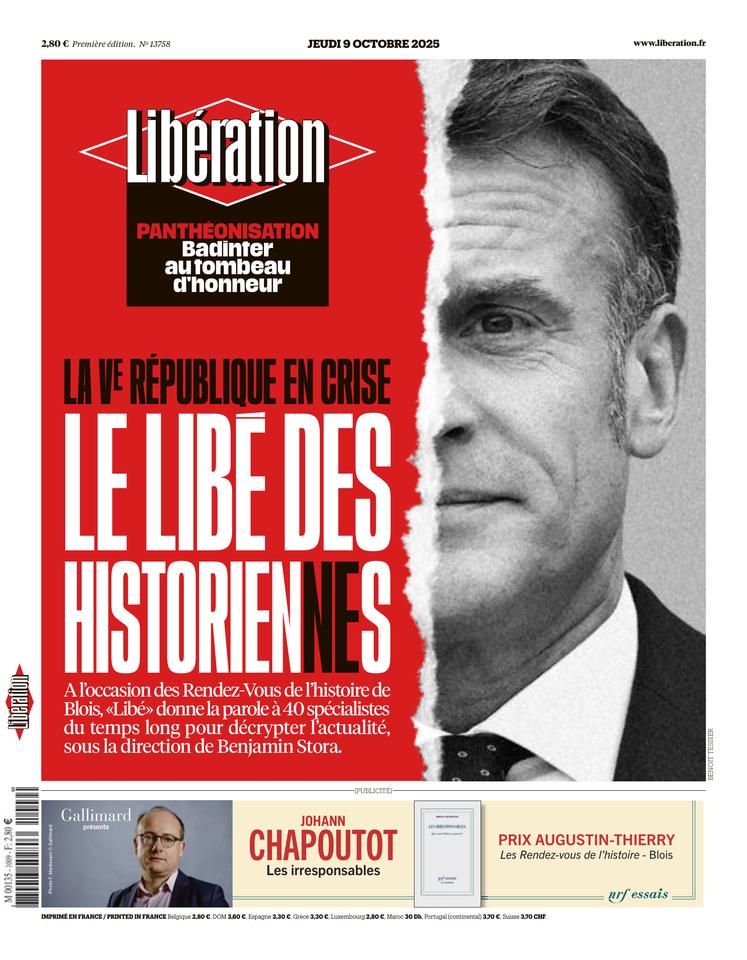
MAGAZINE: Le Libé des historien.nes (9 OCT 2025)
22 December 2021
JOURNAL: The Law and History Review XXXIX (2021), No. 1 (Feb)
Counterterrorism in American Civil Courts: The Role of Letelier v. Republic of Chile (Alan McPherson)
DOI 10.1017/S0738248019000804
Abstract: not available
Hierarchical Inclusion: The Untold History of Israel's Affirmative Action for Arab Citizens (1948–68) (Ofra Bloch)
DOI 10.1017/S0738248020000309
Abstract:
The history of Israel's relationship with its Palestinian-Arab minority during the founding decades, from 1948 to 1968, is often portrayed as a story of formal citizenship that concealed large-scale, state-sanctioned oppression under military rule. This article excavates an untold history of employment affirmative action for Palestinian-Arab citizens of Israel during these two decades which does not fit neatly into this story. Drawing on original archival research, it reveals that, during Israel's founding decades, officials adopted hiring quotas for unskilled Arab workers and for educated Arabs; requirements and incentives for hiring Arabs in government offices, Jewish businesses, and organizations; earmarked jobs and established vocational training courses for the Arab population. It demonstrates that interests in safeguarding Jewish control and economic stability aligned with egalitarian aspirations, and motivated state officials to adopt measures that promoted the inclusion of the Arab population in the workforce, albeit on unequal terms. Furthermore, these measures were part of a transformation of the state's attitude towards Arab citizens, from strict military control to a regime of “hierarchical inclusion” entailing gradual integration into the Israeli economy — mostly though its lower tiers and with a second-class status. Tracing the use of these mechanisms, not then called affirmative action but recognizable as such today, to this period of subjected population management, complicates our understanding of both this chapter in Israel's history and of affirmative action more broadly.
Protecting Foreigners: The Refugee Crisis on the Belize–Yucatán Border, 1847–71 (Vanessa Mongey)
DOI 10.1017/S0738248020000322
Abstract:
Taking mid-nineteenth century Belize as a case study, this article considers the role of migration in forming political, legal, and spatial geographies in a region with weak state institutions and disputed borders. The Caste War—a series of conflicts starting in 1847 in the southeastern Mexican state of Yucatán— resulted in the movement of thousands of people into the neighboring British settlement of Belize. This population movement reshaped the interface between the metropole and the settlement. This was a colony-defining moment in the development of Belize, leading to an extension of imperial control that eventually culminated in the transition to Crown colony in 1871. The refugee crisis was tied to broader Atlantic questions around asylum, law and empire. The benevolent treatment of refugees became the gauge of a “civilized” colony until the refugee crisis turned into a race crisis. This article examines how local administrators used a humanitarian discourse to enshrine white settler colonialism in a territory suddenly inhabited by a foreign-born multi-ethnic majority. The refugee label became a way to secure British sovereignty over the territory and its inhabitants, including non-British subjects, while extracting resources from the newcomers.
Codifying Credit: Everyday Contracting and the Spread of the Civil Code in Nineteenth-Century Mexico (Casey Martina Lurtz)
DOI 10.1017/S0738248020000358
Abstract:
Between the 1870s and the 1910s, municipal court officials in southernmost Mexico recorded contracts regarding small debts and credits in what they labeled libros de conocimientos. While only very rarely citing Mexico's new civil codes of the 1870s and 1880s, the contracts contained in these registers regularly engaged with the kinds of agreements, guarantees, and enforcement mechanisms laid out in the code. They also capture an active, if still elusive, quotidian credit market for the far from well-to-do. This article uses these registers to trace the creation and evolution of Mexico's civil code from the periphery of the country rather than its center. By looking at the ways farmers, smalltime merchants, housewives, and laborers made use of its forms and norms, we can see how liberal economic policy permeated society through use. The determination of everyday people to make good on the protections and possibilities of liberalized fiscal policy cemented that policy in everyday practice.
The Measure of Her Actions: A Quantitative Assessment of Anglo-Jewish Women's Litigation at the Exchequer of the Jews, 1219–81 (Emma Cavell)
DOI 10.1017/S073824802000036X
Abstract:
Taking a chiefly quantitative approach to Jewish women's litigation at the Exchequer of the Jews between in the period 1219–81, this article represents the first exploration of Jewish women before the law in medieval England. It contends that, far from enjoying a level of ‘legal sexual equality’ not available to Christian women, Anglo-Jewish women at the Exchequer of the Jews in fact shared many of their experiences of (secular) law and justice with their Christian counterparts. This contention is possible in part because of the greater interest, over the last decade, in pre-modern European women's litigation and the realisation that Christian women of all classes were able to navigate their way around judicial systems in ways that confounded any theoretical legal disadvantages they may have faced. The article variously examines the number of Jewish women litigating at the Exchequer of the Jews, their roles in court and representation in the records, and the types of litigation in which they took part. It demonstrates that if we are ever to seek a holistic view of the operation of legal jurisdictions in medieval England, our knowledge must include the experiences of Anglo-Jewish women.
“People Crushed by Law Have No Hopes but from Power”: Free Speech and Protest in the 1940s (Catherine L. Fisk)
DOI 10.1017/S0738248020000498
Abstract
In a trio of cases handed down on the same day in 1950, the Supreme Court denied constitutional free speech protection to civil rights picketing and labor picketing. The civil rights case, Hughes v. Superior Court, has often been portrayed as an early test case about affirmative action, but it originated in repression of an alliance of radical labor and civil rights activists exasperated by the legislature's repeated failure to enact fair employment law. Seeking a people's law like the labor general strikers and sit-downers of the 1930s and the civil rights sit-inners of the 1960s, they insisted that the true meaning of free speech was the right to speak truth to power. Courts and Congress forced the labor movement to abandon direct action even as it became the defining feature of the civil rights movement. The free speech rights consciousness they invoked challenged the prevailing conservative conception of rights and law. Direct action was a form of legal argument, a subaltern law of solidarity. It was not, as civil rights protest is often portrayed, a form of civil disobedience. What happened during and after the case reveals how the subaltern law and formal law labor and civil rights began to diverge, along with the legal histories of the movements.
Book reviews
- Will Slauter, Who Owns the News? A History of Copyright, Stanford: Stanford University Press, 2019. Pp. xii, 352. $30.00 paperback (ISBN 9781503607712). (Elena Cooper)
- K.J. Kesselring, Making Murder Public: Homicide in Early Modern England, 1480-1680, Oxford: Oxford University Press, 2019. Pp. vi, 156. $85.00 hardcover (ISBN 9780198835622). (Margaret McGlynn)
- Chenxi Tang, Imagining World Order: Literature and International Law in Early Modern Europe, 1500–1800, Ithaca, NY: Cornell University Press, 2018. Pp. 360. $59.95 hardcover (ISBN 9781501716911). (Ayesha Ramachandran)
- Andrew Phillips and J.C. Sharman, Outsourcing Empire: How Company-States Made the Modern World, Princeton: Princeton University Press, 2020. Pp 272. $40.99 hardcover (ISBN 9780691203515). (Scott A. Carriere)
- Andrea Freeman, Skimmed: Breastfeeding, Race, and Injustice, Stanford, CA: Stanford University Press, 2020. Pp. 304. $28.00 hardcover (ISBN 9781503601123); $28.00 ebook (ISBN 9781503610811). (Angela Lee)
- Ronit Y. Stahl, Enlisting Faith: How the Military Chaplaincy Shaped Religion and State in Modern America, Cambridge, MA: Harvard University Press, 2017. Pp. x + 384. $41.00 hardcover (ISBN 9780674972155).(Andreas Kuersten)
- Sarah A. Seo, Policing the Open Road: How Cars Transformed American Freedom, Cambridge, MA: Harvard University Press, 2019. Pp. 352. $28.95 hardcover (ISBN 9780674980860). (Kathryn Birks Harvey)
18 June 2021
JOURNAL: Forum on "Historiography, Ideology, and Law" (History & Theory, LX (2021), Issue 2, 185-405
Historiography, Ideology and Law: an Introduction (Justin Desautels-Stein & Samuel Moyn) (DOI 10.1111/hith.12207)
Abstract:
This is an introduction to a forum on historiography, ideology, and law. The basic question weaving this forum together concerns the meaning of the term “critical” in the domain of critical legal history, a question that is deeply familiar to historians of all stripes. Ultimately, whether you are a lawyer doing historical work, a historian interested in law, or a historian of a different sort altogether, there is no hiding from the question of context and, critically, the ideological stakes in choosing an answer to that question.
On the domestication of Critical Legal History (Justin Desautels-Stein & Samuel Moyn) (DOI 10.1111/hith.12208)
Abstract:
Among many of today's legal historians, there is a relatively new and generally unreflective understanding of the relationship between history and method. The landscape is everywhere marked by a tendency to eschew big thinking, grand theory, and programmatic approaches to historical explanation and social transformation. In the place of the grand theory approach to law and history, there is a preference for the minimalist, the pragmatic, the particularistic, and the quotidian. What this normal science of today's legal historiography makes obvious is a kind of attachment to particular kinds of problems with particular sorts of built-in solutions. The result for today is intellectual stagnation, a routinized and thoroughly domesticated mode of revealing contingency. Oddly, the fascination with contingency, and its deadening affair with a minimalist pragmatism, is itself a result of the triumph of what continues to be called “critical legal history.” Ostensibly due to an interface between critical legal studies and the historical discipline, the rise and triumph of critical legal history hides a secret: the whole idea of a reigning critical appreciation for contingency seems to be a misnomer. Sure, some may say that “things might have been otherwise.” But what this intellectual settlement demands is obedience to its qualification: “things might have been otherwise, but they weren't, and so let's get on with doing what works.” Although so-called critical legal history seduces adherents with promises of edgy progressivism, the actual malaise of our minimalism seems in fact to suggest just the opposite. It is a quiescent and even quietistic method in practice, counseling in its conservatism against higher-order proposals that might ever make good on the discovery that nothing is natural. In the end, either we must accept that critical legal history in the United States is a lot less politically explosive than we once thought—given its deradicalization and domestication today—or that people have been mistaken about what critical legal history was, is, and ought to be.
Law and the Time of Angels: International Law's Method Wars and the Affective Lives of Disciplines (Natasha Wheatley) (DOI 10.1111/hith.12209)
Abstract:
Recent method wars in international legal scholarship turn on the problem of law in time. Rejecting historians' focus on context and their “policing of anachronism,” prominent legal scholars like Anne Orford and Martti Koskenniemi have argued that the workings of modern law are not governed by the narrow strictures of sequential chronology and that legal scholars require alternate methods that reflect law's transfer of meaning through time. Contextualism, in this reckoning, represents a misguided methodological straightjacket that stifles critique by quarantining meaning and power in discrete historical silos; the embrace of anachronism, conversely, would foster a revitalized history of international law intimately connected with the political imperatives of the present. This essay uses the debate as an opening into a fuller exploration of law in history and in time. In considering the idiosyncratic way law frames time, sequence, and duration, it explores the connection between law's transtemporal transfers and its very mode of reproduction. To speak of law's capacity to escape context and travel through time is another way of describing its normativity: the laws of the past that survive to exert a normative force in the present are not, in their law-ness, past—they are simply present law. The essay suggests some ways to make that temporality itself the object of analysis (rather than naturalizing and affirming it, as Orford has, or, conversely, dismissing it as bad history, as some historians have). It draws on the history of science to generate an account of law's temporal habitus as a disciplinary knowledge tool, a kind of epistemic virtue that is intimately involved in law's internal criteria for truth and falsity.
Theorizing Constitutional History (Maeve Glass) (DOI 10.1111/hith.12210)
Abstract:
The historical study of American constitutional law has long rested on a conceptual framework that divides the past into linear units of analysis. Constitutional time unfolds according to discrete eras defined by changes in political leadership and governance, whereas constitutional space typically appears divided into bordered jurisdictions and regional sections. Despite the prominence of this conceptual framework, scholars have yet to ask how, why, and to what effect it became the paradigmatic mode of study. In the absence of close study, the framework instead appears as a neutral embodiment of the constitutional order. This essay offers a preliminary sketch of how theories of knowledge production, and particularly Louis Althusser's theory of law as an ideological apparatus, can help to move beyond this facile assumption. By returning to a selection of landmark judicial opinions and legal treatises from the long nineteenth century and analyzing their discursive practices in relation to the dominant modes of production, this exploratory essay suggests a striking possibility: that the paradigm that we have assumed to be a primordial part of the constitutional order only emerged in its current iteration in the late nineteenth-century shift from a plantation mode of production rooted in enslaved labor to an industrial mode of production rooted in wage labor. As these sources indicate, leading jurists in America's age of conquest and enslavement regularly analyzed questions of state power and rights by organizing time according to chains of title rooted in dispossession based on race and space according to the geographic circuits of capital. Effective in naturalizing the strict racialized hierarchy integral to the production and circulation of export commodities, this discourse of tethering institutions to the history of property acquisition and the movement of commodities began to shift with the formal abolition of slavery and rise of intensive industrialization, as a new generation of legal academics created a paradigm of institutional time and space that, by erasing material histories of structural inequality, made it possible to reconstitute an old social order predicated on racial classifications of whiteness.
Family Law Matters (Judith Surkis) (DOI 10.1111/hith.12211)
Abstract:
This essay analyzes how new histories of family law help to dismantle developmentalist accounts of legal, economic, and political modernity. Far from being backwaters, they have recently emerged as sites of theoretical and practical innovation. Recombining methodologies from genealogy to social reproduction theory and psychoanalysis, they do more than denaturalize categories, destabilize familiar narratives, and demonstrate ideological contradictions (although they do that too). Motivated by a sense of what is lost theoretically and politically by the family's historical and juridical marginalization, they reinvigorate legal history by locating the problem of the family at the center of broader critical projects.
Proximate Causation in Legal Historiography (Simon Stern) (DOI 10.1111/hith.12212)
Abstract:
The variety of legal history published in general-interest law journals tends to differ from the variety published in history journals. This study compares the two varieties by examining footnote references in five general-interest law journals and footnote references in two journals of legal history. In the law journals, cases and statutes accounted for the single largest group of footnotes (approximately 35%), followed by references to other law journal articles (nearly 25%). In the legal history journals, these two categories accounted for less than 20% of all references; primary and secondary historical materials predominated in the footnotes. To be sure, legal decisions and law journal articles can also be historical sources: rather than being used as evidence of what the law is, they might be studied for what they reveal about legal reasoning or rhetoric in an earlier age. However, in most legal historical research that attends primarily to cases and statutes, these materials figure as evidence of the state of the law at that time. When the analysis relies on legal sources to trace the development of a certain doctrine and treats them as sufficient to account for that development, the result is the distinctive style of research that I seek to contrast against approaches that cast the net of historical inquiry more widely. To account for these different approaches, I suggest that law professors rely on a notion of proximate causation as a historiographic method. According to this approach, legal developments are proximately caused by other developments in the legal sphere, and other social and cultural developments play more attenuated roles, such that their influence is less significant. By proposing this explanation, I hope to draw more attention to assumptions about causation in legal historiography and to question their persuasive force.
(source: Wiley)
28 October 2020
BOOK: Nathalie MALLET-POUJOL, Les franchises de l'Histoire. Essai sur la liberté d'expression en matière historique (Paris: Mare & Martin, 2020). ISBN: 978-2-84934-498-9, pp. 862, € 68
(Source: Mare & Martin)
ABOUT THE BOOK
Des lois mémorielles aux lois d'amnistie, du droit des archives au droit de la presse, la narration historique est régulièrement mise en difficulté par le droit. La liberté d’expression en matière historique se heurte ainsi à l’écueil de l’apologie de crimes, au rempart de l’honneur, à la barrière de l’offense, au spectre du révisionnisme, au mur de la vie privée, au repos des tombeaux et au voile du temps. Cet ouvrage propose d’entrevoir les relations toujours névralgiques que l’écriture de l’histoire entretient avec le droit. Et son auteure s’attache à cartographier les « franchises de l’histoire », peu à peu dessinées par la justice depuis le XIXème siècle.
ABOUT THE AUTHOR
Nathalie Mallet-Poujol, docteure en droit, est directrice de recherche au CNRS. Elle dirige l’ERCIM- Équipe de Recherche Créations Immatérielles et Droit - (UMR 5815 - Université de Montpellier).
More information with the publisher.
01 November 2018
WORKSHOP: Transferring and Translating Concepts in Law and History (Brussels: VUB, 14 DEC 2018)
Generaal Jacqueslaan 271, 1050 Brussels
28 May 2015
BOOK: Ramses DELAFONTAINE, Historians as Expert Judicial Witnesses in Tobacco Litigation. A Controversial Legal Practice [Studies in the History of Law and Justice, 4; eds. M. Sellers & G. Martyn], Heidelberg/New York: Springer, 2015, 453 p. ISBN 978-3-319-14291-3
Ramses Delafontaine (UGent, Department of History) published Historians as Expert Judicial Witnesses in Tobacco Litigation. A Controversial Legal Practice with Springer [Studies in the History of Law and Justice, 4; eds. M. Sellers & G. Martyn].
Abstract:
Historian Ramses Delafontaine presents an engaging examination of a controversial legal practice: the historian as an expert judicial witness. This book focuses on tobacco litigation in the U.S. wherein 50 historians have witnessed in 314 court cases from 1986 to 2014. The author examines the use of historical arguments in court and investigates how a legal context influences historical narratives and discourse in forensic history. Delafontaine asserts that the courtroom is a performative and fact-making theatre. Nonetheless, he argues that the civic responsibility of the historian should not end at the threshold of the courtroom where history and truth hang in the balance.Table of Contents:
The book is divided into three parts featuring an impressive range of European and American case studies. The first part provides a theoretical framework on the issues which arise when history and law interact. The second part gives a comparative overview of European and American examples of forensic history. This part also reviews U.S. legal rules and case law on expert evidence, as well as extralegal challenges historians face as experts. The third part covers a series of tobacco-related trials. With remunerations as high as hundreds of thousands of dollars and no peer-reviewed publications or communication on the part of the historians hired by the tobacco companies the question arises whether some historians are willing to trade their reputation and that of their university for the benefit of an interested party. The book further provides 50 expert profiles of the historians active in tobacco litigation, lists detailing the manner of the expert’s involvement, and West Law references to these cases.
This book offers profound and thought-provoking insights on the post-war forensification of history from an interdisciplinary perspective. In this way, Delafontaine makes a stirring call for debate on the contemporary engagement of historians as expert judicial witnesses in U.S. tobacco litigation.
- Pages 1-5
$29.95
Introductory Theoretical Remarks on the Alleged Problematic Nature of the Interaction of History and LawPages 9-13 Clio’s Modern Paradox UnraveledPages 15-27 Introduction Part IIPages 31-33 Modern Interactions of Law and HistoryPages 35-43
The Globalization of the Historian as an Expert WitnessPages 45-65 Litigation-Driven HistoryPages 67-105 A Reassessment of Wijffels’ Concept of Forensic HistoryPages 107-116 Introduction Part IIIPages 119-125 A History of TobaccoPages 127-141 Tobacco and Health: Towards a Contemporary PerspectivePages 143-156 The Tobacco Industry and Its TacticsPages 157-171 Tobacco LitigationPages 173-209 United States v. Philip Morris et al.Pages 211-259 Debates: Reflections in Academic and National MediaPages 261-275 Historians in Tobacco Litigation, a ConclusionPages 277-296 Final Conclusion on the Involvement of Historians in Tobacco LitigationPages 297-301 Final ConclusionPages 303-309
27 May 2014
WORKSHOP: "Construire et déconstruire les normes culturelles des juristes" (Bordeaux, 2 June 2014)
07 February 2014
JOURNAL: Law and History Review, 32, 2014
February 2014, vol. 32, issue 01
Table of contents and abstracts here