Search

Showing posts with label succession law. Show all posts

06 February 2024

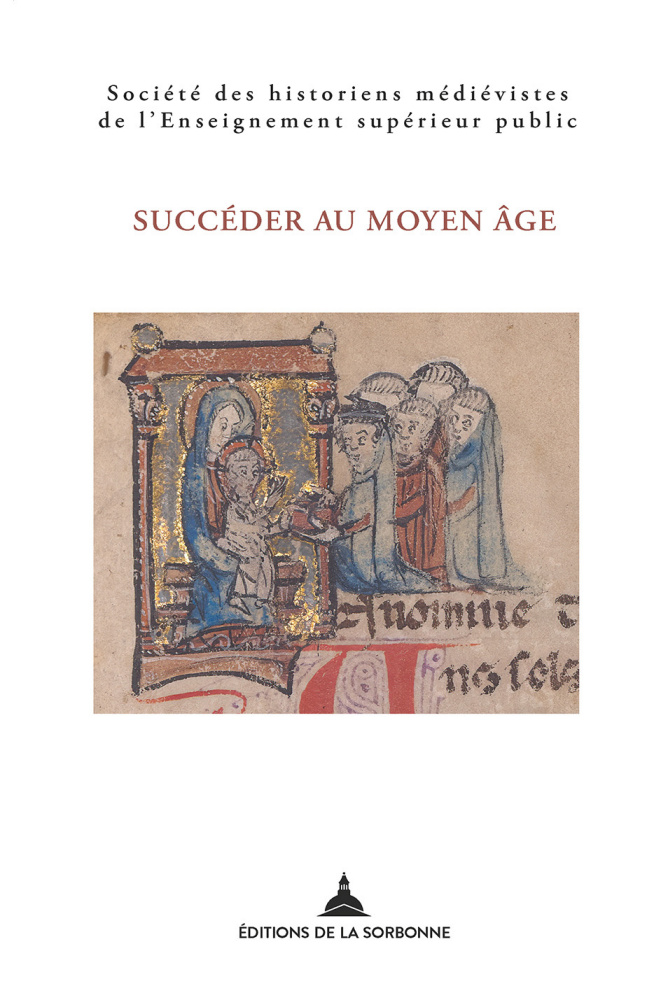
BOOK: Succéder au Moyen Âge. LIIIe Congrès de la SHMESP (Paris: Éditions de la Sorbonne, 2023). ISBN: 9791035108991

(Image source: Éditions de la Sorbonne)


ABOUT THE BOOK

« Tradition », « réforme », « rénovation » ou « translation » : diverses notions ont servi à qualifier le fait de succéder, à savoir l’enchaînement, le relai ou le séquençage temporel dans les sociétés médiévales du Ve au XVe siècle (Occident et Orient, Chrétienté, Islam, Byzance). Toutes témoignent de ce que les institutions du Moyen Âge ont régulièrement prétendu répondre à la nécessité du changement sans bouleverser leurs cadres de référence ou, du moins, sans assumer de le faire. Des travaux récents ont enrichi notre connaissance de l’usage contextuel de ces concepts dans leurs expressions politiques, religieuses et culturelles. À travers eux, c’est souvent le point de vue de celui qui lègue qui a été adopté, laissant dans l’ombre l’action de celui qui prend la suite. Succéder n’est pas hériter : le successeur est supposé s’inscrire activement dans une chronologie et définir sa propre identité en regard d’une entité disparue. Cela est vrai dans le monde du travail ou celui de la vie intellectuelle comme dans l’ordre familial et dynastique, à la tête des gouvernements urbains aussi bien que des institutions ecclésiales. Observer les façons de succéder, c’est alors considérer comment des femmes et des hommes, des institutions et des courants intellectuels ont tenté de résoudre l’équation de la continuité et du changement. Le 53e congrès de la Société des historiens médiévistes de l’Enseignement supérieur public, qui s’est tenu à Rome les 26-28 mai 2022, a envisagé cette vaste question sans renoncer aux diversités des temps, des lieux, des domaines de l’histoire et des acceptions, du littéral au métaphorique.


TABLE OF CONTENTS
  • Avant-propos (Dominique Valérian);
  • Succéder dans la société chrétienne latine. Rapport introductif (Joseph Morsel);
  • Succéder dans les mondes musulmans médiévaux. Rapport introductif (Vanessa Van Renterghem);
Comptes, bilan, transmission : reprendre un patrimoine
  • Dettes et bilan monastiques. Solder le passif d’un abbé dans la Toscane du XIIIe siècle (Philippe Lefeuvre);
  • Succéder ou prendre la place ? Les veuves juives du Roussillon et de la Catalogne (XIVe siècle) (Chloé Bonnet);
  • Apprentis et héritiers. Règlements et pratiques de succession dans le monde des métiers en Normandie, XIIIe-XVe siècle (François Rivière);
Les dynasties : normes, pratiques et limites des successions
  • Planifier la succession royale et échouer. Le cas de Théodoric (489-526) et la compétition pour le règne en Italie (Cristina La Rocca);
  • Cuncta reparans. Recceswinth ou la succession réparatrice (Céline Martin);
  • Succéder à son frère ? Pratiques de la succession dans les royaumes anglais du haut Moyen Âge (VIIe-XIe siècle) (Justine Audebrand);
  • L’empire controversé. Interpréter les pratiques successorales des rois normands et Plantagenêt (1066-1199) (Fanny Madeline);
  • Une compétition sous contrôle ? La fabrique du successeur dans l’émirat de La Mecque (XIIIe-XIVe siècle) (Clarck Junior Membourou Moimecheme);
  • Troubles de la succession royale sous Charles VII et Louis XI (Franck Collard, Lydwine Scordia);
Constructions historiographiques et constructions théoriques
  • Succession des temps et cycle des astres. La conscience historique des hagiographes latins (VIe-XIe siècle) (Marie-Céline Isaïa);
  • Inventer sa succession dans l’exégèse médiévale (XIIe-XIIIe siècle) (Emmanuel Bain);
  • Succéder à Chaucer dans l’Angleterre du XVe siècle (Aude Mairey);
  • Légitimer une dynastie princière par l’image. La succession entre Philippe le Bon et Charles le Téméraire (1467-1470) (Julien Guerro);
  • Une parenté bien ordonnée. Succession, hiérarchie et pouvoir dans le Livre de la danse des aveugles et de l’abuzé en court (v. 1480) (Marie-Lise Fieyre);
Succéder dans l’Église
  • Succéder au siège épiscopal de Ravenne (Ve-IXe siècle) : une approche visuelle (Maria Cristina Carile)
  • Neophyta ! Usages polémiques d’une hérésie de la succession épiscopale (seconde moitié du IXe siècle) (Isabelle Rosé)
  • Succéder au temps de la réforme de l’Église. Définition des procédures canoniques de l’élection pontificale entre le XIe et le XIIe siècle (Umberto Longo)
  • L’impossible succession. Une approche juridique de l’hérédité en milieu clérical (XIIe-XIIIe siècle) (Arnaud Fossier)
  • Les successions familiales dans le Sacré Collège au XVe siècle (Pierre-Bénigne Dufouleur)
Rites et légitimations aux marges du principe dynastique
  • Succéder à l’imam dans l’ibadisme omanais. Sources de légitimité d’un pouvoir dissident en marge du califat (XIe-XIIe siècle) (Enki Baptiste)
  • Un étranger au pouvoir. Identités et légitimation dans les successions exogènes en Bretagne (IXe-XIIIe siècle) (Lucile Queney)
  • Cossols viels et novels. Succession et continuité au sein du consulat montpelliérain (v. 1200-v. 1450) (Vincent Challet)
  • Quand la nuit succède au jour. Rêveries conclusives (Patrick Boucheron)

More information can be found here.

21 December 2022

BOOK: Andrej KOKKONEN, Jørgen MOLLER, Anders SUNDELL (eds.), The Politics of Succession. Forging Stable Monarchies in Europe, AD 1000-1800 (Oxford: Oxford University Press, 2022), ISBN : 9780192897510

(Image source: Oxford University Press)


ABOUT THE BOOK

The death of the ruler poses a significant threat to the stability of any polity. Arranging for a peaceful and orderly succession has been a formidable challenge in most historical societies, and it continues to be a test that modern authoritarian regimes regularly face and often fail.

Drawing on a unique dataset of the life and fates of monarchs in all major monarchies in Medieval and Early Modern Europe, The Politics of Succession documents how succession have historically been moments of violence and insecurity. Deaths of rulers were often associated with civil war, and the shadow cast by looming successions caused coups and depositions.

But this book also shows that the development and spread of primogeniture – the eldest-son-taking-the-throne – mitigated the problem of succession in Europe in the period after AD 1000. The predictability and stability that followed from a clear hereditary principle outweighed the problems of incompetent and irrational rulers sometimes inheriting power. The data used in the book demonstrates that primogeniture reduced the risk of depositions and civil war following the inevitable deaths of leaders.

In this way, hereditary monarchy helped create political stability and lengthen the time horizons of rulers and elites alike, thereby facilitating state-building. The book thus sheds light on the rationale of a system of leader selection that today often appears illogical and outdated – and it uses these findings to shed light on the key advantage of modern representative democracy: its ability to complete power transfers peacefully.


ABOUT THE EDITORS

  • Andrej Kokkonen, Associate Professor, Department of Political Science, University of Gothenburg,
  • Jørgen Møller, Professor, Department of Political Science, Aarhus University
  • Anders Sundell, Associate Professor, Department of Political Science, University of Gothenburg


TABLE OF CONTENTS

Preface
1. Introduction
2. The Politics of Succession
3. Conceptual Framework and Data
4. The Origins and Spread of Primogeniture
5. Civil War and International War
6. Leader Depositions
7. The Development of Parliaments
8. Family and Dynasty
9. The Politics of Succession in Comparative Perspective
10. Conclusions


More information can be found here.

07 February 2022

CALL FOR PAPERS: Ius commune and local testamentary succession laws and customs (c. 1400-1620) Cracow (Poland), 12-13 January 2023 (DEADLINE: 15 December 2022)


The Laboratory of Source Editions at the Faculty of Law and Administration of Jagiellonian University in Cracow and the Research Unit Roman Law and Legal History of KU Leuven are happy to invite you to an international workshop on ius commune and local testamentary succession laws (c. 1400-1620), which will take place at the Jagiellonian University in Cracow on 12-13 January 2023. The aim of the workshop is to bring together experts of both legal and social history of different European jurisdictions to reflect on the role of the law of last wills for the understanding of family and societal relationships, as well as on the impact of ius commune and university-trained jurists on the development of the law of testamentary succession.

Next to the organisation of a few keynote lectures, we launch an open call for papers and especially encourage interested scholars to submit proposals for papers on the following topics, always with a focus on the fifteenth, sixteenth and/or early seventeenth centuries: • the codification and homologation of local testamentary succession laws and customs; • the impact of Roman or canon law (ius commune) on local testamentary law; • the role of university-trained scholars for legal practice with respect to last wills, for instance through (but not limited to) their consilia; • the law of testamentary succession in the academic debate, and references to local legal practice; • the link between the aforementioned topics and the socio-political understanding of family and societal relationships.

We invite submissions for paper proposals on any of the aforementioned topics by both senior and junior legal and social historians. Proposals should consist of a (provisional) title, an abstract of 200-400 words, and a short cv, indicating at least the applicant’s name, current position, academic affiliation, contact details and (if applicable) related publications on the topic. Accepted papers will be granted a 35 minutesslot (25 minutes presentation, 10 minutes discussion). The conference will be held in English.

Please send your abstract and short cv by 31 March 2022 using a submission form: https://forms.office.com/r/5nT5x2eJn8XXX. For practical reasons, a maximum of fifteen applicants will be selected. All applicants will be notified by email within 4 weeks from this date. Participation will be definitive after payment of a workshop fee of 50 EUR.

Successful applicants are expected to submit a paper (8,000-12,000 words) in English for inclusion in a thematic volume to be published with an international publisher. A first version of the full paper will be due prior to the conference, by 15 December 2022. It should be an original contribution, not presented or published elsewhere. After the conference, the authors can finalize their text. Final (pre-peer review) versions of the papers are due by 15 April 2023. Consequently, all submitted papers will be subject to a process of peer-review; inclusion in the book depends on a positive evaluation by the peer-reviewers.

The conference regulations will soon be announced on the event website: https://pwz.wpia.uj.edu.pl/celsa/event. For any further questions, do not hesitate to contact the organizers (kamil.sorka@uj.edu.pl).

We are looking forward to a stimulating and intellectually enriching workshop! On behalf of the organizing committee Maciej Mikuła (Jagiellonian University) Wouter Druwé (KU Leuven) Kamil Sorka (Jagiellonian University)