Search

Showing posts with label Diplomatic History. Show all posts

23 October 2023

VACANCY: Henry A. Kissinger Postdoctoral Fellowship, Yale University (DEADLINE: 18 December 2023)

(Source: Yale University)


International Security Studies at Yale University has a vacancy for a postdoctoral fellowship.

International Security Studies (ISS) welcomes applications for the Henry A. Kissinger Visiting Scholars Postdoctoral Fellowship funded by the Johnson Center for the Study of American Diplomacy. We seek to attract outstanding junior scholars from around the globe whose research is focused on the role of the United States in global affairs from World War II to the present, including the conduct of U.S. statecraft, diplomacy, and grand strategy. Kissinger Visiting Scholars fellowships will be awarded to candidates with outstanding proposals that require access to the Henry A. Kissinger Papers or other archival holdings related to American diplomacy at Yale (http://web.library.yale.edu/digital-collections/kissinger-collection; http://guides.library.yale.edu/american-diplomacy-primary-sources).

Fellowships are awarded for one-year and are renewable for one additional year. The PhD degree must be completed to begin the fellowship. Recipients are expected to use their time at Yale to conduct original research and prepare manuscripts for publication. Kissinger Visiting Scholars will also work with an active academic community of predoctoral fellows, postdoctoral fellows, and visiting scholars, as well as Yale faculty in history, political science, and other disciplines.

Fellows are required to remain in residence through the duration of their fellowship. International Security Studies provides office space and resources. Postdocs are expected to participate in the academic life and public activities of the Brady-Johnson Program in Grand Strategy, International Security Studies, and the Jackson School of Global Affairs. This includes regularly attending ISS’s weekly colloquium and sharing one’s research within this forum. Kissinger postdocs may teach small seminars if desired on subjects relevant to U.S. statecraft, diplomatic history, international affairs, or grand strategy.

The Johnson Center for the Study of American Diplomacy was founded upon the 2011 donation of Dr. Henry Kissinger’s papers to Yale related to his pre-government, government, and post-government careers (http://news.yale.edu/2011/06/14/yale-receive-kissinger-papers-and-establish-johnson-center-study-american-diplomacy). A program of the Jackson School of Global Affairs, in conjunction with International Security Studies and the Brady-Johnson Program in Grand Strategy, the Center brings academics and practitioners to Yale as Kissinger Visiting Scholars and Kissinger Senior Fellows, as well as hosts an annual conference a range of other activities relating to international affairs.

Salary: $65,000 plus $5,000 for research expenses

Qualifications: Recent Ph.D. in relevant field. Ph.D. must be in hand by September 1, 2024.

The deadline for applications is December 18, 2023. Applications are due through Interfolio:              apply.interfolio.com/133967          

A complete application includes:

c.v.

1000-word research proposal, to include an explanation of how access to the Kissinger Papers or other archival holdings related to diplomatic history at Yale would help achieve the goals of your project.

Writing sample, e.g. a dissertation chapter or journal article

Three academic references (no letters of recommendation required)

Yale University is an Affirmative Action/Equal Opportunity employer. Yale values diversity among its students, staff, and faculty and strongly welcomes applications from women, persons with disabilities, protected veterans, and underrepresented minorities.

(Source: AHA

14 March 2023

CONFERENCE: 'Diplomatie et droit à travers l'histoire' - Cycle de conférences lorraines d'histoire du droit - Nancy, 5 Avril 2023


Dans le cadre du cycle des conférences lorraines d’Histoire du Droit, l'Institut François Gény vous propose une nouvelle conférence sur le thème "Diplomatie et droit à travers l'histoire".


PROGRAMME

Introduction aux rapports entre Diplomatie et Droit aux XIXe et XXe siècles
par Monsieur Hugo STAHL, Maître de conférences à l’Université de Lorraine, Faculté de Droit, Économie et Administration de Metz, Institut François Gény (UR 7301)

La négociation du Traité de Paris du 30 mars 1856
par Monsieur Yves BRULEY, Maître de conférences à l'École Pratique des Hautes Études, (UR 4116 Savoirs et Pratiques du Moyen Âge au XIXe siècle)

De l’action réformatrice de la diplomatie au XIXe siècle. Exemples d’analyse, d’inspiration et de création de la norme étrangère
par Monsieur Jean-Romain FERRAND-HUS, Maître de conférences à l’Université de Lorraine, Faculté de Droit, Sciences économiques et Gestion de Nancy, Institut François Gény (UR 7301)

La diplomatie non officielle : le statut juridique des espions de la fin du XIXe au milieu du XXe siècle
par Madame Claire de BLOIS, Docteure en Droit, ATER à l’Université Paris-Cité, IHD (UR 2515)

Le diplomate et le droit
par Monsieur Jean-Pierre VIDON, Ancien ambassadeur, Ministre plénipotentiaire honoraire

ENTRÉE LIBRE

Cette conférence est organisée avec le soutien de l'Institut François Gény (UR7301) et de la Ville de Nancy.

06 February 2023

CFP: ‘The Cloven Dukes’ The Mediterranean diplomacy of the small Italian powers (1530-1730) - 7-8 November 2023, Haifa [DEADLINE 1 MAY 2023]

(Source: HCMH)

Organizers: Davide Trentacoste (HCMH) & Francesco Caprioli (Universidad Autónoma de Madrid).

Diplomatic history is one of the fields that has best embodied the global and cultural turn that in recent decades has led scholars to focus on various historical phenomena in new spaces through new methodological lenses. Under the umbrella category of “New Diplomatic History”, scholarship on early modern Mediterranean diplomacy has programmatically gone beyond and reworked some of the conventional topics and paradigms related to the political relations established between Christian and Muslim powers. In this field of study, various studies have shown how the early modern Mediterranean context was characterized not only by a political-religious clash, but also by intense exchanges and dialogue, shaped among powers of different cultures and confessions. However, most of these investigations have only emphasized the relations established by the major Latin-Christian European political entities (i.e., the Habsburg Empire, the Republic of Venice, or the Spanish and French monarchies), leaving other actors in the background, such as Italian regional powers like Parma, Modena, or Lucca.

Following on from these premises, this conference intends to explore the diplomatic strategies, models, agencies, and practices adopted by Italian duchies and republics when negotiating with the Ottomans, the Safavids or the various Muslim polities of North Africa, and to compare them with those traditionally deployed in the European context.

By addressing the issue of Christian-Muslim diplomatic relations through the eyes of the small Italian regional powers during the early modern times, our aim will be twofold: first, we want to offer a fresh overview of the small Italian powers’ diplomatic strategies towards Muslim states throughout the early modern age. Secondly, we want to provide a useful discussion about similarities and dissimilarities among small Italian states regarding how they used diplomacy to represent themselves outside the Latin-Christian world.


Themes

The conference themes may include, but are not limited to:

  1. Differences and similarities in small Italian states’ diplomatic strategies. How did they act outside Latin-Christian Europe and how did they present themselves when dealing with Muslim powers?
  2. Diplomatic agencies and practices used by small Italian states when negotiating with Muslim powers. Was there a culture of interfaith diplomacy shared by these regional powers during the early modern age?
  3. Changes and continuities in small Italian states’ policy. To what extent did diplomatic negotiations with Muslim rulers alter the policy of Italian regional powers and how they were perceived in the Christian world?

Deadline & details

Maximum 250-word abstract and a short CV (no more than 1 page).

Please send these documents to: clovendukes@gmail.com

Deadline for submission is May 1st, 2023.

Applicants will be notified of the acceptance of their proposal by May 15th, 2023.

Please send your inquiries to clovendukes@gmail.com


The Haifa Center for Mediterranean History will cover the costs of accommodation and local transport on the days of the event. More details on this will be provided after the closing of the CFP and the notification of acceptance to participants. Some modest travel support may be on offer, pending the availability of funds.

25 January 2021

BOOK: Antonio MUSARRA, Il Grifo e il Leone. Genova e Venezia in lotta per il Mediterraneo (Bari: Laterza, 2020). ISBN: 9788858140727, pp. 272, € 24,00

 
(Source: Laterza)

ABOUT THE BOOK

Luogo d’incontri e contaminazioni, nel basso Medioevo il Mediterraneo fu, anche e soprattutto, un luogo di aspri scontri. Genova e Venezia – così come Pisa o la corona catalano-aragonese – si resero protagoniste d’una lotta senza quartiere, ricorrendo a ogni mezzo, lecito o illecito, per assicurarsi il controllo delle principali rotte di trasporto. Sin dalla fine dell’XI secolo, le due città, grandi potenze navali e commerciali, erano andate imponendo il proprio predominio sul Mediterraneo orientale, moltiplicando i propri insediamenti. Le loro attenzioni s’erano volte all’Egitto e alla costa siro-palestinese, divenuti dopo le crociate una parte essenziale del mondo. La conquista veneziana di Costantinopoli, nel 1204, rivoluzionò il quadro politico, dando avvio ai primi scontri tra le due marine. Con la cosiddetta ‘guerra di San Saba’, conclusasi con la cacciata dei genovesi da Acri, capitale del regno di Gerusalemme, si giunse per la prima volta allo scontro aperto. Da questo momento, il Grifo e il Leone esprimeranno un’accesa rivalità, scandita da innumerevoli battaglie navali, che si protrarrà per oltre un secolo e mezzo.

ABOUT THE AUTHOR

Antonio Musarrra insegna Storia medievale alla Sapienza Università di Roma. Con il Mulino ha pubblicato «Genova e il mare nel Medioevo» (2015), «Acri 1291. La caduta degli stati crociati» (2017), «Il crepuscolo della crociata» (2018) e, con Franco Cardini, «Il grande racconto delle crociate» (2019).


The table of contents is available in PDF version, here. More information with the publisher.

23 November 2020

BOOK: Giuseppina DE GIUDICI, Sanctitas legatorum. Sul "fondamento" dell'indipendenza giurisdizionale in età moderna (Roma: Edizioni Scientifiche Italiane, 2020). ISBN: 9788849542332, pp. 198, € 30,00

 Nessuna immagine impostata

(Source: ESI)

ABOUT THE BOOK

Collana: Pubblicazioni del Dipartimento di Giurisprudenza dell'Università degli Studi di Cagliari - Serie II, vol. 26.

Interrogarsi sulla sanctitas legatorum, e specialmente sull’indipendenza giurisdizionale dei diplomatici durante l’età moderna, non significa solo far emergere contenuti e limiti a essa assegnati dai “costruttori” del diritto delle genti. Considerato che il riconoscimento della tutela dei moderni ambasciatori scaturiva dall’esigenza di garantire la libera comunicazione tra Stati, è opportuno allargare lo studio al diritto di legazione attivo e passivo per mettere in luce il fondamentale ruolo che esso ha svolto. Grazie al suo esercizio le organizzazioni politiche si scoprivano parte della communitas, riconoscendosi e legittimandosi reciprocamente. In più, la progressiva diffusione delle ambascerie permanenti, anche in forza della loro stabilizzazione e istituzionalizzazione, ha permesso al jus legationis di ottenere puntuali informazioni politiche utili alla ricerca di nuovi equilibri e di contribuire alla formazione di una parte notevole del patrimonio normativo comune. È per questo che le peculiari concezioni sulla communitas e sul suo ordinamento costituiscono l’irrinunciabile orizzonte di senso anche per chi si occupa delle prerogative diplomatiche.

ABOUT THE AUTHOR

Giuseppina De Giudici è professore associato di Storia del diritto medievale e moderno presso il Dipartimento di Giurisprudenza dell’Università degli Studi di Cagliari. Tra i suoi lavori si segnalano: Il governo ecclesiastico nella Sardegna sabauda (1720-61), Napoli, 2007; Interessi e usure nella Sardegna di Carlo Emanuele III, Pisa, 2010; Le istituzioni prefettizie nella Sardegna dell’Ottocento. Le vie dell’accentramento giurisdizionale e amministrativo (1807-1861), Cagliari, 2012. Sul tema della condizione giuridica dei moderni ambasciatori e sui legati in età bassomedievale ha pubblicato i saggi: Sullo statuto dell’ambasciatore in età moderna: l’inviolabilità tra sacralità e indipendenza giurisdizionale, 2012; «Quando imbassiadores saen mandare». A proposito del cap. XXXV del primo libro degli Statuti sassaresi, 2018.

TABL OF CONTENTS

Prefazione

«Quel est ce droit des gens?». Il diritto di legazione nel suo orizzonte di senso

Capitolo I - Il diritto di legazione in età moderna

1. Una pietra miliare: Le droit des gens di Emer de Vattel

2. Per un droit des gens distante «dalle chimere e dagli equivoci»

3. Senza la civitas maxima. Il ruolo della diplomazia permanente

4. Il diritto di legazione e l’ordine orizzontale

5. La soggettività interstatale e la peculiare declinazione dell’uguaglianza

Capitolo II - La trattatistica de legato e la sanctitas legatorum

1. L’irruzione della moderna diplomazia

2. Incertezze linguistiche: dall’ambasciatore ai ministri pubblici

3. Tra diritto, politica e interessi letterari. L’eterogenea produzione de legato

4. Lo status giuridico dei ministri pubblici

5. Condizione giuridica dei ministri pubblici e funzione diplomatica, una storia da scrivere

Capitolo III - La sanctitas e l’indipendenza giurisdizionale

1. Gentili e la trattatistica tardo-cinquecentesca

2. Lo statuto minimo dell’ambasciatore e la «quasi extraterritorialità» groziana

3. Oltre la rappresentanza: Bynkershoek e l’ordine giuridico interstatale

4. La soluzione vatteliana tra rappresentanza e mutuo consenso

5. La misura delle immunità: le prerogative del sovrano all’estero

6. Il “fondamento” dell’indipendenza giurisdizionale

7. L’extraterritorialità groziana, una fictio dai molti usi


More information with the publisher.

01 October 2020

BOOK: Colin HEYWOOD & Ivan PARVEV (Eds.), The Treaties of Carlowitz: Antecedents, Course and Consequences (Leiden-New York: Brill, 2020). ISBN 978-90-04-40950-7, EUR 105.00

(Source: Brill)


Brill has published a new book on the Treaties of Carlowitz (1699).

ABOUT THE BOOK

The Treaties of Carlowitz (1699) includes recent studies on the Lega Sacra War of 1683-1699 against the Ottoman Empire, the Peace treaties of Carlowitz (1699), and on the general impact of the conflict upon Modern Europe and the Balkans. With its contributions written by well-known international specialists in the field, the volume demonstrates that sometimes important conflicts tend to be forgotten with time, overshadowed by more spectacular wars, peace congresses or diplomatic alliances. The “Long War” of 1683-1699 is a case in point. By re-thinking and re-writing the history of the conflict and the subsequent peacemaking between a Christian alliance and the Ottoman state at the end of the 17th century, new perspectives, stretching into the present era, for the history of Europe, the Balkans and the Near East are brought into discussion.


Contributors are: Tatjana Bazarova, Maurits van den Boogert, John Paul Ghobrial, Abdullah Güllüoğlu, Zoltan Györe, Colin Heywood, Lothar Höbelt, Erica Ianiro, Charles Ingrao, Dzheni Ivanova, Kirill Kochegarov, Dariusz Kołodziejzcyk, Hans Georg Majer, Ivan Parvev, Arno Strohmeier.

ABOUT THE EDITORS

Colin Heywood, Ph.D. (London, 1970) is an Honorary Research Fellow at the University of Hull. He has published numerous studies and articles on Ottoman history and historiography and on Mediterranean and maritime history in the late medieval and early modern period. 

Ivan Parvev, Ph.D. (1993), Habil. D. (2011), University of Sofia, is Professor of Early Modern Balkan history at that university. He has published monographs and articles on Habsburg-Balkan relations, including Land in Sicht. Südosteuropa in den deutschen politischen Zeitschriften des 18. Jahrhunderts (Zabern, 2008).

TABLE OF CONTENTS

  Preface 
  About the Authors 
  Introduction 


Part 1: The War of 1683–1699 – Political Strategies and Balance of Power in Europe


 1On the Road to Carlowitz: Visions of Ottoman Diplomacy in the Letters of Thomas Coke, 1691–1694 
  Jean-Paul A. Ghobrial 
 2‘This Great Work’: Lord Paget and the Processes of English Mediating Diplomacy in the Latter Stages of the Sacra Lega War, 1697–1698 
  Colin Heywood 
 3The Spoils of Peace: What the Dutch Got Out of Carlowitz 
  Maurits H. van den Boogert 
 4The War of 1683–1699 and the Beginning of the Eastern Question 
  Ivan Parvev 


Part 2: The Sacra Lega War Viewed by the Sublime Porte


 5Ottoman Diplomacy in the First Years (1683–1685) of the Ottoman “Long War” 
  Abdullah Güllüoğlu 
 6Ottoman Subjects, Habsburg Allies. The Reaya of the Chiprovtsi Region (Northwestern Bulgaria) on the Front Line, 1688–1690 
  Dzheni Ivanova 
 7Ottoman Knowledge of the Imperial Commanders 
  Hans Georg Majer 


Part 3: Time for War, Time for Peace


 8From Slankamen to Zenta: The Austrian War Effort in the East during the 1690s 
  Lothar Höbelt 
 9The Habsburgs and the Holy League: Religion or Realpolitik? 
  Charles Ingrao 
 10From the ‘Eternal Peace’ to the Treaty of Carlowitz: Relations between Russia, the Sublime Porte and the Crimean Khanate (1686–1699) 
  Kirill Kochegarov 
 11The Treaty of Carlowitz in Polish Memory – A Date Better Forgotten? 
  Dariusz Kołodziejczyk 
 12The Symbolic Making of the Peace of Carlowitz: The Border Crossing of Count Wolfgang IV of Oettingen-Wallerstein during His Mission as Imperial Grand Ambassador to the Sublime Porte (1699–1701) 
  Arno Strohmeyer 
 13The Treaty of Carlowitz and its Impact on Russian-Ottoman Relations, 1700–1710 
  Tatiana Bazarova 


Part 4: Early Modern Demographic and Economic Context


 14War and Demography: The Case of Hungary 1521–1718 
  Zoltán Györe 
 15Venice after Carlowitz: Change and Challenge in Eighteenth-century Venetian Policy 
  Erica Ianiro 
 Concluding Remarks 
  Index 


More info here

31 August 2020

BOOK: Robert B ZOELLICK, America in the World: A History of U.S. Diplomacy and Foreign Policy (New York: Twelve, 2020). ISBN 978-1538761304, £20.72


(Source: Amazon)

Twelve Press is publishing a book on the history of US diplomacy and foreign policy.

ABOUT THE BOOK

Recounting the actors and events of U.S. foreign policy, Zoellick identifies five traditions that have emerged from America's encounters with the world: the importance of North America; the special roles trading, transnational, and technological relations play in defining ties with others; changing attitudes toward alliances and ways of ordering connections among states; the need for public support, especially through Congress; and the belief that American policy should serve a larger purpose. These traditions frame a closing review of post-Cold War presidencies, which Zoellick foresees serving as guideposts for the future.


More info here

19 August 2020

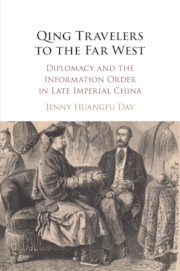
BOOK: Jenny HUANGFU DAY, Qing Travelers to the Far West. Diplomacy and the Information Order in Late Imperial China (Cambridge: University Press, 2020). ISBN: 9781108457729, £ 23.99

Qing Travelers to the Far West
(Source: CUP)

ABOUT THE BOOK

Prior to the nineteenth century, the West occupied an anomalous space in the Chinese imagination, populated by untamable barbarians and unearthly immortals. First-hand accounts and correspondence from Qing envoys and diplomats to Europe unraveled that perception. In this path-breaking study, Jenny Huangfu Day interweaves the history of Qing legation-building with the personal stories of China's first official travelers, envoys and diplomats to Europe. She explores how diplomat-travelers navigated the conceptual and physical space of a land virtually unmapped in the Chinese intellectual tradition and created a new information order. This study reveals the fluidity, heterogeneity, and ambivalence of their experience, and the layers of tension between thinking, writing, and publishing about the West. By integrating diplomatic and intellectual history with literary analysis and communication studies, Day offers a fundamentally new interpretation of the Qing's engagement with the West.

ABOUT THE AUTHOR

Jenny Huangfu Day is Assistant Professor of History at Skidmore College, New York.

TABLE OF CONTENTS

List of figures
Acknowledgments
Introduction
1. The traveler
2. The envoy
3. The student
4. The scholar
5. The diplomat
6. The strategist
Epilogue
Appendix 1. Zhigang's passage on the White House visit in the 1877 and 1890 editions
Appendix 2. Selected passages that appeared in the Chushi taixi jiyao (1890) but not in the Chushi taixi ji (1877)
Glossary
Bibliography
Index.


More information with the publisher.

23 June 2020

BOOK: Nicolas DROCOURT & Élisabeth MALAMUT (Eds.), La diplomatie byzantine, de l’Empire romain aux confins de l’Europe (Ve-XVe s.)(Leiden: Brill, 2020). ISBN: 9789004431805, €121.00

La diplomatie byzantine, de l'Empire romain aux confins de l ...
(Source: Brill)

ABOUT THE BOOK

Series: The Medieval Mediterranean, Volume: 123

In La Diplomatie byzantine, de l’Empire romain aux confins de l’Europe (Ve-XVe s.), twelve studies explore from novel angles the complex history of Byzantine diplomacy. After an Introduction, the volume turns to the period of late antiquity and the new challenges the Eastern Roman Empire had to contend with. It then examines middle-Byzantine diplomacy through chapters looking at relations with Arabs, Rus’ and Bulgarians, before focusing on various aspects of the official contacts with Western Europe at the end of the Middle Ages. A thematic section investigates the changes to and continuities of diplomacy throughout the period, in particular by considering Byzantine alertness to external political developments, strategic use of dynastic marriages, and the role of women as diplomatic actors. 

Contributors are are Jean-Pierre Arrignon, Audrey Becker, Mickaël Bourbeau, Nicolas Drocourt, Christian Gastgeber, Nike Koutrakou, Élisabeth Malamut, Ekaterina Nechaeva, Brendan Osswald, Nebojša Porčić, Jonathan Shepard, and Jakub Sypiański.

ABOUT THE EDITORS

Nicolas Drocourt is an Associate Professor of Medieval history at the University of Nantes. He published Diplomatie sur le Bosphore. Les ambassadeurs étrangers dans l’Empire byzantin des années 640 à 1204 (Leuven, 2015), and numerous articles on Middle Byzantine diplomacy. He also edited or co-edited different volumes on medieval diplomacy, notably La figure de l’ambassadeur entre mondes éloignés (XIe-XVIe siècle) (Rennes, 2015) and Themis en diplomatie. Le droit et les arguments juridiques dans les Relations internationales de l’Antiquité tardive à la fin du XVIIIe siècle (Rennes, 2016). He is currently working on the co-edition of Byzantium and the Latin West (860-1204), to be published by Brill.

Élisabeth Malamut is Professor Emeritus of the University of Aix-Marseille. She is a specialist in the Byzantine Empire. Her research interests focus on island and urban history, holy monks and travelers, diplomatic and cultural relations and on women, especially empresses. She is the author of Les îles de l’Empire byzantin, VIIIe-XIIe s. (Paris, 1988), Sur la route des saints byzantins (Paris, 1993), Alexis Ier Comnène (Paris, 2007). She is currently working on the history of the Byzantine Empire to be published by Humensis.

TABLE OF CONTENTS

Liste des Illustrations
Liste des Contributeurs
Introduction
        Nicolas Drocourt

Part 1 ère ie: Une diplomatie en transition ( V e– VI e siècle)
1. From Hegemony to Negotiation: Reshaping East Roman Diplomacy with Barbarians during the 5th Century
           Audrey Becker
2. Collusion on the Eastern Front: The Strange Cases of Constantine of Theodosiopolis and Theodorus of Martyropolis
           Ekaterina Nechaeva

Part 2 ème ie: Rechercher et identifier les acteurs de la diplomatie médio-byzantine
3. Photius entre l'Assyrie et al-Andalus - Jakub Sypiański
4. Le traité byzantino-russe de 944, acte fondateur de l’État de la Kievskaja Rus’ ?
           Jean-Pierre Arrignon
5. À propos des formules protocolaires concernant les Bulgares dans le Livre des Cérémonies : réception et correspondance
            Élisabeth Malamut

Part 3 ème ie: Le poids de l’Occident dans la diplomatie byzantine aux XIII e– XV e siècles
6. Le traité de 1279 entre Charles d’Anjou et Nicéphore Ier d’Épire
    Brendan Osswald
7. Changes in Documents of the Byzantine Chancery in Contact with the West (Michael VIII and Andronikos II Palaiologos). Language, Material, and Address
    Christian Gastgeber
8. Manuel II Paléologue en Occident (1399–1402) : la perspective de l’échec confrontée aux sources
    Mickael Bourbeau

Part 4 ème ie: Permanences et mutations. Le temps long de la diplomatie
9. The Emperor’s Long Reach: Imperial Alertness to ‘Barbarian’ Resources and Force Majeure, from the Fifth to the Fifteenth Centuries
    Jonathan Shepard
10. Permanence and Change in Serbian Medieval Diplomacy
    Nebojša Porčić
11. Summit Diplomacy with a Female Face: Women as Diplomatic Actors in Byzantium from the 11th to the 15th century
    Nike Koutrakou
12. Les Alliances matrimoniales dans la diplomatie byzantine du 8e au 15e siècle : une stratégie dynastique revisitée sur la longue durée
    Élisabeth Malamut

Index


More information here.

04 June 2020

JOURNAL: Diplomatica (Vol. II, Issue 1)


(Source: Brill)

Diplomatica has published the first issue for its 2020 volume, with a focus on the history of business diplomacy. The table of contents here:
  
Multinational Corporations as Diplomatic Actors: an Exploration of the Concept of Business Diplomacy
By: Huub Ruël
Pages: 1–12
  
Business Diplomacy from an IR Perspective
By: Niels van Willigen
Pages: 13–19
  
Early Modern Business Diplomacy: an Appraisal
By: Cátia Antunes
Pages: 20–27
  
  
The Dutch East India Company and Business Diplomacy
By: Adam Clulow and Tristan Mostert
Pages: 28–38
  
  
Trading Companies and Business Diplomacy in the Early Modern World
By: David Veevers and William A. Pettigrew
Pages: 39–47
  
  
Business and Diplomacy in the Twentieth Century: a Corporatist View
By: Thomas David and Pierre Eichenberger
Pages: 48–56
  
  
Merely “Ad hoc” Diplomacy? A Global Historical Comparison of Early Modern Japanese–Spanish and Qing-Russian Foreign Relations
By: Birgit Tremml-Werner and Lisa Hellman
Pages: 57–78
  
  
Private Diplomacy and Dutch Foreign Relations: the Rijkens Group and the West New Guinea Dispute 1949–62
By: David Verster
Pages: 79–99
  
  
“India Looks at the World”: Nehru, the Indian Foreign Service & World Diplomacy
By: Swapna Kona Nayudu
Pages: 100–117
  
  
Russian Science Diplomacy
By: Olga Krasnyak
Pages: 118–134
  
  
“A Number One Diplomatist”: Josephine McNeill, Ireland’s Minister to the Netherlands, 1950–55
By: Michael Kennedy
Pages: 135–144
  
  
The Slow Ascent of Women in Dutch Diplomacy: the Case of Maria Witteveen
By: Marc Dierikx
Pages: 145–153
  
  
Women in Diplomacy: the Equality Agenda
By: Anne Barrington
Pages: 154–162
  
  
Informal Alliance: The Bilderberg Group and Transatlantic Relations During the Cold War, 1952–1968, written by Thomas W. Gijswijt, 2019
By: Dino Knudsen
Pages: 163–166
  
  
La missione di Decio Francesco Vitelli nella storia della nunziatura di Venezia: Dai primi incarichi alla guerra di Castro (1485–1643), written by Marco Albertoni, 2017
By: John Condren
Pages: 167–168
  
  
Preventing Palestine. A Political History from Camp David to Oslo, written by Seth Anziska, 2018
By: Lorena De Vita
Pages: 169–171
  
  
Diplomacy in the 21st Century: A Brief Introduction, written by Paul Sharp, 2019
By: Alison Ruth Holmes
Pages: 172–173
  
  
The Institution of International Order: From the League of Nations to the United Nations, edited by Simon Jackson and Alanna O’Malley, 2018
By: Quincy Cloet
Pages: 174–176
  
  
Enemy Number One: The United States of America in Soviet Ideology and Propaganda, 1945–1959, written by Rósa Magnúsdóttir, 2018
By: Marsha Siefert
Pages: 177–179
  
  
International Development: A Postwar History, written by Corinna R. Unger, 2018
By: David Webster
Pages: 180–182
  
  
Announcement: The Mattingly Prize
Pages: 183

More info here

11 May 2020

BOOK: Stefano MANNONI, Da Vienna a Monaco (1814-1938). Ordine europeo e diritto internazionale (Torino: Giappichelli, 2019). ISBN: 9788892120426, pp. 256, € 25,00

Da Vienna a Monaco (1814-1938)


ABOUTTHE BOOK

Saggio di storia del diritto internazionale, questo contributo ruota intorno alla questione del rapporto tra la ricerca dell’ordine europeo e l’adozione del diritto come semantica delle relazioni internazionali. I due temi sono intrecciati poiché tratto saliente dell’esperienza europea è stato quello di avere tentato di costruire l’ordine in un sottile rapporto tra diritto e politica.
Era pertanto inevitabile che l’itinerario partisse dal Congresso di Vienna, momento fondatore tanto del Concerto europeo che della centralità del droit de gens, si snodasse lungo le convulsioni di fine Ottocento, attraversasse la Grande Guerra e la creazione della Società delle Nazioni, per approdare infine al capolinea della diplomazia continentale, ossia l’effimero patto di Monaco del 1938. Adottando il lessico tipico delle relazioni internazionali si direbbe che le fasi di questa vicenda sono quattro: equilibrio, deterrenza, sicurezza collettiva e di nuovo, per pochissimo, equilibrio.
Il diritto internazionale è stato, volta a volta, con i suoi istituti, istituzioni e dottrina, partner, comprimario, protagonista e , melanconicamente, succube. Malgrado però gli alti e bassi delle sue fortune, il diritto internazionale ha conosciuto una crescita e uno sviluppo senza precedenti che ne fanno a pieno titolo uno degli elementi qualificanti della identità europea, di oggi come di ieri.

ABOUT THE AUTHOR

Stefano Mannoni Professore ordinario di storia del diritto all’Università di Firenze. Ha scritto sulla storia del diritto internazionale "Potenza e ragione. La scienza del diritto internazionale nella crisi dell’equilibrio europeo", Milano, 1999.

TABLE OF CONTENTS

A pdf version of the the index can be download here


More information here


22 April 2020

BOOK: Leonard V. SMITH, Sovereignty at the Paris Peace Conference of 1919 (Oxford: University Press, 2018). ISBN: 9780199677177, pp. 304, £36.99

Cover for 

Sovereignty at the Paris Peace Conference of 1919
(Source: OUP)

ABOUT THE BOOK

We have known for many decades that the Paris Peace Conference of 1919 "failed", in the sense that it did not prevent the outbreak of World War II. This book investigates not whether the Paris Peace Conference succeeded or failed, but the historically specific international system it created. It explores the rules under which that system operated, and the kinds of states and empires that inhabited it. Deepening the dialogue between history and international relations theory makes it possible to think about sovereignty at the Paris Peace Conference in new ways. Sovereignty in 1919 was about not just determining of answers demarcating the international system, but also the questions. Sovereignty in 1919 was about remaking the world.
Most histories of the Paris Peace Conference stop with the signing of the Treaty of Versailles with Germany on 28 June 1919. Sovereignty at the Paris Peace Conference of 1919 considers all five treaties produced by the conference as well as the Treaty of Lausanne with Turkey in 1923. It is organized not chronologically or geographically, but according to specific problems of sovereignty. A peace based on "justice" produced a criminalized Great Power in Germany, and a template problematically applied in the other treaties. The conference sought to unmix lands and peoples in the defeated multinational empires by drawing boundaries and defining ethnicities. The conference sought not so much to oppose revolution as to instrumentalize it in the new international system. The League of Nations, so often taken as the supreme symbol of the failure of the conference, is better considered as a continuation of the laboratory of sovereignty established in Paris.

ABOUT THE AUTHOR

Leonard V. Smith is Frederick B. Arz Professor of History at Oberlin College, Ohio. He has previously written extensively about France and the Great War. His first book, Between Mutiny and Obedience: The Case of the French Fifth Infantry Division During World War I (1994) won the Paul Birdsall Prize from the American Historical Association. France and the Great War, 1914-1918 (co-authored with Stéphane Audoin-Rouzeau and Annette Becker, 2003) won the Norman B. Tomlinson Prize from the Western Front Association. Smith is also the author of The Embattled Self: French Soldiers Testimony of the Great War (2007).

TABLE OF CONTENTS

Introduction: The Riddles of Sovereignty at the Paris Peace Conference
1: The Agents and Structures of Peacemaking
2: The Sovereignty of Justice
3: The "Unmixing" of Lands
4: The "Unmixing" of Peoples
5: Mastering Revolution
6: Sovereignty and the League of Nations, 1920-1923
Conclusion: History, IR, and the Paris Peace Conference

More information here

21 April 2020

BOOK: Alison CARROL, The Return of Alsace to France, 1918-1939 (Oxford: University Press, 2018). ISBN: 9780198803911, pp. 248, £60.00

Cover for 

The Return of Alsace to France, 1918-1939
(Source: OUP)

ABOUT THE BOOK

In 1918, the end of the First World War triggered the return of Alsace and Lorraine to France after almost fifty years of annexation into the German Empire. Enthusiastic crowds in Paris and Alsace celebrated the return of the 'lost provinces,' but return proved far more difficult than expected. Over the following two decades, politicians, administrators, industrialists, cultural elites, and others grappled with the question of how to make the region French again. Differences of opinion emerged, and reintegration rapidly descended into a multi-faceted struggle as voices at the Parisian centre, the Alsatian periphery, and outside France's borders offered their views on how to introduce French institutions and systems into its lost borderland. Throughout these discussions, the border itself shaped the process of reintegration, by generating contact and tensions between populations on the two sides of the boundary line, and by shaping expectations of what it meant to be French and Alsatian.
Borderland is the first comprehensive account of the return of Alsace to France which treats the border as a driver of change. It draws upon national, regional, and local archives to follow the difficult process of Alsace's reintegration into French society, culture, political and economic systems, and legislative and administrative institutions. It connects the microhistory of the region with the 'macro' levels of national policy, international relations, and transnational networks, and with the cross-border flows of ideas, goods, people, and cultural products that shaped daily life in Alsace as its population grappled with the meaning of return to France. In revealing the multiple voices who contributed to the region's reintegration, it underlines the ways in which regional populations and cross-border interactions have forged modern nations.

ABOUT THE AUTHOR

Alison Carrol is Senior Lecturer in European History at Brunel University, London. She has published on questions of borders and integration in modern French history, and in 2010 she was awarded the Etienne Baluze prize in European local history. This is her first book.

TABLE OF CONTENTS

Introduction
1: A Bridge Across the Rhine
2: Remaking French Alsace: Citizenship, Administration, and Laws
3: Borderland Politics
4: Economic Reintegration
5: Reimagining Alsatian Culture
6: The Border Landscape
Conclusion

More information here


14 February 2020

BOOK: Vincent K.L. CHANG, Forgotten Diplomacy, The Modern Remaking of Dutch-Chinese Relations, 1927–1950. Series: Studies on Modern East Asian History, Vol. 2 (Leiden/Boston: Nijhoff/Brill, 2019). ISBN: 9789004410701, € 149.00

Cover Forgotten Diplomacy
(Source Brill)


ABOUT THE BOOK

In this meticulously researched volume, Vincent Chang resurrects a near forgotten yet pivotal chapter of Dutch-Chinese ties to narrate how World War II, the civil war in China, and Indonesia’s decolonization redefined and remade this age-old bilateral relationship. 
Drawing on a unique range of hitherto unexplored archives, the book explains how China’s nascent rise on the global scene and the Netherlands’ simultaneous decline as a colonial power shaped events in Dutch-controlled Indonesia (and vice versa) and prompted a re-calibration of their mutual ties, culminating in the Netherlands’ recognition of the People’s Republic and laying the foundations for Dutch and Chinese policies through to the present. 
Offering insightful analyses of power dynamics and international law at the close of empire, this book is a critical resource for historians and China specialists as well as scholars of international relations.

ABOUT THE AUTHOR

Vincent K.L. Chang, PhD (2016), a Dutch lawyer and historian, is Associate Professor of History at Southwest University (China) specializing in modern Chinese history and diplomacy. He also teaches at Leiden University and serves as a fellow of the LeidenAsiaCentre.

TABLE OF CONTENTS

Contents
Acknowledgments
List of Tables
List of Plates
Note
Introduction
 1 Dutch Diplomatic History
 2 Chinese Diplomatic History
 3 Merging Histories
 4 Traits of Modern Dutch-Chinese Relations
 5 Aims, Arguments, and Organization of the Book

Part 1: Readjustment
1 Diplomatic Relations During the Prewar Years: 1927–1936
 1 International Context
 2 Development of Bilateral Ties
 3 Dutch Official Representation in China
 4 Chinese Official Representation in the Netherlands
 5 Conclusion
2 Remission of the Dutch Share in China’s Boxer Indemnity
 1 A Watershed Moment
 2 The Central Hydraulic Research Institute at Nanjing
 3 Life, Loss, and Lasting Friendship
 4 Effects and Significance
Plates 1–24

Part 2: Realignment
3 Diplomatic Relations during the War Years: 1937–1945
 1 International Context
 2 Development of Bilateral Ties
 3 Dutch Official Representation in China
 4 Chinese Official Representation in the Netherlands
 5 Conclusion
4 Abrogation of Dutch Extraterritorial Rights in China
 1 The System of Extraterritoriality in China
 2 Extraterritoriality and Dutch-Chinese Treaty Relations
 3 The Dutch-Chinese Treaty of
 4 Effects and Significance
Plates 25–45

Part 3: Reset
5 Diplomatic Relations during the Postwar Years: 1946–1950
 1 International Context
 2 Development of Bilateral Ties
 3 Dutch Official Representation in China
 4 Chinese Official Representation in the Netherlands
 5 Conclusion
6 Recognition of the People’s Republic of China
 1 Early Encounters
 2 The Path to Recognition
 3 Rationales, Response, Result
 4 Effects and Significance

Conclusion
 1 Change and Continuity
 2 Policies and People
 3 Power Dynamics
 4 Past and Present
 5 The Future Past
Appendix 1: Chronology of Major Events
Appendix 2: Overview of Senior Envoys, 1927–1950
Appendix 3: Exchange of Notes Dated 4 April 1933
Appendix 4: Joint Announcement Dated 15 February 1943
Appendix 5: Dutch-Chinese Treaty of 29 May 1945
Appendix 6: Notes on Recognition, March/April 1950
Bibliography
Index

More information here

17 January 2020

BOOK: Aryo MAKKO, European Small States and the Role of Consuls in the Age of Empire (Leiden/Boston: Nijhoff/Brill, 2019). ISBN: 9789004414372, € 145.00

Cover European Small States and the Role of Consuls in the Age of Empire
(Source: Brill)

ABOUT THE BOOK

In European Small States and the Role of Consuls in the Age of Empire Aryo Makko argues that Sweden and Norway participated in the New Imperialism in the late 18th and early 19th centuries through consular services. Usually portrayed as nations without an imperial past, Makko demonstrates that their role in the processes of imperialism and colonialism during that period can be understood by including consular affairs and practices of informal imperialism into the analysis. With this, he contributes to our understanding of the role of smaller states in the so-called Age of Empire. 

ABOUT THE AUTHOR

Aryo Makko, Ph.D. (2012), Stockholm University, is Associate Professor of History at that university and a Pro Futura Scientia Fellow at the Swedish Collegium for Advanced Study (SCAS). He is also a member of the Young Academy of Sweden.

TABLE OF CONTENTS

Acknowledgements 
List of Tables 
List of Abbreviations 
Introduction 
 1 Focus of This Book 
 2 Sources 
 3 Structure 
 4 Prior Research 
1 Power in the Age of Empire 
 1 Sweden-Norway during the Age of Empire: Shipping, Trade and Globalization 
 2 Trade, Diplomacy and Security? Consuls and Foreign Policy 
2 Years of Ambition, 1875–1884 
 1 The Consular Committee of 1875 and the Backlog of Reforms 
 2 Africa: Economic Stagnation and Mixed Courts 
 3 Eastern and Southern Asia: the “Opening” of a Continent 
 4 West Indies: Old Ambitions, New Realities 
 5 Conclusions 
3 Disillusionment and Years of Conflict, 1884–1905 
 1 The Consular Regulation of 1886 and Renewed Failures 
 2 After Berlin: the Scramble for Africa 
 3 Eastern and Southern Asia: Growth, Tension and Hesitation 
 4 West Indies: Colonial Periphery and Merchant Consuls 
 5 Conclusions 
4 From Informal Empire to Small State Realism, 1905–1914 
 1 Zero Hour: Reorganizing the Foreign Service 
 2 Africa: Maintaining the Status Quo 
 3 Eastern and Southern Asia: Concentrating Efforts 
 4 West Indies: Falling into Oblivion 
 5 Conclusions 
Conclusion 
Appendix 
Bibliography 
Index 

More information here


16 January 2020

JOURNAL: Diplomatic History (Vol. 44, Issue 1)


Oxford University Press has published a new issue of Diplomatic History. Here the table of contents:

CONTENTS
Diplomatic History Volume 44, Number 1, January 2020
PRESIDENTIAL ADDRESS
The Diplomat’s Two Minds: Deconstructing a Foreign Policy Myth 1
by Barbara Keys
ARTICLES
Stalin, Soviet Intelligence, and the Struggle for Iran, 1945–53 22
by Vladislav M. Zubok
Managing Imponderables: The Rise of U.S. Tourism and the
Transformation of German Diplomacy, 1890–1933 47
by Elisabeth Piller
Imperial Stepping Stone: Bridging Continental and Overseas Empire in
Alaska 76
by Michael A. Hill
Creating An American Culture Of Secrecy: Cryptography In
Wilson-Era Diplomacy 102
by Daniel Larsen
Anti-Nuclear Activism and Electoral Politics in the 1963 Test
Ban Treaty 133
by Mark Eastwood
BOOK REVIEWS
Constructing American Alienage 157
by Yucheng Qin
The Shah’s Tears 160
by Nathan J. Citino
Seeing Spaceship Earth 163
by Stephen Macekura
William Walker, Liberal Imperialist 165
by Kevin Coleman
Internationalism and Indian Independence 168
by Andrew Muldoon
Kaunda’s Diplomacy 170
by Amanda McVety
The View from Little Havana 173
by Jonathan C. Brown
Lawfare and the Debasement of Genocide 175
by Susan L. Carruthers
An Outpost of Progress 177
by Bruce Kuklick
Outside of the Bipartisan Consensus 180
by Michael Bowen

More info here