Search

Showing posts with label call for abstracts. Show all posts

30 June 2026

CALL FOR ABSTRACTS: 4rd Central and Eastern European Legal History Conference, University of Belgrade - Faculty of Law, 19-21 May 2027, Deadline for Applications: 15 December 2026

By ZoranCvetkovic - Own work, CC BY-SA 3.0, https://commons.wikimedia.org/w/index.php?curid=35741729


The Central and Eastern European Legal History Conference (CEELHC), first
organized in 2019 in Wien, second in 2023 in Budapest and again 2025 in Cracow,
will take place next year in Belgrade. It will be hostedat the Faculty of Law Belgrade
University.
 
We want to invite all interested scholars to take part in our conference. Registrations
is open to all reserchers who deal with Central and Eastern European legal history and
political doctrines. We ask you to submit only contributions that are thematically
relatred to the broadly conceived legal history of Central and Eastern Europe.
 
The conference language will be English and the conference fee is 200 EUR.
 
In addition, there will be an opportunitty to submit contributions to the journals:
“Annals of the Faculty of Law in Belgrade”, “Beiträge zur Rechtsgeschichte
Österreichs”, “Pázmány Law Review” and "Krakowskie Studia z Historii Państwa i Prawa".
Contributions will only be accepted in English.
 
We ask that you submit your proposal (abstract up to 300 words) by December 15 2026.
Information regarding the acceptance of proposal will be sent by the end of January
2027, at the latest.

Contact information: ceelhc2027@ius.bg.ac.rs

06 January 2026

CALL FOR ABSTRACTS: Annual Meeting of the American Society for Legal History (Banff, 12-14 NOV 2026); DEADLINE 24 MAR 2026

(image source: lawandhistoryreview)
 

The Program Committee of the American Society for Legal History invites proposals for the 2026 meeting to be held November 12-14 in Banff, Canada. Panels on any facet or period of legal history from anywhere in the world are welcome. We encourage thematic proposals that transcend traditional periodization and geography. The online portal will open in early January 2026. The deadline for Pre-Conference Symposia proposals is Friday, February 27, 2026. The deadline for all other submissions is Tuesday, March 24, 2026.

Panel proposals should include the following: a CV with complete contact information for each person on the panel, including chairs and commentators; 300-word (maximum) abstracts of individual papers; and a 300-word (maximum) description of the panel. Only complete panel proposals will be considered. All conference panel slots will be 90 minutes long.

Scholars looking to build a panel may post their potential paper topics here. We encourage individuals to peruse this spreadsheet to identify other scholars with common interests, beyond their familiar networks. Senior scholars who are willing to chair and/or comment on a panel may register their interest and availability here. All program participants must be current members of the Society by the date of the Annual Meeting. Information on how to build a successful panel can be found here. The Program Committee especially encourages panels that include participants from groups historically underrepresented in the organization, and that include participants who represent a diversity of rank, experience, and institutional affiliation.

Besides traditional panels featuring presentations of work in progress, the Program Committee welcomes other forms of structured presentation, such as a skills/pedagogical workshop (chair, 3-4 presenters) or a roundtable format (chair, 3-5 presenters).

In addition to the above formats, the Program Committee accepts proposals for the following three types of panels:

New Directions: The purpose of these panels will be to identify cutting-edge methodological and topical directions in legal history, to define new subfields, and/or generate dialogue among scholars whose recent books (published since 2023 or forthcoming) have tackled common historiographic questions. These panels may feature three to five authors of new books organized by theme, chronology, or methodology and may also include scholars writing review essays of a field, or others similarly positioned. For a panel featuring new books, the session abstract should include the author, title, publisher, and publication date for each proposed book. Please note that the Program Committee will devote only a very small number of sessions to this type of panel (likely 2-3) that are able to clearly develop broad analytical themes among the included monographs and that illuminate shifts in the “state of field” in a particular area rather than descriptions of the books themselves. The Program Committee will not accept proposals for “Author-Meets-Readers” panels for the 2026 meeting. Book authors are encouraged to apply for:  “Making Connections: New Works in Legal History.

Poster Presentations: This year’s Annual Meeting will dedicate space during the conference for poster presentations on any aspect of legal history in the main conference common area. Participants in the poster presentations will also join in a “lightning round” panel session to introduce their projects. Individuals interested in participating in this session should submit a short description of their project (up to 300 words) as well as a CV. Accepted participants will be asked to submit a poster design to the organizers by early October. Posters will be printed onsite.

Graduate Lightning Round: In this session, 8-10 graduate students briefly introduce their projects and receive feedback and questions from the audience. Interested graduate students should submit their CV and an abstract of their paper. Note that given the large size of the panel, an individual presenter in this session has much less time to present their work than in a traditional panel with 3-4 presenters.

Read more here.

17 July 2025

CALL FOR ABSTRACTS: Between State Authority and Legal Supremacy – (Legal) Historical Perspectives on Administrative Justice in Germany and Europe (Regensburg: University of Regensburg, 19-20 MAR 2026) [DEADLINE 5 OCT 2025]

(Image source: The organisers of the Conference)


The history of administrative jurisdiction is a central topic in the history of law and public administration, as well as in the political development of Germany and Europe.

Administrative courts play a significant role in overseeing state action and upholding the principles of the rule of law. Their origin, development and function reflect historical processes of transformation and are closely linked to social, political and legal change.

Since the 19th century, different forms of judicial oversight of administration have emerged across Europe within this context. This heterogeneity of administrative jurisdiction has proven particularly relevant in recent history, especially in light of the influence of European law on individual nation-states.

Since their inception, administrative courts have operated within multiple areas of tension, such as between the protection of individual rights and the objective oversight of legality. Moreover, the role of administrative courts also had to be renegotiated within the constitutional and judicial framework.

The planned research symposium offers an opportunity to present and discuss current research on this field.

A key aim is to foster interdisciplinary exchange and to open perspectives from legal history, administrative sciences, political science, history and related disciplines.

Various research approaches will be brought together, and a wide range of topics will be explored, including the legislative history at national and international levels, comparative law analyses of different systems of administrative justice, and the practical work of administrative courts, particularly through rulings and decisions.

In addition, the sociography of administrative judges as well as the impact of individual personalities is to be brought into focus.

Possible approaches to the topic include:

  • The emergence and development of administrative jurisdiction in Germany and other European countries
  • Comparative perspectives on administrative justice across different legal systems
  • The relationship between administrative courts and other courts, as well as their position within the constitutional framework
  • The influence of European law and European institutions on national systems of administrative justice
  • The impact of political, social, and economic upheavals on administrative jurisdiction
  • The role of administrative courts in the constitutional democracy

The conference theme is deliberately broad in scope and aims to open up various aspects and perspectives on the role of administrative jurisdiction in Germany and Europe.


Conditions of Participation:

This call for abstracts is specifically aimed at early-career researchers working within the relevant disciplinary fields. We therefore welcome submissions from students, doctoral candidates, postdoctoral researchers and scholars pursuing habilitation.

Each presentation will be allocated a 45-minute time slot, with the talk itself expected to last approximately 20 minutes, allowing ample time for subsequent discussion.


Submission:

Interested applicants are invited to submit an abstract (max. 500 words) along with a short academic CV (max. 1 page) by 5 October 2025 to michael.reichenthaler@jura.uni-regensburg.de.

Notification of acceptance will be provided by end of October 2025.


Event Details:

The symposium will take place on 19–20 March 2026 at the University of Regensburg. Participation and/or presentations may also be possible digitally upon prior arrangement.

Acommodation costs for the night of 19 to 20 March can be covered. At present, travel expenses of up to €100 per person can also be reimbursed.

Following the symposium, the publication of the contributions is planned with Rechtskultur Verlag.

Further information will be provided upon acceptance of the submissions.


Contact:

Michael Reichenthaler, Research Assistant

  • Chair of Civil Law, German and European Legal History and Canon Law (Prof. Dr. Martin Löhnig, University of Regensburg)
  • michael.reichenthaler[at]jura.uni-regensburg.de


28 October 2024

CALL FOR PAPERS: (De-/re-)constructions of International Law over Time and Space [Agora Panel Proposal, ESIL Annual Conference 2015] (Berlin, 10-13 SEP 2025) [DEADLINE 15 JAN 2025]


 Call for Expression of Interest

ESIL Interest Group on the History of International Law

Agora Panel Proposal for the ESIL Annual Conference 2025

  (De-/re-)constructions of International Law over Time and Space

Berlin, 10 to 13 September 2025

Submission deadline: 15 January 2025

The ESIL Interest Group on the History of International Law is preparing an Agora panel proposal on ‘(De-/re-)constructions of International Law over Time and Space for the 2025 ESIL Annual Conference “Reconstructing International Law” in Berlin, Germany. The outcome of the Agora proposal is uncertain, but the panel speakers will be invited to present at the interest group pre-conference workshop, if the conference organizers do not select the Agora proposal for the main stage.

Themes

This Agora aims to better understand the theme of ‘reconstructing international law’ from a historical perspective: (1) What have been the causes and reasons for (re-)constructions of international law in its history? (2) How has international law fared after past major systemic crises? (3) What can we learn from institutional and normative projects of (re-)constructing ‘new’ international law in the past?

Until modern times, international relations were determined by the good will of the sovereign and force played the dominant role in these relations. There has been no agreed definition as to when ‘international law’ exactly began, but it is generally agreed that (de-/re-)construction has been a common theme in the history of international law at various moments in time, with the Westphalian Peace of 1648 being marked as one of the most famous watershed moments. The subsequent transition from European public law to international law through colonial expansion was another important moment of territorial ‘reconstruction.’ Conversely, one might inquire about the extent to which decolonization and the admission of newly independent states has led to the ‘reconstruction’ of Eurocentric international law in the 20th century.

At the same time, reconstruction can be approached from an institutional perspective or through the historical expansion of the actors or sources of international law. One could also explore the (de-/re-) construction of international law through the rise and fall of its individual sub-disciplines or by looking at reconstruction within and across sub-disciplines. Apart from successful (de-/re-) construction, the failed attempts of various actors to (de-/re-)construct international law could provide important lessons about reform. In addition to the restructuring of international law in the history, we are also interested in papers discussing the restructuring of ‘the history of international law’ as a discipline, its theories, and methodologies.

The IG particularly encourages interdisciplinary research engaging with historical methods, such as the use of archives and other historical sources. Perspectives from underrepresented regions and critical scholars are particularly welcomed.

Submission procedure

Members of the HIL IG and other ESIL Members working on related topics are invited to express their interest in participating by sending to lamsh@vuw.leidenuniv.nl prior to the deadline the following documents:

-          An Abstract of no more than 400 words

-          Your curriculum vitae

-          Your short biography, indicating whether you are an ESIL member and whether you are applying for the ESIL Early-Career Scholar Prize

 Timeline

The deadline for expressing interest in the Agora panel proposal is 15 January 2025. We expect to inform successful applicants before 31 January 2025 if they will be part of the Proposal.

If you have any questions, feel free to contact Ocean: lamsh@vuw.leidenuniv.nl.

Please note that the Interest Group is prioritizing those who could present their papers in person. However, the Interest Group is unable to provide funding for travel and accommodation. Selected speakers will be expected to bear the costs of their own travel and accommodation. Some ESIL travel grants and ESIL carers’ grants will be available to offer partial financial support to speakers who have exhausted other potential funding sources.

Please see the ESIL website for all relevant information about the conference.

Conveners

Anastasia Hammerschmied – Florenz Volkaert - Jaanika Erne – Sze Hong Lam (Ocean)

16 July 2024

CALL FOR PAPERS: Residues and Innovations within Imperial Orders. Political Assemblies in Continental Europe, 1800-1850 (Warsaw: DHI, PAS, 23-24 JAN 2025); DEADLINE 31 AUG 2024


(image source: IHPAN)


Organizers: Piotr Kuligowski, Wiktor Marzec, Bartosz Dziewanowski-Stefańczyk Academic Committee: Marnix Beyen, Anna Grześkowiak-Krwawicz, Paulina Kewes, Judit Pál, Henk te Velde First Edition, 23-24 January 2025

The turn of the 18th and 19th centuries witnessed profound transformations in the political landscape of continental Europe, that might be dubbed a Napoleonic moment. Novel ideas regarding national community and state centralization led to the rapid decline of residual republican systems, including almost synchronous collapses of the Dutch Republic, Polish-Lithuanian Commonwealth, and Italian city-republics. Simultaneously, it paved the way for a new type of political assemblies representing a broader, modernly conceived nation, including the third estate. These newly established bodies often deviated from local political traditions, generating uncertainty but also stirring desire for change. These were, however, often created by politicians educated in the time of the 18th century ancien régime. The year 1815 marked a new wave of parliamentarization in Europe, guided by the provisions of the Congress of Vienna and subsequent treaties. Unlike in the Napoleonic era, the architects of the post- Viennese order sought to restore and adapt previously existing representative institutions.

Both pre- and post-Vienna political assemblies, characterized by limited sovereignty were integrated into a broader imperial orders but often situated in buffer zones of empires. While securing imperial rule in these diverse interfaces, these assemblies articulated national-revolutionary claims in times of upheavals and crises, which spurred on centrifugal forces. By comparing these assemblies in the context of their nascent parliamentary culture mixing old forms and innovative designs, a deeper understanding of imperial nexus of power sovereignty, and representation on heterogenous territories can be fostered.

In the first edition of the ‘Parliamentary Junctures in Continental Europe’ conference, we welcome submissions addressing various aspects of representative assemblies’ internal and external functioning during the first half of the nineteenth century. Exemplary areas of inquiry include, but are not limited to:

  • parliamentary rhetoric / discourse and concepts,
  • rearticulations of traditions,
  • procedural and conceptual innovations,
  • assemblies in interface peripheries and inter-imperial bids,
  • social composition of assemblies.

Particular attention will be given to political assemblies situated in imperial borderlands.

Submission deadline: August 31st, 2024

Please send the title, abstract (up to 300 words), and a short CV (one-two pages) at parljunctures@mail.com

Selection results: mid-September 2024

Venues:

  • German Historical Institute, Warsaw (23rd of January 2025)
  • Tadeusz Manteuffel Institute of History of the Polish Academy of Sciences, Warsaw (24th of January 2025)

Practicalities: The conference organizer will provide accommodation to all participants. If necessary, travel expenses may be covered up to 300 EUR. The conference results will be published in the form of a special issue of a respected journal in the field (in English). Participants are expected to circulate drafts of their papers at least two weeks before the workshop.

Read more here.

24 May 2023

CALL FOR PAPERS: International Law – Its Heritage as a Response to Modern Problems - Łódź, 16 and 17 May 2024 (DEADLINE: 30.09.2023)


The Chair of International Law and International Relations and the Centre for Anglo-American Legal Tradition of the University of Lodz invites you to participate in the conference "International Law – Its Heritage as a Response to Modern Problems" that will take place 16-17 (Thursday-Friday) May 2024.

Conference’s mission

International law is constantly under attack for its unsuitability in the context of modern international relations and its challenges, the war in Ukraine being one of the most recent and tragic examples. From theoretical negators to cynical politicians, it is said that it is tiger without fangs and claws. Simultaneously, different bodies are constantly searching for new instruments to ensure the stability of today’s world embodied in the rule of law.

We believe, however, that the international legal community already has the answers to this problem, and that there is no need for a revolution. That response is international law’s greatest strength, i.e. its heritage, deeply rooted in legal tradition and consciousness of humans. Whether embodied either in treaties, customary law, or general rules recognised by the civilised nations it bears its values stemmed from the historical experience of nations.

The subject itself is broad but we would like to suggest some key issues that can be discussed during the conference. Among them are: (1) rule of law, (2) constitutional values of states, (3) human rights, (4) war crimes, (5) international justice, (6) influence of national or local laws, (7) protection of national interests v. global governance. However, we are not limiting the scope of proposed papers to the above-mentioned themes.

Because the theme of the conference is so wide and interdisciplinary, we are looking forward to welcoming in Lodz the broadest possible range of scholars, including international lawyers, both scholars and practitioners, legal historians, sociologists of law, specialists in political studies and international relations and more. Especially warmly, we invite young and early career scholars.

Professor Fernanda Pirie (University of Oxford), Professor Malgosia Fitzmaurice (Queen Mary University of London), and Professor Joseph H.H. Weiler (New York University School of Law) have already generously agreed to participate as key speakers at the conference.

Application

Applications can be submitted until 30 September 2023. It should contain:

• Name and surname

• Affiliation

• Short abstract (max 500 words)

• Author’s decision regarding paper / poster form of presentation (posters are predominantly recommended for Young and Early Career Scholars)

The Scientific Committee reserves its right to decide about the final programme until 31 October 2023. Authors of the accepted applications will be asked then to prepare longer abstracts (up to 1500 words) which will be collected in the Book of Abstracts (published by the end of January 2024).

Contact email: Anglo-AmericanLT@uni.lodz.pl

Call for papers: here.

Center for Anglo-American Legal Tradition website.

05 May 2023

CALL FOR ABSTRACTS: Critical Conversations: Teaching and Creating Community in Difficult Times (DEADLINE 27 MAY 2023)

 Critical Conversations: Teaching and Creating Community in Difficult Times

  H-Net’s theme for this year’s conference, “Critical Conversations: Teaching and Creating Community in Difficult Times,” will resonate with teachers at all levels of the educational system and especially those in the humanities and social sciences. In an era when educators are under assault for teaching Critical Race Theory, implementing Diversity, Equity, and Inclusion initiatives, and subjected to various external forces regarding curriculum development, book bans, and course redesigns, this conference will be a gathering to navigate these challenges and discuss solutions and strategies in the face of threats to academic freedom. 

  We welcome individual, panel, and roundtable proposals on any and all aspects of teaching, including the scholarship of teaching and learning (SOTL), theories and methodologies, remote and hybrid learning, content and delivery, as well as combining research interests into the classroom for first-year students and non-majors. We also encourage those with unique classroom experiences or teaching methodologies to submit proposals for workshops to present their approach to teaching or discuss topics of note. 

  The conference will be held in a virtual format spread over the evenings (US central time zone) during the week of August 21. Presenters will be invited to opt-in to have their sessions recorded for future reference via the H-Net Commons. Selected presenters will be invited to publish their work in the H-Net Conference Proceedings publication.  

  All proposals should include a title, CVs, email addresses for all presenters, and abstracts of no more than 200 words. Submissions are encouraged to focus on any of the following themes:  

  1. Challenges and strategies for teaching humanities and social sciences at all levels;   
  2. Navigating the teaching, or the politics of, topics related to our contemporary environment, such as DEI, CRT, BIPOC, religious and ethnic themes, reproductive rights, LGBTQIA+, etc.
  3. Recommendations for specific strategies for success despite contemporary challenges.  

No pre-recorded sessions will be accepted. Please email submissions to H-Net Teaching Conference Committee at teach.history@mail.h-net.org by Saturday, May 27, 2023.  

(source: HNet)

19 December 2022

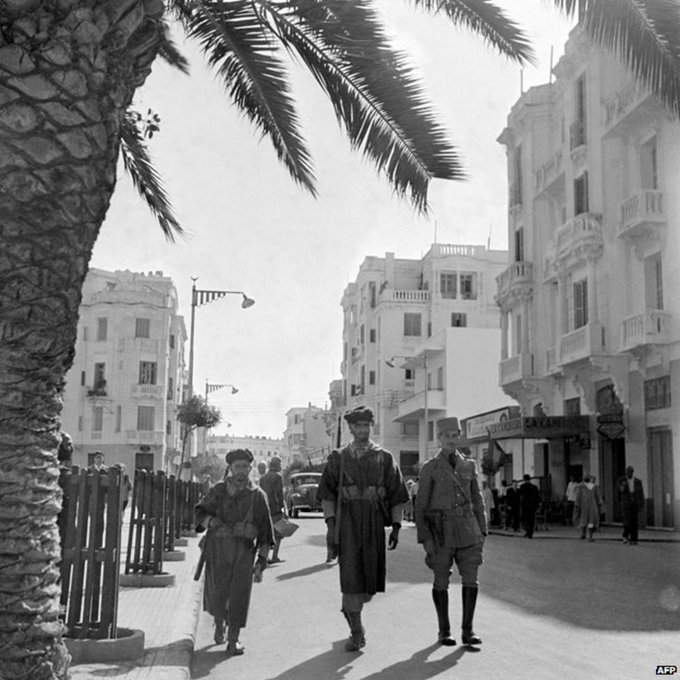
CALL FOR ABSTRACTS: Tangier Statute Centenary Conference (18 December 2023, Tangier) (DEADLINE: 15 May 2023)


(Source: Gavclaw.com)

We learned of a call for expressions of interest for a conference on the centenary of the Statute of Tangier. Here the call:

On 18 December 2023 (i.e. a year from now), Willem Theus (KU Leuven – UCLouvain), Dr Michel Erpelding (University of Luxembourg), Prof Dr Francesco Tamburini (University of Pisa), Prof Dr Fouzi Rherrousse (University of Oujda), and myself are organising a conference to celebrate the centenary of the Statute of Tangier, signed at Paris. Credit for kicking off the process goes to Willem.

This treaty, signed between France, Spain and the United Kingdom, and later joined by Sweden, Belgium, the Netherlands, Portugal and Italy, provided for the creation of a new legal entity: the International Zone of Tangier. Established by 1925, the Tangier Zone was formally an integral part of Morocco, but subject to a special regime that left most of its institutions under the joint administration of several Western powers. This special regime would last until Morocco’s independence in 1956, with some international elements remaining in place under a Royal Charter until 1960.

Thinking about the Zone triggers an extravaganza of thoughts on international commercial courts, conflict of laws, history of law and so much more. The call asks for papers on

The Politics of Individual Powers Towards/Within the Zone
Moroccan Attitudes and Policies Towards/Within the Zone and Its Institutions
The Interzonal and Foreign Relations of the International Zone17
Politics in the International Legislative Assembly
The Veto-Role of the Committee of Control
The Zone’s Legal System/Codes
The Operation, Case Law and Reforms of the Mixed Court
The Bar of the International Zone

Careers of Individual Lawyers/Officials/Businessmen/Intermediaries
The Tangier Banking System
The Ecclesiastical, Jewish and Sharia Courts
The Working and Case Law of the American Consular Court
The Spanish Civil War and its Impact on the Zone
The Architecture of the International Administrative Buildings of the Zone
Smugglers and the Law; and
The Legal System of the Transition Period (1956–1960)

The call and further details are available in ArabicEnglishFrenchItalian and Spanish.

(Source: Gavclaw.com)


07 October 2022

CALL FOR ABSTRACTS : The Forgotten Foundations of Feminist Legal Scholarship, Part 2: 1985-1995 (London/Zoom, 4 November 2022) (DEADLINE: 16 October 2022)


Via Criticallegalthinking, we learned of this call for paper proposals.

Contemporary feminist legal scholarship appears to have no history and almost no canonical texts. Unlike other fields in the humanities and social sciences, there has been an absence of interest in questions of feminist inheritance in law; a certain unwillingness to grapple with feminism’s intellectual and/or textual traditions. Individual studies, however radical or sophisticated in their orientation, appear to be situated in the ‘feminist present’ only, such that the past of legal feminism is void of any heritage worthy of being handed down. 

Yet despite this disregard or disavowal, contemporary feminist legal scholarship rests on the foundations of a corpus of post-war feminist texts. Those texts’ vital power shaped new, creative, and critical modes of thinking, new routes for understanding and reflection that challenged dominant thought inside and outside the academy. They animated multiple ways of revalorising lived experience and the subject’s embodied nature and in so doing raised radical questions about women’s social being. It is the forgetfulness of these earlier texts that these workshops wish to interrogate. The first workshop, held in Summer 2022, focused on feminist theoretical texts produced (mainly) in the years between 1970-1985. The second workshop, to be held in Autumn 2022, will focus on the body of new feminist, feminist legal, critical race feminist, postcolonial feminist and queer legal scholarship that emerged from the mid-1980s to early 1990s. 

In these two one-day workshops we wish to pose as a problem the present of feminist legal scholarship that has not only lost sight of most of these earlier texts, but has left this disconnection from its past to go entirely unnoticed. It is as if what credits feminist legal scholarship with contemporaneity is precisely the erasure of these earlier texts from its horizon. The questions to be addressed include: what is the position of these texts with regards to the present? How should we think of the feminist (legal) texts of the 1970s-90s today? How should we place our contemporary thought in relation to those texts?  How are we to receive these texts today? Why is it that feminist legal scholarship has developed no feminist canon or classical literature while continuing to reference/reverence the work of white male philosophers? In short, are we to reconnect and reconcile with the rich inheritance that feminist thought and practice of the ’70s, ’80s and ’90s has bequeathed us? Or should we continue to acknowledge as a sign of our contemporaneity the disjunction with our heritage? 

Call for Paper Proposals

Please send proposals of papers for the second workshop to Maria Drakopoulou (m.drakopoulou@kent.ac.uk) and/or Rosemary Hunter (r.c.hunter@kent.ac.uk). Proposals, including title and abstract of 150-300 words, should be submitted by 16 October 2022.

An indicative list of texts is attached although texts outside this list with justifications for inclusion are welcome.

Limited funding for travel costs may be available for research students and early career researchers. If you would need funding in order to attend, please let us know, with approximate cost, as soon as possible.

Workshop Organisers: Maria Drakopoulou and Rosemary Hunter.

Place: London in person + online for participants unable to travel

Date: 4 November 2022

05 October 2022

CALL FOR ABSTRACTS: Remapping Decisions: Splendid Encounters XI (Vienna, 27–28 April 2023) (DEADLINE: 15 October 2022)


(Source: RSA)

We learned of Call for Abstracts for a conference on diplomatic decision-making in the context of the multi-faceted political and cultural contacts between the Ottoman Empire and the rest of early modern Europe.

 The conference hosted by the Institute for Habsburg and Balkan Studies of the Austrian Academy of Sciences (IHB ÖAW) and the Institute for History of the Polish Academy of Sciences (IH PAN) seeks to examine the problem of diplomatic decision-making in the context of the multi-faceted political and cultural contacts between the Ottoman Empire and the rest of early modern Europe. Firstly, its main scope focuses on both power conflicts and conflict-management practice in Central Europe, Southeast Europe and the Mediterranean. In light of political actions, it shall also reflect the significance of cultural exchange in the directly affected regions, as well as the growing interest in the Ottoman Empire and the Near East in Europe. Secondly, in order to enrich this increasingly popular research field by new approaches, this event centers the procedure of decision-making which has been largely under-investigated in the field of European-Ottoman relations so far.

Splendid Encounters is a series of international and interdisciplinary conferences that aims to bring together scholars from different fields of study to consider diplomacy and diplomatic activities in the early modern period within the broadest possible framework. After nine successful meetings in, among others, Warsaw, Bath, Budapest, Prague, Toulouse, Florence and Lisbon we invite you to join us for another event, this time hosted by the Institute for Habsburg and Balkan Studies of the Austrian Academy of Sciences (IHB ÖAW) in Vienna.

View full CFP in a new window (PDF)

More info here

28 October 2021

CALL FOR PAPERS: International conference "(Un)fit to rule: themes of acceptance and rejection of rulers throughout history" - October 26th-28th, 2022 - The University of Belgrade Faculty of Law


(Source: University of Belgrade)


The University of Belgrade Faculty of Law is opening a CALL FOR PAPERS for the international conference "(Un)fit to rule: themes of acceptance and rejection of rulers throughout history" to be held on October 26th -28th, 2022.

In 2022, it will be 700 years since King Stefan Uroš III Dečanski ascended the Serbian throne in 1322. It was not a simple succession, though: he had unsuccessfully rebelled against his father, King Stefan Uroš II Milutin in 1314, and, as punishment, he was blinded and exiled. He was thus believed no longer to be a candidate for the throne, but his vision was miraculously restored (it is now believed that he was not blinded completely, if at all) and he managed to conquer the throne after his father's death. This anniversary presents an occasion for a comparative overview of requirements for a ruler – or, from a different angle, circumstances that made a person unfit to take the throne or govern a country.

Our anniversary first brings physical disabilities to the fore. These could have impeded potential rulers from assuming the reins of power simply because they were presumed to prevent one from being an efficient ruler, particularly in the periods when a monarch was also a military leader, but also (as a result of ideas widespread in Christian Europe) because of the idealised perception of a monarch as God's chosen representative on Earth who had to embody perfection. There are, however, well-known examples that speak to the contrary, such as Béla II of Hungary, Enrico Dandolo or John of Bohemia. An even more sensitive subject is that of mental disabilities, which were viewed as an even greater hindrance to effective rulership. In some countries, an heir with serious mental health issues would be ex lege disqualified from inheriting, while in some places, particularly in the Modern era, an extensive regency was considered better than a squabble over the throne. The reactions of other political figures to a ruler whose mental health was visibly deteriorating, and thus to the fate of his or her reign, also make for an interesting subject. 

The issue of gender must also be raised: while men were the default sovereigns in most countries of the world until well into the Modern Age, some countries accepted women on the throne when there was no suitable male heir; in some it was impossible and a more distant heir would be chosen. Finally, in some legal systems exceptional women did manage to rule, but had to go through a lot of effort to masculinize; their reign in order to be acceptable. Even in ancient Egypt, where women held a remarkably good legal position compared to the other polities of Antiquity, the first female pharaoh, Hatshepsut, dressed and talked like a man to legitimise her rule, and still her successor, Thutmose III, tried to wipe the account of her reign from the records afterwards.

A sovereign’s religion also played an important role. Whatever the dominant religion of the realm, the ruler was expected to be pious, and in some ancient societies was even deified: with such a position came strict standards of behaviour in accordance with religious doctrines. (Akhenaton’s failed attempt to change the ruling faith is widely known.) The need for the monarch (and often the royal consort and heir) to belong to the country’s ruling denomination became a given in the Middle Ages. However, as the Modern Age gradually brought religious freedom and pluralism, as well as a rise in atheism, such provisions began to face criticism – yet they still persist in many modern monarchies. Finally, ethnic background or nationality also plays an increasing role in modern societies, where it is set as a requirement for the ruler to belong to the nation being governed.

Just as all of these issues could present an obstacle to a person’s claim to rulership, so could most of them, too, serve as cause for one’s overthrow. A ruler who suffered a crippling injury or a debilitating illness, who converted to a different religion or was revealed to be a heretic, for example, could, and indeed frequently was deposed. The reasons behind this act, their legality and legitimacy could also be valuable subjects of research. Perhaps more intangible, but by no means less important for a potential ruler’s prospects for success, was his or her charisma. The uncharismatic candidate for power who otherwise fulfilled all formal requirements for rulership might nonetheless have been deemed less qualified than a ‘disabled’ rival who possessed that certain je ne sais quoi which appealed to his or her subjects. In this light, ‘qualified’ and ‘competent’ were not interchangeable criteria in judging one’s fitness to rule.

A final consideration in evaluating a candidate’s fitness for assuming the reins of power concerns how we as scholars attempt to discern contemporaneous criteria for exploring this question. Rules and requirements for exercising sovereignty were, especially in pre-modern societies, often unwritten, and instead relied on oral traditions – whether longstanding or recently invented – and precedents and examples were set by predecessors. The absence of formal, constitutional prerequisites for rulers does not mean that they did not exist in other forms. Evaluating fitness to rule throughout time therefore requires taking account of the broader political order, of ‘constitutions’ both written and unwritten.

We believe a comparative and multidisciplinary approach to these questions could yieldthe best results, and therefore we invite scholars from all fields of sciences and humanities(including, but not limited to, legal history, political science, theology, art history, medical history etc.) to submit their abstracts. We welcome papers dealing with all countries and historical periods, from Antiquity to the Modern Age, regardless of whether they focus on an individual legal system or adopt a comparative approach, whether they are of a broader scope or case-studies, etc.

> The conference language is English. Applications containing an abstract of 200 to 500 words and a short CV should be sent to un-fit.to.rule@ius.bg.ac.rs by the 31 st of December 2021

> Participants will be notified if their applications have been accepted by the end of January at the latest. 

> For more information, please inquire at the same address or consult the conference webpage (http://wp2008.ius.bg.ac.rs/un-fit-to-rule/) and Facebook page (https://www.facebook.com/un.fit.to.rule.2022/).

It is our desire to host the conference live at the University of Belgrade Faculty of Law and we hope that the current progress of the fight against the COVID-19 pandemic will allow that. However, a final decision will be made within a reasonable time before the conference. Even if the conference is held live, remote participation via video link will be possible. A book of abstracts will be published as an e-book (with ISBN) before the conference. An edited volume of peer-reviewed conference proceedings will be published after the conference; details will be available to the participants in due course.

16 January 2019

DEADLINE EXTENDED: Identity, Citizenship and Legal History. XXVth Annual Forum of Young Legal Historians (Brussels, 5-8 JUN 2019); DEADLINE 15 FEB 2019

Identity, Citizenship and Legal History

XXVth Annual Forum of Young Legal Historians
Brussels, 5 – 8 June 2019

(image source: Wikimedia Commons)

Historically, the concept of citizenship encompassed three distinct, yet interconnected dimensions. The first and foremost dimension was of a legal nature: citizenship was a legal status which allowed one to act freely in accordance with the law and, when necessary, to claim its protection. In its second dimension citizenship presupposed one’s active participation in society’s political institutions. And last, though certainly not least, citizenship was closely linked to membership of a specific community that provided a distinct source of identity. All three dimensions were closely related to each other. This can perhaps be most aptly exemplified in the ancient boast of ‘Civis romanus sum!’, which encapsulated simultaneously a plea for legal rights, a republican sense of duty, and a distinctly Roman feeling of the imperial pride. Since the nineteenth century, these dimensions have been linked predominantly to the modern nation-state, a model which is nowadays increasingly challenged on the internal as well as the external level. Internally, many states are seen to be struggling with federalism, separatist movements, legacies of colonialism and right-wing identity politics. Externally, today’s governments are confronted with issues, such as climate change, demographic shifts, migration streams and a global and interdependent economic system, that require international cooperation or even supranational institutions.

The XXVth Annual Forum of the Young Legal Historians aims to shed light on these questions by looking at the legal history of the closely intertwined concepts of citizenship and legal history. Throughout history, citizenship and identity has been defined in different ways and at different levels. For instance, in antiquity the often smallish Greek poleis could hardly be compared to the expansive Roman Empire. Medieval life in Europe consisted of a feudal patchwork of kingdoms, principalities and free city-states, yet all were considered part of Christendom. Identity could also be determined by social class (e.g. aristocratic families) or by profession (e.g. the guilds). The nineteenth century saw the rise of nationalism and revolution, whilst at the same time European powers expanded their colonial empires. Despite these evolutions, it cannot be denied that there is also much continuity to be found. Although diversity and globalisation have reached an unprecedented scale and form today, these phenomena are not entirely new. Each era has had its international relations, its trades, wars, economic discrepancies, migrants and refugees.

There is, in short, enough reason to expect that we can learn from history. Such an endeavour necessitates a multidisciplinary approach since legal constructions can be fully appreciated only when combined with insights from the related fields of history, philosophy, political science and sociology. Therefore, the organizers welcome both traditional approaches in legal history and methodologically innovative research.

If you would like to present a paper during the conference, please send an application including an abstract of not more than 250 words and your CV to aylh2019@gmail.com before 15 February 2019. It is also possible to apply for a full panel. In that case, your proposal should also include, in addition to individual paper proposals, an abstract introducing the theme of the panel. Presentations have to be in English and should not exceed 20 minutes each. The conference fee will be € 100,- and does not include accommodation. Further information about the upcoming forum can be found at the website of the conference. Information about the Association of Young Legal Historians and the past Annual Forums is available at the AYLH-website.


19 May 2018

REMINDER: JHIL Conference February 2019: Politics and the Histories of International Law (MPIL Heidelberg; DEADLINE 31 MAY 2018)


We have the following Call for Papers for a conference on “Politics and the Histories of International Law” by the Max Planck Institute for Comparative Public Law and International Law.

CONFERENCE THEME

L’histoire n’est pas une religion. L’historien n’accepte aucun dogme, ne respecte aucun interdit, ne connaît pas de tabous. Il peut être dérangeant. - LIBERTÉ POUR L’HISTOIRE, 2005

Almost all scholarship on international law and its history has political implications. Some say that international legal scholarship is inevitably ideological in nature and that its findings depend on concealed political preferences. Put differently, legal scholarship could be nothing more than the pseudo-objective defence of ruling ideologies. Most famously, Hans Kelsen had denounced a ‘tendency wide-spread among writers on international law’ to produce ‘political ideology’. Kelsen sought to escape this by writing books of a ‘purely juristic character’ (Principles of International Law, 2nd ed. 1967, ix). In his foreword to the commentary on the UN Charter of 1950, he stressed that ‘separation of law from politics in the presentation of national or international problems is possible’ (The Law of the United Nations, 1950, viii).

Many nowadays doubt that purging international legal scholarship of politics would work. In 2004, Martti Koskenniemi put this as follows: ‘The choice is not between law and politics, but between one politics of law, and another. Everything is at stake, but not for everyone’ (EJIL 16 (2005), 123).
So, which factors ‘politicise’ international legal scholarship? The first factor is that the object under investigation is itself a political matter. International law has throughout its history been political, because its content depends on the political power of the parties negotiating the treaties, and because it transports political values.

Scholars themselves cannot completely avoid being more or less political actors, because their value judgements, which are inescapable, often carry political implications. However, an important difference between doing scholarship and doing politics lies in the authors’ main intention: It is, ideal-typically, not the primary purpose of scholarship to make politics and unbounded evaluation but to generate knowledge − which could then be used politically, by the author herself or by others. Along this line, most scholars of history seek to uncover various aspects of past events and debates and to contextualise them, thereby realising a modicum of objectivity and neutrality. Some consciously try to avoid judgment, while others are more prone to judging deliberately and to employing historical insights in contemporary political debates.

Research on the history of international law is not only inherently political but moreover specifically ‘risk-prone’. Writing on topics such as genocide, state of exception, failed states, humanitarian intervention, asymmetrical war, or cyber-attacks is especially liable to being used and abused by participants in political controversies. In fact, when it comes to writing history, the fight over master narratives is especially fierce, among governments, in different academic camps, and between governments and academics. The notorious example are memory laws which consecrate specific views on atrocities of the past (especially genocidal massacres) and which sometimes additionally criminalise the denial of those atrocities. These attempts to close historical debates by law have been criticised by historians, most famously in the petition ‘Liberté pour l‘histoire’ by French historians reacting against various French memory laws.

To conclude, the interpretations of historical events are almost inescapably political, and potentially have the power to shape international relations: ‘On résiste à l’invasion des armées; on ne résiste pas à l’invasion des idées’ (Victor Hugo, Histoire d’un crime, 1877/2009, 639). It is against this background that the rights and responsibilities of those researching on the history of international law should be seen.

The JHIL invites scholars to engage with the questions of the role of politics and ideology in the historiographies of international law. We welcome propositions for papers which address methodological questions, as well as case studies or historiographical analyses that focus on certain contentious subjects within the field of international law and its history

PRACTICAL MATTERS

  • Date: The conference will last from Friday morning, 15 February to Saturday noon (16 February 2019). It will start with an informal get-together on Thursday evening, 14 February.
  • Venue: Max Planck Institute for Comparative Public Law and Public International Law, Im Neuenheimer Feld 535, D-69120 Heidelberg, Germany.
  • Scholars who would like to present a paper at the conference are invited to submit a title and abstract (250–500 words) to the managing editor of the JHIL (submissions.jhil@mpil.de) before 1 June 2018. Abstracts will be assessed by the editors of the JHIL with involvement of the journal’s Academic Advisory Board. A decision on acceptance of the abstract will be communicated by 1 July 2018.
  • Authors of accepted abstracts will be requested to submit their draft papers by 1 February 2019. The draft will be circulated among participants (authors and admitted engaged listeners).
  • Final versions of the papers will be due by 30 March 2019. Papers will then be submitted to the normal review procedure of the JHIL, online at: editorial manager.com/jhil.
  • See the “Instructions for authors” online at: brill.com/files/brill.nl/specific/ authors_instructions/JHIL.pdf.
  • The Max Planck Institute will cover the costs of the accommodation of accepted paper presenters (up to three nights) and will offer a needs-based subsidy towards travel costs.
  • An additional call for engaged listeners will be issued shortly.
  • For updated technical information on the conference see mpil.de/en/pub/ publications/periodic-publications/jhil.cfm.


For more information, please visit the website of the Max Planck Institute for Comparative Public Law and International Law