Search

Showing posts with label Latin America. Show all posts

02 April 2026

CHAPTER: Vanessa DAZA CASTILLO, María Daniela DÍAZ-VILLAMIL & Luis ESLAVA, "Colombia: A Material Legal Consciousness History of International Law", in: Liliana OBREGÓN-TARAZONA, Laura BETANCUR-RESTREPO, Juan Manuel AMAYA CASTRO & Daniel Ricardo QUIROGA-VILLAMARÍN (eds.), The Oxford Handbook of International Law and the Americas (Oxford: OUP, online)

(image: Universidad de Antioquia (izquierda), Medellín, Colombia. Plazuela San Ignacio. Detalle realizado antes de la gran reforma arquitectónica, dibujo hecho por los estudiantes de la Escuela de Minas en el siglo XIX; source: Wikimedia Commons)
 

Abstract:

This chapter traces the long-standing relationship between the international legal order and socio-legal, economic, and political arrangements in Colombia, from the colonial to the Republican period, to the present day. Grounded on Legal Consciousness Theory (LCT) and a material approach to history, the chapter demonstrates that international law—or more specifically, the international legal project—has never been foreign or alien to the country’s everyday life. International normative ideas on civility, diplomatic relations, borders, or rights have been mutually constituted with local developments and imaginaries in Colombia, across issues ranging from competing paradigms of state-building to access to contraception and legal abortion. The vibrancy of present international legal scholarship in Colombia reflects this dynamic and complex relationship between the international and the domestic, which the 1991 Constitution further brought to the surface.

Read the chapter here: DOI  10.1093/oxfordhb/9780197661062.013.39

12 May 2025

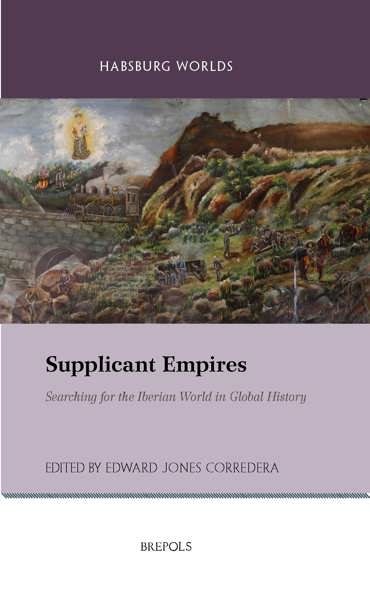
BOOK: Edward JONES CORREDERA (ed.), Supplicant Empires. Searching for the Iberian World in Global History [Habsburg Worlds] (Turnhout: Brepols, 2025), 250 p. ISBN 9782503611211


(image source: Brepols)

On the editor:

Is a Senior Research Fellow at the Max Planck Institute for Comparative Public Law and International Law (Heidelberg) and a Lecturer at the UNED (Madrid).

Table of contents:

Edward Jones Corredera (Max Planck Institute, Heidelberg, and UNED, Madrid)
Introduction: Who Prayed for the Iberian World? Incomparable Empires & Global History

Tamar Herzog (Harvard University)
Is Spain Exceptional? Reflections on Thirty Years of Research and Writing

Pedro Cardim (Universidade Nova de Lisboa)
Corporations, normative pluralism, and jurisdictions in early modern Iberia: The potential and the limitations of an interpretive framework

Marcos Reguera (Universidad del País Vasco)
From Manifest Destiny to “destino manifiesto”: the Hispanic Reception and Formulations of Manifest Destiny

Bethany Aram (Universidad Pablo de Olavide)
Comparative approaches to gender, ethnicity and empires: Britain & Spain

Marta Manzanares (Universidad Autónoma de Madrid)
Rethinking the Place of Sugar in Eighteenth-Century Spain

Fabien Montcher (University of St. Louis)
Imperial Blind Spots: Indeterminacy and Thickness across the Iberian Monarchies

David Martín Marcos (UNED)
Rustics and Barbarians: Otherness and Counter-hegemony in the Early Modern Iberian World

Interviews:

Bartolomé Yun-Casalilla (Universidad Pablo de Olavide), Amanda Scott (Pennsilvania State University), Juan Pimentel (CSIC), José Maria Portillo (Universidad del País Vasco), Maria Gago (European University Institute), Javier Rodríguez (Universidad Autónoma de Madrid), and Thiago Krause (Wayne State University)

 Read more here.

09 June 2023

CALL FOR PAPERS: Revista Relaciones estudios de Historia y Sociedad. Número temático "Ocupación, posesión y administración de la tierra en los mundos ibéricos: una perspectiva desde los actores" (DEADLINE: June 30, 2023)

(Image source: Scielo)


Número temático "Ocupación, posesión y administración de la tierra en los mundos ibéricos: una perspectiva desde los actores"

El presente número temático tiene el objetivo de analizar las relaciones entre tierras y actores históricos en los imperios ibéricos. Para ello, pretende alejarse de una perspectiva centrada en la legislación regia, la doctrina jurídica y las teorías sobre la propiedad. Y es que, si bien permite entender cómo las nociones de propiedad se fueron definiendo históricamente, dicho enfoque deja de lado el análisis de las condiciones sociales concretas en que aquellos procesos tuvieron lugar y dieron una substancia propia al andamiaje teórico-legal.

De hecho, la posesión de la tierra no solo estaba regulada por la doctrina, las leyes, las costumbres y la gracia real, sino que estaba estrechamente vinculada con los cuerpos sociales y con los lazos familiares locales. Es posible entender la regulación del acceso a la tierra como la combinación entre aquellos diversos órdenes normativos. Esta perspectiva permite entender al derecho y la doctrina jurídica como dos componentes más de un complejo y dinámico conjunto de prácticas, instituciones y normas sociales, religiosas y culturales que brindaron solidez y validez a ciertos órdenes normativos en determinados momentos. Tal perspectiva requiere que historiadores e historiadores del derecho interesados por la regulación del acceso a la tierra en diversas regiones del mundo ibérico le presten atención a cómo la combinación de aquellos factores produjo prácticas específicas en la posesión, reparto, ocupación y regulación de la tierra y en la forma en que los conflictos fueron adjudicados judicialmente. 

El presente dossier contempla las siguientes temáticas:

  • Reflexión sobre las condiciones sociales concretas en que se fraguan la legislación regia, la doctrina jurídica y las teorías sobre los derechos al acceso a la tierra.
  • Análisis y descripción de la variedad de fuentes que permiten comprender los mecanismos de ocupación y uso de la tierra en los imperios ibéricos.
  • Atención peculiar prestada al papel específico desempeñado por los cuerpos políticos y sociales (cabildos, etc.) y por la movilización de lazos familiares locales en el acceso a la tierra.
  • Reflexión sobre la dimensión ritual que entrañaba la posesión de la tierra con prácticas que se desarrollaban en “relación concreta con espacio físico” reclamado y sobre las referencias a conceptos como el “bien común” o el “carácter inmemorial” del uso de la tierra.

Para evitar la duplicidad de contenido, comuníquese con los editores del número para informarle sobre su interés en enviar un manuscrito. Se aconseja enviar sus trabajos lo antes posible, con preferencia antes del 30 de junio de 2023, aunque la convocatoria seguirá abierta mientras esté anunciada en el portal de Relaciones Estudios de Historia y Sociedad.

Para asegurar la pertenencia al número temático, los artículos deberán anteponer el prefijo TMI al título del manuscrito. E.g., “TMI_Tierras y conflictos en los mundos ibéricos”.

Los Artículos originales que se reciban para su posible publicación deberán tener una extensión de entre 45 mil y 60 mil caracteres con espacios; los Ensayos teóricos y de revisión deberán tener una extensión de entre 25 mil y 30 mil caracteres con espacios. El formato de citación es con APA Séptima edición. Por favor consulte el resto de las directrices para autor en la página de la revista: https://www.revistarelaciones.com

No dude en ponerse en contacto con los editores de este número especial si tiene preguntas relacionadas con el tema.

Todos los manuscritos deben someterse directamente a través del sistema OJS de la Revista Relaciones y no a los editores del número temático. Relaciones reconoce la entrega del manuscrito solamente a través del gestor OJS. Usted debe recibir acuse de recibo de su manuscrito dentro de pocos días. En caso de no recibirlo dentro de una semana, favor de comunicarse con Relaciones para verificar la llegada de su manuscrito.

Cualquier duda relacionada con aspectos técnicos, puede manifestarla a: relacion@colmich.edu.mx, anteponiendo el prefijo TMI al encabezado del mensaje.


Editores del número:

  • Manuel Bastias Saavedra (Leibniz Universität Hannover)
  • Caroline Cunill (EHESS/CERMA)


More information can be found here.

22 March 2023

BOOK: Adrian MASTERS, We, the King: Creating Royal Legislation in the Sixteenth-Century Spanish New World (Cambridge: Cambridge University Press, 2023), 342 pp., ISBN 9781009315418, £85


(image courtesy: Cambridge University Press)

Book description: 
We, the King challenges the dominant top-down interpretation of the Spanish Empire and its monarchs' decrees in the New World, revealing how ordinary subjects had much more say in government and law-making than previously acknowledged. During the viceregal period spanning the post-1492 conquest until 1598, the King signed more than 110,000 pages of decrees concerning state policies, minutiae, and everything in between. Through careful analysis of these decrees, Adrian Masters illustrates how law-making was aided and abetted by subjects from various backgrounds, including powerful court women, indigenous commoners, Afro-descendant raftsmen, secret saboteurs, pirates, sovereign Chiriguano Indians, and secretaries' wives. Subjects' innumerable petitions and labor prompted – and even phrased - a complex body of legislation and legal categories demonstrating the degree to which this empire was created from the “bottom up”. Innovative and unique, We, the King reimagines our understandings of kingship, imperial rule, colonialism, and the origins of racial categories.
Table of contents: 
List of figures
List of tables
Acknowledgments
Prelude: A Peruvian pestizo at the Spanish Court
Introduction: the collective making of an empire
1. Paper ceremonies for a global empire: Gobierno petitions and the collective work of Voluntad
2. The co-creation of the Imperial Logistics Network
3. Distant kings, powerful women, prudent ministers: the gendered creation of the Council of the Indies
4. Lawmaking in a portable council: Gobierno decision-making technologies before 1561
5. 'Bring the Papers:' Royal decision-making and the power of archives in Madrid, 1561–1598
6. Creating the royal decree: format, phraseology, and petitioners' transformation of Indies law
7. Pedro Rengifo's epilogue: subjects of chance
Conclusions
Index.
About the author: 
Adrian Masters is Director of the University of Trier's GloVib: Global Entanglements Project. Raised in rural Costa Rica, he has written several award-winning articles on Spanish imperial history.
More information can be found here

13 October 2021

BOOK: Ana María SERNA, Dolo y Malicia. Regulación del lenguaje, criminalización del periodismo y libertad de expresión en México, 1901-1931 [Historia del Derecho en América Latina] (Valencia: Tirant lo Blanch, 2021), 386 p., ISBN 9788413552569

 
(image source: Tirant lo Blanch)

Book abstract:

Durante décadas, una aparente contradicción jurídica facilitó la censura de la libre expresión de las ideas y opiniones por medio de la prensa escrita. Los artículos 6º y 7º de la Constitución garantizaban la libertad de expresión e imprenta, siempre y cuando no se atentara contra la vida privada de las personas. Al mismo tiempo, el Código Penal consideraba que ciertas expresiones podían calificarse como delitos contra el honor: la injuria, la calumnia y la difamación. Cada vez que un periodista fue acusado de tales delitos, que supuestamente rebasaban la libertad que le era conferida por la ley, se generó un significativo debate jurídico entre abogados, jueces, ministros de la Suprema Corte y los propios acusados. En este espacio discursivo operó un doble ejercicio hermenéutico que interpretó tanto los textos periodísticos como la ley para determinar qué escritos calificaban como delitos y habían de ser castigados con multas, prisión, la clausura de talleres e imprentas y el retiro de la publicación. Las conclusiones de estos acalorados debates jurídico-hermenéuticos que se registran en este libro, marcaron el devenir de la esfera pública mexicana y el trabajo cotidiano de muchos periodistas.

 On the author:

ANA MARÍA SERNA es Doctora en Historia de América Latina por la Universidad de Chicago y profesora-investigadora del Instituto Mora. Es especialista en historia social y en temas relacionados con la revolución mexicana. Ha realizado investigaciones acerca de la migración española a México en 1939, las relaciones entre mexicanos y extranjeros en la industria petrolera, y en los últimos años se ha enfocado en la historia del periodismo en México. 

 (read more here)

05 October 2021

CALL FOR PHD-POSITIONS: ERC Research Group IberLAND (Beyond Property: Law and Land in the Iberian World (1510-1850); DEADLINE 15 OCT 2021


 The Max Planck Institute for Legal History and Legal Theory in Frankfurt/Main is a world leader in fundamental research on law. Its three research departments with more than 60 scholars, the unrivalled collections of its specialized library, and its numerous national and international co-operations make it the central research hub for a global scientific community investigating the past, present, and future of legal regimes.


We are looking to recruit from March 2022 onwards,


Three PhD researchers (m/f/d/)


for the ERC research group IberLAND

“Beyond Property. Law and Land in the Iberian World (1510-1850)”

directed by Dr. Manuel Bastias Saavedra, with a case study compatible with the following focus:


(1) Goa (and Old Conquests), 1510-1630

(2) New Spain, 1520-1630

(3) Cape Verde, 1600-1730


IberLAND explores the history of land tenure in a long-term and global perspective by focusing on the territories of the former Portuguese and Spanish empires in what has recently been labelled the Iberian world. The Iberian crowns of Portugal and Castile, beginning in the 15th century, connected diverse peoples and communities across Africa, Asia, Europe, and the Americas. In doing so, they for the first time transformed the questions of how to own and how to use land into an issue of global dimensions. While this age of discovery and colonialism has often been regarded as the first phase of the transplantation of European concepts of property from Europe to the non-European world, IberLAND seeks to disrupt this narrative by looking at the history of land tenure not as a process of diffusion from Europe to the world, but as a process of decentred legal innovation. To do this, the project will move beyond the idea of property and focus on land relations to understand the sets of social relations established between people and land. This conceptual approach provides a way of observing how law was produced at the local level through the combination of practice and doctrine. To connect legal doctrines to local practices, the project’s analysis will focus on different sets of institutions that structured land relations in different places in the Iberian world. This conceptual and analytical framework will be applied to six case studies focusing on New Spain, Goa, Cape Verde, Spain, Brazil and the Philippines, enabling us to overcome the diffusionist mindset that has pervaded the study of law and empire.


Job description


Your key responsibility is to develop and complete a doctoral dissertation within the framework of the research group with focus on one of the three regions and temporal foci above. Doctoral researchers are also expected to discuss, publish, and disseminate their research findings in close co-operation with the other members of the research group.


Your Profile


You hold a university degree in history, law, anthropology, or other related field that has been completed with above-average success. Applicants should hold a master’s degree at the time the PhD contract is signed. Candidates may already be enrolled in a PhD program in any university worldwide.


You are fully proficient in Portuguese and/or Spanish, and good knowledge of English is expected. Knowledge of additional languages relevant to the regional focus is not required but will be considered an asset.


Your curriculum vitae shows the potential to conduct research at an internationally high level. You work meticulously and are able to handle deadlines. You work independently and have a strong interest in interdisciplinary, archival, and comparative work. You have the ability to play an active collaborative role in the research group.


Our offer


We offer an attractive and international work environment with unparalleled research infrastructure and a good working atmosphere. The candidate will have the opportunity to take part in an interdisciplinary international research group, benefit from continuous scientific exchange, a comprehensive library and the possibility of research stays in Germany and abroad.


The PhD positions are full-time (39 hours per week) and are paid the equivalent of 65% of the German Civil Service Collective Agreement (TVöD Bund), level E13.


The positions are fixed-term appointments for three years; in exceptional cases, a position can be extended for up to one additional year.


The Max Planck Society is committed to increasing the number of individuals with disabilities in its workforce and therefore encourages applications from such individuals. Furthermore, the Max Planck Society seeks to increase the number of women in those areas where they are underrepresented and therefore women are explicitly encouraged to apply.


We encourage applications from all backgrounds.


Application process


The application can be in English, Portuguese, Spanish or German and should contain the following documents (in one pdf document):


·         Cover letter naming your research project and explaining to what extent your profile meets the selection criteria

·         Detailed CV containing a list of any publications you might have

·         Preliminary research project (up to five pages, not including bibliography) on a local or regional case study fitting within one of the three regions indicated above, specifically indicating archives and sources. (Applicants working on other regions of the Iberian World may be considered but should contact Dr. Bastias Saavedra before applying).

·         Copies of your university certificates


Your application must be submitted online via the following link by the closing date of October 15, 2021: https://www.lhlt.mpg.de/job-offers. Outstanding candidates will be invited to an interview.


Contact


You are encouraged to contact Dr. Bastias Saavedra (bastias@lhlt.mpg.de) for any inquiries regarding the scientific aspects of the project. For questions as to the terms and conditions of employment, please contact Ms. Anna Heym (jobs@lhlt.mpg.de).

14 May 2020

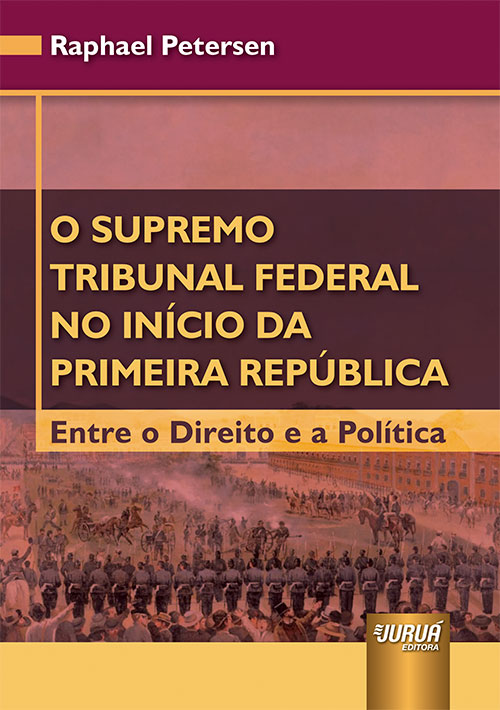
BOOK: Raphael PETERSEN, O Supremo Tribunal Federal no Início da Primeira República: Entre o Direito e a Política (Juruá: Curitiba, 2020). 213 p. R$ 62


Abstract:
Esta obra aborda a atuação do Supremo Tribunal Federal na primeira década republicana, entre os anos de 1889 e 1898. Escrito a partir da consulta a debates parlamen­tares, autores da época e a integra de mais de duzentos julgamentos, busca compreender o papel do Tribunal no contexto político e jurídico da Primeira República. Chamado a se manifestar em face dos mais importantes eventos políticos, como a Revolta da Armada, a Revolução Federalista e o atentado ao presidente Prudente de Moraes, o STF, nessa difícil conjuntura, passou a tra­balhar institutos jurídicos como o controle de constitu­cionalidade e o controle dos atos administrativos, e a julgar habeas corpus, ações penais originárias e ações anulatórias. Além do papel político-institucional, a obra permite que se conheça a tradição constitucional bra­sileira em julgamentos como o caso do Navio Jupiter, primeiro caso de grande repercussão em que houve o exercício do controle de constitucionalidade das nor­mas, e o caso da Anistia de 1895, em que se impugnava a imposição de condições aos anistiados políticos da Revolução Federalista.

Author:
Juiz Federal Substituto da 4ª Região desde 2013, estan­do atualmente lotado em Novo Hamburgo/RS. Possui Mestrado em Direito pela Universidade Federal do Rio Grande do Sul/UFRGS, com ênfase em História do Direi­to. Foi Assessor no Superior Tribunal de Justiça, entre os anos de 2010 e 2013. 

More information: https://www.jurua.com.br/shop_item.asp?id=28455

12 December 2019

BOOK: Antonio GASPARETTO JUNIOR, Atmósfera de Plomo. Las Declaraciones de Estado de Sitio En La Primera República Brasileña (Valencia: Tirant Editorial, 2019). ISBN 9788413134932, EUR 32,21


(Source: Tirant Editorial)

Tirant Editorial has published a new book on the first Brasilian Republic (1889-1930).

ABOUT THE BOOK

Antonio Gasparetto Junior estudió la inclusión del Estado de Sitio en la Constitución de 1891. Esta figura constitucional significó un suceso trascendental en Brasil, ya que fue utilizada 44 veces y permaneció vigente en un 20% de los 39 años que duro la Primera República (1889-1891). El libro discute su implementación en la ley brasileña y nos explica los usos y abusos del Estado de Sitio de Deodoro da Fonseca hasta Washington Luis. A partir de un abordaje institucional, Gasparetto explora una variedad de cuestiones más exhaustivas, como la circulación transnacional de modelos jurídicos o el autoritarismo de la Primera República. La Constitución de Brasil, de tendencia estadounidense, estuvo regulada con rasgos de centralismo y autoritarismo francés. El Estado de Sitio, justificado originalmente en caso de invasión extranjera, fue tergiversado y usado en la conservación del orden social interno. A lo largo de la República, el Estado de Sitio sirvió como herramienta para reforzar el poder federal, como también para eliminar a los indeseables de las calles de la Capital Federal y descartar a los adversarios políticos. Según Gasparetto, el Estado de Sitio fue responsable de la muerte de cerca de 15.000 personas, entre los más vulnerables de la población urbana, y por el destierro de tantas otras. Esto demuestra, sin duda, que se trata de una investigación importante para este periodo crucial de la construcción republicana y de la cultura política y jurídica de Brasil. Armelle Enders Profesora Titular de Historia Contemporánea de la Université Paris-8-Vincennes-Saint-Denis / Institut d?Histoire du Temps Présent.

TABLE OF CONTENTS

Índice
Agradecimientos        9
Prólogo        11
Cláudia Maria Ribeiro Viscardi
Introducción        15
Capítulo 1
UNA INSTITUCIÓN FUNESTA: LA CREACIÓN JURÍDICA FRANCESA
1.1.    Raíces de la excepción en la historia        24
1.2.    La creación francesa del Estado de Sitio constitucional        28
1.2.1.    La Noción Militar del Estado de Sitio en el Período Revolucionario        28
1.2.2.    La Consolidación de la Noción Política del Estado de Sitio        43
1.3.    Una síntesis del Estado de Sitio en Francia        58
1.3.1.    Usos y Abusos del Estado de Sitio en Francia        63
Capítulo 2
LA CONSTITUCIÓN BRASILEÑA DE 1891 Y EL ESTADO DE SITIO
2.1.    Raíces del Estado de Sitio en la Constitución de 1824        72
2.2.    La comisión de los cinco y los proyectos de Constitución        75
2.3.    Rui Barbosa y la revisión del proyecto de Constitución        79
2.4.    Definiciones de la Constitución de 1891 en torno del Estado de Sitio        83
2.5.    Diálogos con la legislación extranjera        97
2.5.1.    La Constitución Argentina y el Estado de Sitio        112
2.5.2.    La Constitución de los Estados Unidos        119
2.6.    Intentos de reglamentación del Sitio en la Primera República        121
Capítulo 3
EL CHORO DE LOS EXCLUIDOS
3.1.    La “cosecha de la tormenta”        144
3.2.    La lástima de deodoristas y monarquistas        151
3.2.1.    Los tres largos días de sitio en 1892        152
3.2.2.    El Estado de Sitio de septiembre de 1893        165
3.3.    El llanto descontrolado de los Jacobinos        177
3.3.1.    El ataque que llevó al Estado de Sitio        181
3.3.2.    Las disputas en torno del Estado de Sitio        187
3.4.    El pesar golpista        192
3.4.1.    El Estado de Sitio contra el Levante        196
3.4.2.    La nueva cara de los destierros        198
3.4.3.    Amnistía para unos, condenación para otros        201
Capítulo 4
ENTRE EL CHORO Y EL GRITO, EL LAMENTO
4.1.    Amargura y salvación        207
4.1.1.    El Estado de Sitio contra los marineros        211
4.1.2.    El Estado de Sitio en la política de las salvaciones        220
4.2.    Guerra y aflicción        234
4.2.1.    Un Sitio inédito: la agresión extranjera        237
Capítulo 5
EL GRITO DE LOS EMERGENTES
5.1.    El levantar de las voces y de los tenientes        244
5.1.1.    El primer Estado de Sitio contra los emergentes        248
5.1.2.    Una nueva fase de represión        251
5.2.    Los ecos de los gritos tenentistas        257
5.2.1.    El quadrienio nefasto        260
5.2.2.    La represión del Calamitoso        267
5.2.3.    El fin de la vida en el comienzo de Brasil        272
5.2.4.    La resistencia al Estado de Sitio        276
5.3.    El grito final de los aliancistas        279
Conclusiones        289
Adjuntos        305
Fuentes Primarias        321
Referencias Bibliográficas        331

More info here

13 August 2018

CONFERENCE : V Biennial Conference of the Latin American Society of International Law “Dialogues of International Law”, Torcuato Di Tella University (Buenos Aires, Argentina), 24-25 September 2018


Coming September, the Latin American Society of International Law is holding its 4th biennial conference.

The full programme can be found here

Two panels deal with the history of international law on September 25, namely:

11.30 – 13.00: PARALLEL SESSIONS

THE HISTORY OF INTERNATIONAL LAW

Chair: Justina Uriburu (Torcuato Di Tella University).
           Amaya  Alvez  (Universidad  de  Concepción)  and  Arnulf  Becker  Lorca  (Brown University): “¿Autodeterminación para los Pueblos Originarios? Los límites de la Consulta Indígena Constituyente en Chile”.
        Sebastián Machado (University of Melbourne): “La historia del derecho internacional
como una herramienta crítica y hermenéutica”.
        Liliana  Obregón  (Harvard  University):  “América  Latina  y  la  Historiografía  del
Derecho Internacional”.

14.30 – 16.00: PARALLEL SESSIONS

THE HISTORICAL TURN IN INTERNATIONAL LAW AND ITS IMPACT IN LATIN AMERICA

Chair: Francisco José Quintana (Torcuato Di Tella University). Speakers:
        José Manuel Barreto (Universidad Externado de Colombia; Universidad Católica de
Colombia): “Las Casas y los Orígenes Coloniales del Derecho Internacional y los
Derechos Humanos”.
        Fabia Fernandes Vecoso (University of Melbourne): “Intervention, sovereign debt,
and the making of spatial order: revisiting the 1902-1903 Venezuelan Blockade”.
           Juan Pablo Scarfi (Universidad Nacional de San Martín): “El Derecho Internacional (Latino)Americano y la no Intervención: La Hegemonía  Estadounidense en América Latina y el Debate (Humanitario) sobre la  Intervención en los Orígenes del Sistema Interamericano”.

 More information about the conference can be found here

13 July 2018

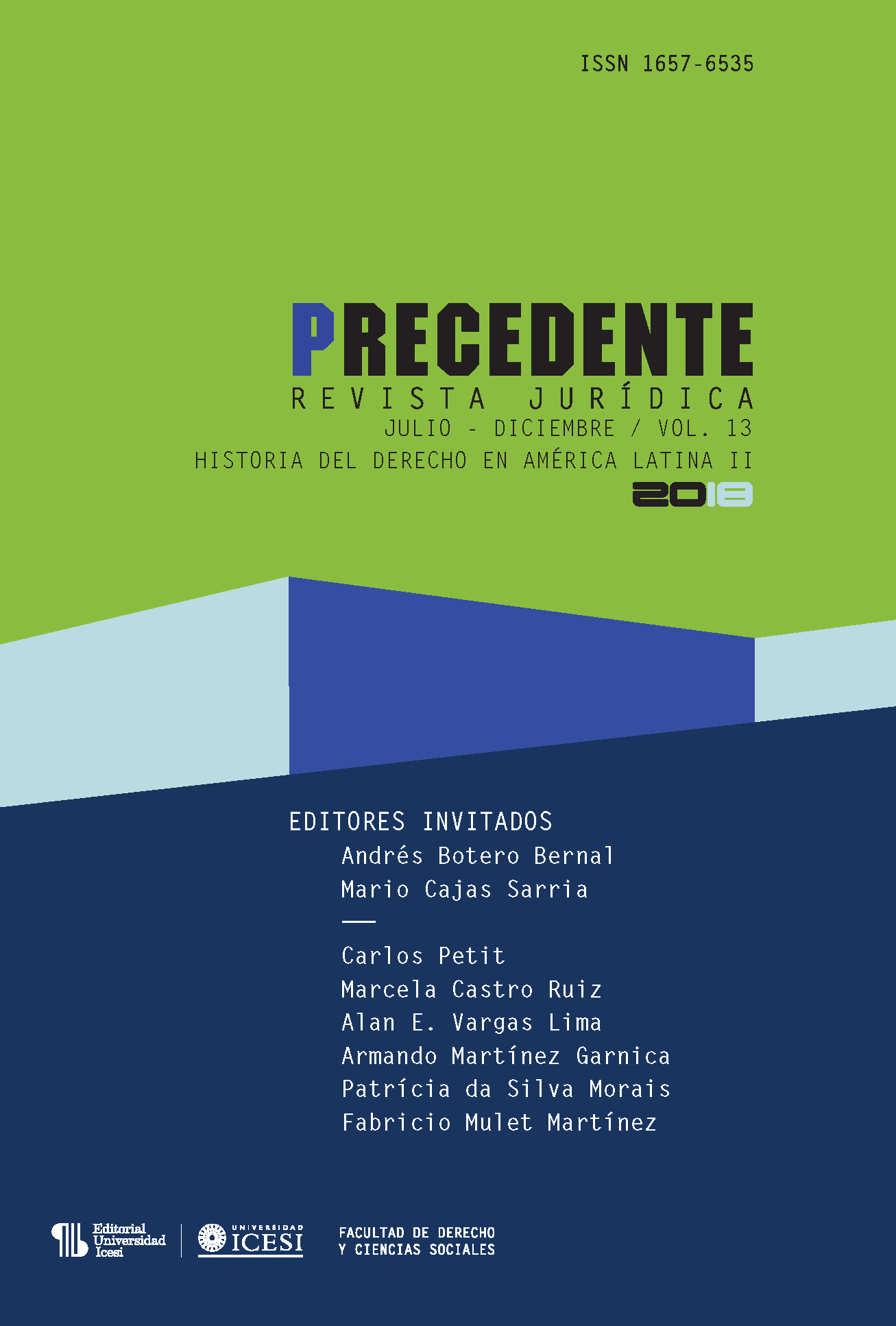
JOURNAL: Precedente. Revista Juridica XIII (2018): Historia del Derecho en América Latina II (eds. Andrés BOTERO BERNAL & Mario Alberto CAJAS SARRIA)

(image source: Precedente)

Presentación: Historia del Derecho en América Latina II (Andres Botero Bernal, Mario Cajas Sarria)

Articles:
El Invite Ilustrado. Real lotería y proyectos de poder en el siglo XVIII (Carlos Petit)
Economía, moral y derecho en la Europa cristiana: Justo precio, usura y capitalismo mercantil (siglos XII-XVIII) (Marcela Castro Ruiz)
La evolución histórica del control de constitucionalidad en Bolivia y su proyección hacia un modelo plural  (Alan E. Vargas Lima)
Orígenes del Consejo de Estado (Armando Martínez Garnica)
Derecho de la persona transexual en Brasil (Patrícia de Silva Morais)
Las críticas al derecho romano en Cuba durante la primera mitad del siglo XIX. A Propósito de la modernización de la enseñanza y la ciencia jurídica (Fabricio Mulet Martínez)

Nova et vetera:
Crédito público, derecho mercantil y arte del grabado (Andrés Botero Bernal)
El crimen de herejía y su represión inquisitorial (Elisa Álvarez Díaz)
On the journal:
Precedente se propone contribuir a la construcción del debate jurídico, en este sentido, el público al que se dirige está compuesto por estudiantes, profesores e investigadores nacionales y extranjeros pertenecientes a las diferentes ramas del derecho, pero además por profesionales interesados en contar con una actualización permanente en los análisis e investigaciones contemporáneas en el campo jurídico. Precedente tiene claro que siempre habrá un público por conquistar, de manera que concentra importantes esfuerzos en las estrategias de difusión de la publicación en su soporte material y electrónico.


More information here.

05 October 2015

BOOK: Mathew C. MIROW, Latin American Constitutions. The Constitution of Cádiz and its Legacy in Spanish America (Cambridge: CUP, 2015, ISBN 9781107025592, USD 99,99)


(image source: CUP)

The Legal History Blog signals the new book of Prof. Mathew C. Mirow

Abstract:

Latin American Constitutions provides a comprehensive historical study of constitutionalism in Latin America from the independence period to the present, focusing on the Constitution of Cádiz, a foundational document in Latin American constitutionalism. Although drafted in Spain, it was applied in many regions of Latin America, and deputies from America formed a significant part of the drafting body. The politicization of constitutionalism reflected in Latin America's first moments proved to be a lasting legacy evident in the legal and constitutional world of the region today: many of Latin America's present challenges to establishing effective constitutionalism can be traced to the debates, ideas, structures, and assumptions of this text. This book explores the region's attempts to create effective constitutional texts and regimes in light of an established practice of linking constitutions to political goals and places important constitutional thinkers and regional constitutions, such as the Mexican Constitution of 1917, into their legal and historical context.
Table of contents:
Introduction
1. Constitutional limbo in early nineteenth-century Latin America
2. The Constitution of Cádiz: America's other first constitution
3. The colonies speak to the metropole: transatlantic constitutionalism
4. The failures and successes of metropole constitutionalism
5. Latin American constitutionalism after independence
6. The legacy of the Constitution of Cádiz: twentieth-century Latin American constitutionalism
7. Constitutional promise: Latin American constitutionalism today
Conclusion.
 More information at Cambridge University Press.

29 March 2015

BOOK: "Advocates for the Oppressed: Hispanos, Indians, Genízaros, and Their Land in New Mexico", by Malcolm Ebright


all information here
Struggles over land and water have determined much of New Mexico’s long history. The outcome of such disputes, especially in colonial times, often depended on which party had a strong advocate to argue a case before a local tribunal or on appeal. This book is partly about the advocates who represented the parties to these disputes, but it is most of all about the Hispanos, Indians, and Genízaros (Hispanicized nomadic Indians) themselves and the land they lived on and fought for. 
Having written about Hispano land grants and Pueblo Indian grants separately, Malcolm Ebright now brings these narratives together for the first time, reconnecting them and resurrecting lost histories. He emphasizes the success that advocates for Indians, Genízaros, and Hispanos have had in achieving justice for marginalized people through the return of lost lands and by reestablishing the right to use those lands for traditional purposes.