Search

Showing posts with label ESCLH blog. Show all posts

07 July 2026

REMINDER: Blog submission instructions

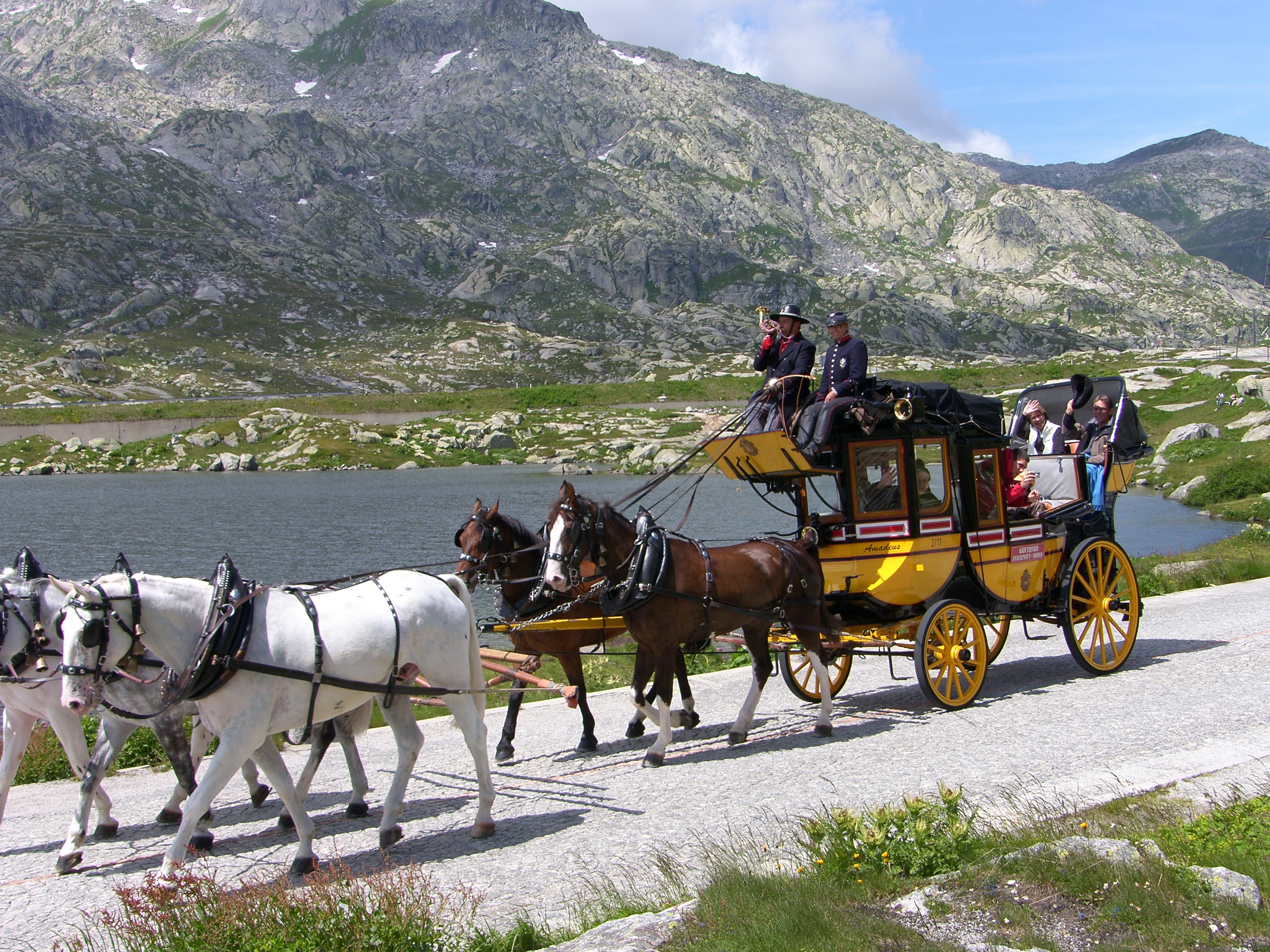
(image: stagecoach on the St. Gotthard Pass; source: Wikimedia Commons)

We kindly remind our readers and contributors that the ESCLH Blog welcomes news and announcements relevant to comparative legal history sensu lato. As the blog is run entirely by volunteers, all of whom have full-time professional commitments outside the blog, we ask contributors to bear the following in mind:

  • Please submit your text in MS Word (.doc or .docx) or RTF format. Unfortunately, PDF files cannot be posted and will be returned to the sender.
  • Please include at least one image to accompany your post.
  • Please allow sufficient time for processing. As a general rule, submissions should reach us at least ten days before the event or application deadline. The only exception is job advertisements, which we will endeavour to publish as quickly as possible.

Thank you for your understanding and cooperation.

04 May 2026

BLOG TEAM: New Composition as of 4 May 2026

Pursuant to our most recent call for bloggers, the ESCLH Blog Team has been extended.

We are happy to welcome as new bloggers:

  • Fuad-Meša Čičić: graduated in law (LL.B.) summa cum laude and is currently completing his LL.M. in Civil law (legal-historical focus) at the University of Pristina (Kosovo). His master's thesis examines the transfer of risk in the contract of sale in classical Roman law (periculum rei venditae), approaching from legal-historical and legal-theoretical perspectives. His research interests include ancient legal history, the historical development of private law (partic. the law of obligations), as well as customary law in the Balkan context. Professionally, he serves as a Judicial Clerk at the Constitutional Court of Kosovo. He is also a member of several scholarly associations dedicated to legal history and related fields (incl. ASLH, ESHL, and the AIP)
  • Paweł Kaźmierski, LL.M.: doctoral candidate at the Doctoral School in the Social Sciences of the Jagiellonian University in Kraków and at the Faculty of Law of the University of Jena (cotutelle). He holds MA in Polish law and LL.M. in German law. His research interests focus on the comparative legal history, history of Socialist law, history of Family law and law and religion.
  • Benedict Vanlanduyt: doctoral researcher affiliated with KU Leuven and KU Leuven Campus Kortrijk (Belgium). She holds degrees in Medieval and Ancient Philosophy and in Law from KU Leuven, where she completed the Research Master Programme in Law, graduating magna cum laude. Her master’s dissertation examined the role of auxiliary states in the War of the Austrian Succession (1740–1748) within the broader history of public and international law. She currently investigates the restitution of private property seized or confiscated in the Low Countries between 1550 and 1750 during times of war. The project focusses on the relation between legal doctrine and practice, by conducting archival research, analyzing treaties and investigating negotiation history. 
The other members of the current team remain on board, save for Marco Castelli, who has decided to focus on the peer reviewed journal Comparative Legal History. We are grateful for Marco’s loyal service and commitment to the blog. Over the past five years, he contributed over 340 posts (ergo 1,44 a week, if one discounts the Winter and Summer blogging breaks).

We kindly remind our readership that proposals for contributions can be submitted to esclhblog@gmail.com. We only publish suggestions in MS Word or RTF format, with an image. PDFs or formatted documents will be returned to the sender. Please be patient: blog posts are usually scheduled well in advance, only calls for paper or vacancies with a fixed term limit have priority. Publications of books or journals are spread out across time. 

16 March 2026

REMINDER: CALL FOR BLOGGERS (m/f/x) [DEADLINE 31 MAR 2026]


Call for a Blogger (m/f/x)

European Society for Comparative Legal History (ESCLH)

The European Society for Comparative Legal History (ESCLH) invites expressions of interest for the position of blogger for its official blog.

We are seeking two colleagues willing to contribute actively to the intellectual visibility and digital outreach of the Society. The ESCLH blog aims to serve as a dynamic forum for scholarly exchange in the field of comparative legal history, broadly understood as the study of law in the past across different jurisdictions, cultures, and normative contexts.

Profile

The ideal candidate:

  1. Is a researcher in legal history or a closely related discipline;
  2. Is comfortable with digital communication, including familiarity with websites, academic blogging formats, and social media dissemination;
  3. Has a demonstrable research focus on, or strong affinity with, comparative legal history, understood as historically grounded, context-sensitive analysis of law across jurisdictions or traditions;
  4. Is committed to inclusive scholarly exchange, and welcomes engagement with diverse methodological, geographical, and intellectual perspectives.

We particularly encourage applications from scholars whose backgrounds and perspectives would contribute to further broadening and enriching the diversity of the current team.

Role and Responsibilities

The blogger / blog editor will:

  • Contribute regular posts (e.g. publications, calls, conferences, vacancies);
  • Help identify useful announcements;
  • Support the blog’s visibility through appropriate digital channels (e.g; our BlueSky and LinkedIn-accounts);
  • Strengthen the connection between the ESCLH blog and the journal
    Comparative Legal History (published by Routledge; indexed in Web of Science)

A central ambition of this role is to enhance the blog’s function as a bridge between ongoing research, the Society’s activities, and the journal Comparative Legal History. This requires modest but regular time investment.

Why Consider This Role?

This is an opportunity to:

  • Contribute to shaping debates within comparative legal history;
  • Increase the visibility of emerging and established scholarship;
  • Build academic networks across jurisdictions and generations;
  • Play a meaningful role in strengthening the Society’s digital presence.

We warmly encourage colleagues who may be hesitating to step forward. Expressions of interest from scholars at different career stages and from varied academic and geographical backgrounds are most welcome.

Practical Information

Interested candidates are invited to send:

  • A short statement of motivation (max. 1 page);
  • A brief CV;
  • (Optionally) links to previous digital or editorial work.

Please send expressions of interest to esclhblog@gmail.com by 31 March 2026.

For informal inquiries about the role, do not hesitate to get in touch.

The position is not paid.


02 March 2026

REMINDER: CALL FOR BLOGGERS (m/f/x) [DEADLINE 31 MAR 2026]


Call for a Blogger (m/f/x)

European Society for Comparative Legal History (ESCLH)

The European Society for Comparative Legal History (ESCLH) invites expressions of interest for the position of blogger for its official blog.

We are seeking two colleagues willing to contribute actively to the intellectual visibility and digital outreach of the Society. The ESCLH blog aims to serve as a dynamic forum for scholarly exchange in the field of comparative legal history, broadly understood as the study of law in the past across different jurisdictions, cultures, and normative contexts.

Profile

The ideal candidate:

  1. Is a researcher in legal history or a closely related discipline;
  2. Is comfortable with digital communication, including familiarity with websites, academic blogging formats, and social media dissemination;
  3. Has a demonstrable research focus on, or strong affinity with, comparative legal history, understood as historically grounded, context-sensitive analysis of law across jurisdictions or traditions;
  4. Is committed to inclusive scholarly exchange, and welcomes engagement with diverse methodological, geographical, and intellectual perspectives.

We particularly encourage applications from scholars whose backgrounds and perspectives would contribute to further broadening and enriching the diversity of the current team.

Role and Responsibilities

The blogger / blog editor will:

  • Contribute regular posts (e.g. publications, calls, conferences, vacancies);
  • Help identify useful announcements;
  • Support the blog’s visibility through appropriate digital channels (e.g; our BlueSky and LinkedIn-accounts);
  • Strengthen the connection between the ESCLH blog and the journal
    Comparative Legal History (published by Routledge; indexed in Web of Science)

A central ambition of this role is to enhance the blog’s function as a bridge between ongoing research, the Society’s activities, and the journal Comparative Legal History. This requires modest but regular time investment.

Why Consider This Role?

This is an opportunity to:

  • Contribute to shaping debates within comparative legal history;
  • Increase the visibility of emerging and established scholarship;
  • Build academic networks across jurisdictions and generations;
  • Play a meaningful role in strengthening the Society’s digital presence.

We warmly encourage colleagues who may be hesitating to step forward. Expressions of interest from scholars at different career stages and from varied academic and geographical backgrounds are most welcome.

Practical Information

Interested candidates are invited to send:

  • A short statement of motivation (max. 1 page);
  • A brief CV;
  • (Optionally) links to previous digital or editorial work.

Please send expressions of interest to esclhblog@gmail.com by 31 March 2026.

For informal inquiries about the role, do not hesitate to get in touch.

The position is not paid.
 

30 January 2025

LINKEDIN: Follow our Blog on Linkedin

(image source: dall-e)

The ESCLH Blog now has a linkedin-page. This is a new complementary method to remain in touch with our announcements, besides:

- an RSS reader (e.g. feedly)
- the daily mails through follow.it (see right on the blog)
- the Society's account on Bluesky

Follow the page here.

10 June 2024

REMINDER: Are you not receiving e-mails from us anymore ? Look right on the blog (follow.it)

The blogging team regularly gets inquiries on whether and why e-mails would have stopped sending out daily or weekly updates.

We moved to another system in the month of May 2023. We take the liberty to copy the instructions below:

Pursuant to the announcement that a follow.it-button has been created on the blog, it might be useful to clarify how this simple system works:

(1) Follow-it imports the list of posts from this blog's RSS-feed
(2) By entering your email, you do not create an "account" or leave data with the ESCLH, but with follow.it (= the ESCLH is not collecting your data, we don't know who is reading the updates by mail)
(3) Logging in to your follow.it-account, using the username and password received by mail upon confirmation of your registration, allows you to tweak your subscription as you prefer

(screenshot Folllow.it-settings)


=> it is, for instance, possible to select headlines only (if you prefer clicking and opening the blog in your browser) or the entire story (if you prefer to read everything in Outlook, e.g. below)


=> it is equally possible to modify the hour of delivery or your time zone (e.g. those who prefer to read the blog at breakfast, or after lunch break, at five PM, at the end of a hard day of scientific labour around 11:30 PM... can make sure information arrives at the right time in their daily schedule)


Ergo: 

(1) We still send out emails, but not any longer through blogger: our RSS-feed is converted into mails by Follow.It

(2) Signing up is deadly simple: just enter your mail address in the box on the right-hand side of the blog 


26 March 2024

ESCLH BLOG TEAM: New composition (as of 26 MAR 2024) - How to reach us - How to suggest posts

(image: Rijksmuseum Library, Amsterdam)

(1)
Following the most recent call for bloggers, the ESCLH Blog team has been reshuffled.

We first of all would like to express our profound gratitude to the outgoing team members:
  • Dr. Piotr Alexandrowicz (postdoctoral researcher at the Poznań Society for the Advancement of Arts and Sciences): dr. Alexandrowicz has been with us since 15 november 2022 
  • Arthur Barrêto de Almeida Costa (PhD candidate, University of Firenze): Arthur Barrêto has been part of our team since 2019
  • Dr. Filip Batselé (postdoctoral assistant, Vrije Universiteit Brussel/voluntary researcher, Ghent Legal History Institute): dr. Batselé has been part of our team since 2018
  • Dr. Priyasha Saksena (lecturer in law, University of Leeds): dr. Saksena  has been with us since 2022
  • Dr. Kamila Staudigl-Ciechowicz, postdoctoral researcher at the University of Vienna (Department of Legal and Constitutional History) and lecturer and research fellow at the University of Regensburg (Chair of Private Law, German and European Legal History and Canon Law): dr. Staudigl-Chiecowiz has been with us since 2022
We welcome four new contributors:
  • Dr. Ida Ferrero: Ida Ferrero graduated in law at the University of Turin and she has completed her PhD in legal history at the University of Milan. From 2022 she is a researcher at the Department of Law of the University of Turin. She teaches European History of law in the Global law and Transnational legal studies course. She is the author of three monographs and several articles and contributions in books.
  • Shardool Kulkarni: Thesis Programme Candidate, Zvi Meitar Center for Advanced Legal Studies, Buchmann Faculty of Law, Tel Aviv University. In the past, he has worked as an Academic Fellow at the National Law University Delhi, where he co-taught courses on judicial process, law and poverty, and constitutional theory. His scholarly interests lie at the intersection of legal history, constitutional law, and judicial process reform.
  • Michael Reichenthaler: doctoral candidate at the Faculty of Law at the University of Regensburg, where he also studied law. He specialises in the history of administrative law in the 19th and 20th centuries. His particular focus is on the administrative courts and their legal foundation.
  • Armando José Santana Bugés: PhD-Fellow awarded by the Ministry of Education (Spanish Government) at the University of Jaén. He is focus on legal history (the origin of parliamentary system, democracy and citizen´s representation). Visiting fellow in Stanford University, Harvard University and WZ Berlin
Three other team members remain on board:
  • dr. Marco Castelli: postdoctoral researcher at the University of Milan and lawyer. He also collaborates with the research group in legal history at the University of Brescia. He obtained the degree of Master of Law (University of Brescia, 2019) and of Doctor in Law (University of Milan, 2023). His main field of interest is the rediscovery of Aristotle's Natural Philosophy and its effects on Medieval legal theory and political thought.
  • dr. Stefano Cattelan: Research Foundation Flanders (FWO) Fundamental Research Project postdoctoral researcher at the Vrije Universiteit Brussel and Adjunct Professor at the Brussels School of Government
  • Prof. Frederik Dhondt: associate professor of legal and political history at the Vrije Universiteit Brussel, Faculty of Law and Criminology/voluntary researcher at the Ghent Legal History Institute; president of the Royal Commission for the Publication of Old Laws and Ordinances of Belgium

(2) 
We reiterate our thanks to the loyal readers and followers of our blog, which attracts an impressive number of internet users (296 000 in the past six months), from all corners of the world and most legal traditions. The blog can be followed in several ways:
(3)
Reaching us with proposals for posts is quite easy: the Gmail account of the blog (esclhblog@gmail.com) is the unique channel to suggest an announcement. We prefer this channel, rather than one-on-one e-mails to the persons listed above. 

We gently remind our readers of the instructions set out in the right-hand column of the blog. Proponents need to provide us with a file in MS Word and an image. Bloggers are volunteers and have to organize their time efficiently. We would -of course- appreciate drafts formatted according to our own bibliographical template, as some of you have already done in the past. 

19 February 2024

REMINDER: CALL FOR BLOGGERS: ESCLH Blog (Deadline 1 MAR 2024)


The blog of the European Society for Comparative Legal History is the successful media outlet of our scholarly society. Since its inception in 2010, the posts and pages have attracted over 2,3 million views from Europe and other continents (approx. 22 000 per month in the past twelve months).

We intend to strengthen and enlarge the current team of bloggers, as we regularly welcome new collaborators and thank those who wish to step down after a year of dedicated service.

Candidates are encouraged to send to esclhblog at gmail dot com by 1 March 2024:
- a brief curriculum vitae (mentioning academic credentials and IT experience)
- a cover letter

Bloggers can be at any stage of their academic career (graduate student, PhD-candidate, postdoc, assistant professor, voluntary/associate researcher...). Familiary with legal history (traditionally but not exclusively in a law faculty or history department) is of course a conditio sine qua non. It goes without saying that a Society for comparative legal history is open to candidacies from all backgrounds, irrespective of gender, legal tradition or spatial contingency. We constantly strive to enhance the diversity of our perimeter of interests.  

Serving on the blog is not remunerated. Yet, bloggers receive a reduction on the membership fee of our Society, and are displayed on the blog, as a recognition of their effort.  

The level of engagement with the blog can vary depending on the person. We aim to publish one notification of publication, job announcement, call for papers... per working day, in order to keep the interested audience connected to our RSS-feed, this URL, X (twitter) account, or the daily mailing with follow.it.

16 February 2024

DEADLINE EXTENDED: CALL FOR BLOGGERS: ESCLH Blog (Deadline 1 MAR 2024)


The blog of the European Society for Comparative Legal History is the successful media outlet of our scholarly society. Since its inception in 2010, the posts and pages have attracted over 2,3 million views from Europe and other continents (approx. 22 000 per month in the past twelve months).

We intend to strengthen and enlarge the current team of bloggers, as we regularly welcome new collaborators and thank those who wish to step down after a year of dedicated service.

Candidates are encouraged to send to esclhblog at gmail dot com by 1 March 2024:
- a brief curriculum vitae (mentioning academic credentials and IT experience)
- a cover letter

Bloggers can be at any stage of their academic career (graduate student, PhD-candidate, postdoc, assistant professor, voluntary/associate researcher...). Familiary with legal history (traditionally but not exclusively in a law faculty or history department) is of course a conditio sine qua non. It goes without saying that a Society for comparative legal history is open to candidacies from all backgrounds, irrespective of gender, legal tradition or spatial contingency. We constantly strive to enhance the diversity of our perimeter of interests.  

Serving on the blog is not remunerated. Yet, bloggers receive a reduction on the membership fee of our Society, and are displayed on the blog, as a recognition of their effort.  

The level of engagement with the blog can vary depending on the person. We aim to publish one notification of publication, job announcement, call for papers... per working day, in order to keep the interested audience connected to our RSS-feed, this URL, X (twitter) account, or the daily mailing with follow.it.

05 February 2024

REMINDER: CALL FOR BLOGGERS: ESCLH Blog (Deadline 11 FEB 2024)


The blog of the European Society for Comparative Legal History is the successful media outlet of our scholarly society. Since its inception in 2010, the posts and pages have attracted over 2,3 million views from Europe and other continents (approx. 22 000 per month in the past twelve months).

We intend to strengthen and enlarge the current team of bloggers, as we regularly welcome new collaborators and thank those who wish to step down after a year of dedicated service.

Candidates are encouraged to send to esclhblog at gmail dot com by 11 February 2024:
- a brief curriculum vitae (mentioning academic credentials and IT experience)
- a cover letter

Bloggers can be at any stage of their academic career (graduate student, PhD-candidate, postdoc, assistant professor, voluntary/associate researcher...). Familiary with legal history (traditionally but not exclusively in a law faculty or history department) is of course a conditio sine qua non. It goes without saying that a Society for comparative legal history is open to candidacies from all backgrounds, irrespective of gender, legal tradition or spatial contingency. We constantly strive to enhance the diversity of our perimeter of interests.  

Serving on the blog is not remunerated. Yet, bloggers receive a reduction on the membership fee of our Society, and are displayed on the blog, as a recognition of their effort.  

The level of engagement with the blog can vary depending on the person. We aim to publish one notification of publication, job announcement, call for papers... per working day, in order to keep the interested audience connected to our RSS-feed, this URL, X (twitter) account, or the daily mailing with follow.it.

29 January 2024

REMINDER: CALL FOR BLOGGERS: ESCLH Blog (Deadline 11 FEB 2024)


The blog of the European Society for Comparative Legal History is the successful media outlet of our scholarly society. Since its inception in 2010, the posts and pages have attracted over 2,3 million views from Europe and other continents (approx. 22 000 per month in the past twelve months).

We intend to strengthen and enlarge the current team of bloggers, as we regularly welcome new collaborators and thank those who wish to step down after a year of dedicated service.

Candidates are encouraged to send to esclhblog at gmail dot com by 11 February 2024:
- a brief curriculum vitae (mentioning academic credentials and IT experience)
- a cover letter

Bloggers can be at any stage of their academic career (graduate student, PhD-candidate, postdoc, assistant professor, voluntary/associate researcher...). Familiary with legal history (traditionally but not exclusively in a law faculty or history department) is of course a conditio sine qua non. It goes without saying that a Society for comparative legal history is open to candidacies from all backgrounds, irrespective of gender, legal tradition or spatial contingency. We constantly strive to enhance the diversity of our perimeter of interests.  

Serving on the blog is not remunerated. Yet, bloggers receive a reduction on the membership fee of our Society, and are displayed on the blog, as a recognition of their effort.  

The level of engagement with the blog can vary depending on the person. We aim to publish one notification of publication, job announcement, call for papers... per working day, in order to keep the interested audience connected to our RSS-feed, this URL, X (twitter) account, or the daily mailing with follow.it.

22 January 2024

REMINDER: CALL FOR BLOGGERS: ESCLH Blog (Deadline 11 FEB 2024)


The blog of the European Society for Comparative Legal History is the successful media outlet of our scholarly society. Since its inception in 2010, the posts and pages have attracted over 2,3 million views from Europe and other continents (approx. 22 000 per month in the past twelve months).

We intend to strengthen and enlarge the current team of bloggers, as we regularly welcome new collaborators and thank those who wish to step down after a year of dedicated service.

Candidates are encouraged to send to esclhblog at gmail dot com by 11 February 2024:
- a brief curriculum vitae (mentioning academic credentials and IT experience)
- a cover letter

Bloggers can be at any stage of their academic career (graduate student, PhD-candidate, postdoc, assistant professor, voluntary/associate researcher...). Familiary with legal history (traditionally but not exclusively in a law faculty or history department) is of course a conditio sine qua non. It goes without saying that a Society for comparative legal history is open to candidacies from all backgrounds, irrespective of gender, legal tradition or spatial contingency. We constantly strive to enhance the diversity of our perimeter of interests.  

Serving on the blog is not remunerated. Yet, bloggers receive a reduction on the membership fee of our Society, and are displayed on the blog, as a recognition of their effort.  

The level of engagement with the blog can vary depending on the person. We aim to publish one notification of publication, job announcement, call for papers... per working day, in order to keep the interested audience connected to our RSS-feed, this URL, X (twitter) account, or the daily mailing with follow.it.

17 January 2024

CALL FOR BLOGGERS: ESCLH Blog (Deadline 11 FEB 2024)


The blog of the European Society for Comparative Legal History is the successful media outlet of our scholarly society. Since its inception in 2010, the posts and pages have attracted over 2,3 million views from Europe and other continents (approx. 22 000 per month in the past twelve months).

We intend to strengthen and enlarge the current team of bloggers, as we regularly welcome new collaborators and thank those who wish to step down after a year of dedicated service.

Candidates are encouraged to send to esclhblog at gmail dot com by 11 February 2024:
- a brief curriculum vitae (mentioning academic credentials and IT experience)
- a cover letter

Bloggers can be at any stage of their academic career (graduate student, PhD-candidate, postdoc, assistant professor, voluntary/associate researcher...). Familiary with legal history (traditionally but not exclusively in a law faculty or history department) is of course a conditio sine qua non. It goes without saying that a Society for comparative legal history is open to candidacies from all backgrounds, irrespective of gender, legal tradition or spatial contingency. We constantly strive to enhance the diversity of our perimeter of interests.  

Serving on the blog is not remunerated. Yet, bloggers receive a reduction on the membership fee of our Society, and are displayed on the blog, as a recognition of their effort.  

The level of engagement with the blog can vary depending on the person. We aim to publish one notification of publication, job announcement, call for papers... per working day, in order to keep the interested audience connected to our RSS-feed, this URL, X (twitter) account, or the daily mailing with follow.it.

15 January 2024

REMINDER: Blog submissions (Word or RTF, no PDF)

We gently remind our readers that submissions for posts are more than welcome on esclhblog@gmail.com.

However, keep in mind the general instructions for the blog: we do not accept submissions in PDF. Please provide us with a Word- or RTF-document, with an image (free to use).

Our bloggers are volunteers, whose service to the ESCLH comes on top of their other academic commitments. 

15 November 2022

ESCLH BLOG TEAM: New composition (as of 15 November 2022) - How to reach us - How to suggest posts


(Image: Charles V's coat of arms, representing the various entities of the composite Spanish/Burgundian monarchy, as well as the imperial eagle, Oudenaarde town hall (Belgium))


1) Following our call for bloggers, the ESCLH is glad to announce the new composition of the Blog team, in alphabetical order:

  • Piotr Alexandrowicz, postdoctoral researcher at the Poznań Society for the Advancement of Arts and Sciences, received his PhD in law in 2019 at Adam Mickiewicz University in Poznań. He holds MA in law, theology, and canon law. His research interest focuses on the influences of canon law on civil law in the late medieval and early modern periods.

  • Arthur Barrêto de Almeida CostaPhD fellow in Theory and History of Law at the Università degli Studi di Firenze and researches the history of 19th and 20th public law in Brazil in a comparative perspective. Master and Bachelor of law at the Universidade Federal de Minas Gerais. Member of Studium Iuris - Research Group on the History of Legal Culture (CNPq/UFMG).

  • Filip Batselé, PhD fellow of the Research Foundation Flanders (FWO) at Ghent University and the Université Libre de Bruxelles, specializing in the history of international investment law. He is also an affiliated researcher at the Research Group Contextual Research in Law (VUB). He studied law at Ghent University, the University of Glasgow (Erasmus+) and the Fletcher School of Law and Diplomacy (LL.M.).

  • Marco Castelli, PhD candidate in Legal Studies / History of Law at the University of Milan (Department 'Cesare Beccaria') and lawyer. He also collaborates with the research group in legal history at the University of Brescia. His main field of interest is the rediscovery of Aristotle's Natural Philosophy and its effects on Medieval legal theory and political thought.

  • Stefano Cattelan, postdoctoral researcher at the Vrije Universiteit Brussel (Research Group Contextual Research in Law). His current project “In the Shadow of the Great Powers: Freedom of the Sea and Neutrality in the 18th Century” is funded by a Carlsberg Foundation Internationalisation Fellowship (2022-2023). He obtained the degree of Master of Law (University of Trento, 2017) and of Doctor in Law (Aarhus University, 2020). His main field of interest is the history of public international law between the 16th and 18th centuries, with a focus on its maritime dimension.

  • Frederik Dhondt, associate professor of legal history at the Vrije Universiteit Brussel (Research Group Contextual Research in Law/Head of the Department of Interdisciplinary Legal Studies) is the ESCLH's director of communications and coordinates the team. He studied Law (Ghent), History (Ghent/Paris-Sorbonne) and International Relations (Sciences Po Paris), before obtaining his PhD in Law (Ghent, 2013) and was a visiting researcher in Frankfurt, Heidelberg, Paris and Geneva as well as a visiting professor in Amsterdam (VU). From 2016 to 2020, he was also a visiting lecturer at the University of Antwerp. His research focuses on the use of legal arguments in diplomatic correspondence and in constitutional debates (18th and 19th centuries). 

  • Priyasha Saksena, lecturer in law at the University of Leeds. She is a graduate of Harvard University (SJD) and National Law School of India University (BA LLB). Prior to joining the University of Leeds, she was a visiting researcher at the Max Planck Institute for European Legal History. Her work focuses on the historical development of legal concepts and institutions within the British Empire. Her monograph, The Many Meanings of Sovereignty: International Law and the Princely States of Colonial South Asia, is forthcoming with Oxford University Press in 2023. 

  • Kamila Staudigl-Ciechowicz, postdoctoral researcher at the University of Vienna (Department of Legal and Constitutional History) and lecturer and research fellow at the University of Regensburg (Chair of Private Law, German and European Legal History and Canon Law). She studied Law (Vienna) and Canon Law (LL.M., Vienna), received her doctorate in Law (Vienna, 2017, thesis on legal history of the Viennese University) and is currently writing her habilitation in private law history. She specialises in European legal and constitutional history, with a focus on the 19th and 20th centuries, in particular the interwar period. 


2) We reiterate our thanks to the loyal readers and followers of our blog, which attracts an impressive number of internet users. The blog can be followed in several ways:


3) Reaching us with proposals for posts is quite easy: the Gmail account of the blog (esclhblog@gmail.com) is the unique channel to suggest an announcement. We prefer this channel, rather than one-on-one e-mails to the persons listed above. 

We gently remind our readers of the instructions set out in the right-hand column of the blog. Proponents need to provide us with a file in MS Word and an image. Bloggers are volunteers and have to organize their time efficiently. We would -of course- appreciate drafts formatted according to our own bibliographical template, as some of you have already done in the past. 

03 October 2022

REMINDER: CALL FOR BLOGGERS: European Society for Comparative Legal History (DEADLINE 15 OCTOBER)


The blog of the European Society for Comparative Legal History (established in 2010) is a reference for all those seeking reliable information on publications, calls and vacancies in the broad interdisciplinary field of comparative legal history. Its readership spans the globe, with almost two million visits (approx. 14 000 per month). Lawyers, historians, sociologists and philosophers aim to understand the categories of legal thinking and practical manifestations of human behaviour across jurisdictions and traditions.

The blog is not an automated creation, but human-made. It thrives thanks to the efforts of volunteers who are ready to add content and correspond with submitting publishers or scholars. It is vital for our blog to remain up-to-date, and to reflect the real diversity within and outside of European academia. We aim to publish on a daily basis and maintain the uninterrupted stream of news. Therefore, the Society actively encourages young or established scholars to join the current team of bloggers.

Serving as a blogger contributes to your visibility in the world of legal history. It requires a limited amount of your time, and can also be intermittent. In any case, you will be part of a team.

Proposals can be sent (cover letter + cv) to esclhblog@gmail.com by 15 October. We will inform applicants of the outcome as soon as possible.

09 May 2022

REMINDER: Respect the instructions for blog proposals


 This is a kind reminder to respect the instructions for proposed announcements:

(1) Send an MS Word or RTF-version

(2) Join an image


The ESCLH Blog works with volunteers. It is possible that your announcement does not appear within two or three days, but rather within a week. 

29 April 2022

REMINDER: Respect the instructions for blog proposals


(image source: Wikimedia Commons)


 This is a kind reminder to respect the instructions for proposed announcements:

(1) Send an MS Word or RTF-version

(2) Join an image


The ESCLH Blog works with volunteers. It is possible that your announcement does not appear within two or three days, but rather within a week. 

21 May 2021

ESCLH BLOG TEAM: new composition (as of 21 May 2021) - How to reach us - How to suggest posts

(Image: Charles V's coat of arms, representing the various entities of the composite Spanish/Burgundian monarchy, as well as the imperial eagle, Oudenaarde town hall (Belgium))

1.

Following our call for bloggers, the ESCLH is glad to announce the new composition of the Blog team, in alphabetical order:

  • Arthur Barrêto de Almeida Costa, PhD candidate in Theory and History of Law at the Università degli Studi di Firenze and researches the history of 19th and 20th public law in Brazil in a comparative perspective. Master and Bachelor of law at the Universidade Federal de Minas Gerais. Member of Studium Iuris - Research Group on the History of Legal Culture (CNPq/UFMG)
  • Filip Batselé, PhD-Fellow of the Research Foundation Flanders (FWO) at Ghent University and the Université Libre de Bruxelles, specializing in the history of international investment law. He is also an affiliated researcher at the research Group CORE (VUB). He studied law at Ghent University, the University of Glasgow (Erasmus+) and the Fletcher School of Law and Diplomacy (LL.M.)
  • Marco Castelli, PhD student in Legal studies at the University of Milan (Dept. 'Cesare Beccaria'). He also studies Latin Palaeography and Diplomacy at the School of Archival Studies of the State Archive in Milan and he collaborates with the research group in legal history at the University of Brescia. His main field of interest is the rediscovery of Aristotle's Natural Philosophy and its effects on Medieval legal theory and political thought.
  • Stefano Cattelan, research assistant at Aalborg University (Dept. of Law). In December 2020, he defended his PhD dissertation on the historical development of the law of the sea in the Early Modern Age (Aarhus University). He previously studied at the University of Trento (Bachelor and Master of Law). His primary interests lie at the crossroad of legal history and public international law.
  • Frederik Dhondt, associate professor of legal history at the Vrije Universiteit Brussel (Research Group Contextual Research in Law) is the ESCLH's director of communications and coordinates the team. He  studied Law (Ghent), History (Ghent/Paris-Sorbonne) and International Relations (Sciences Po Paris), before obtaining his PhD in Law (Ghent, 2013) and was a visiting researcher in Frankfurt, Heidelberg, Paris and Geneva. From 2016 to 2020, he was also a visiting lecturer at the University of Antwerp.
  • Gilles Hebben, PhD student at the University of Lille. His PhD directors are Luisa Brunori (University of Lille) and Guido Rossi (University of Edinburgh). He is currently writing a thesis called : “The Levant Company (1592-1825), a chartered company supervising the British merchants in law in their trade with the Levant.
  • Christel Annemieke Romein holds a PhD in early modern history (2016, Rotterdam). Her focus is on early modern political-institutional and legal history. She currently works at the Huygens Institute for Dutch History.
2.
We reiterate our thanks to the loyal readers and followers of our blog, which attracts an impressive number of internet users. The blog can be followed in several ways:
  • The website (https://esclh.blogspot.com);
  • An RSS-feed reader, such as Feedly;
  • The Twitter account (https://www.twitter.com/esclh), which automatically retweets posts added to the blog;
  • The daily mailing to subscribers (see box on the right-hand side of the page)
    !!! Attention: blogger has announced that this module will be terminated as of July 2021 !!!
    => It might be useful to switch to an RSS-reader or twitter 
3.
Reaching us with proposals for posts is quite easy: the gmail-account of the blog (esclhblog@gmail.com) is the unique channel to suggest an announcement. We prefer this channel, rather than one-on-one e-mails to the persons listed above. 

We gently remind our readers of the instructions set out on the right-hand column of the blog. Proponents need to provide us with a file in MS Word and an image. Bloggers are volunteers, and have to organize their time efficiently. We would -of course- appreciate drafts formatted according to own bibliographical template, as some of you have already done in the past. 

23 September 2020

FACEBOOK PAGE DOWN: follow our twitter account, or subscribe to our daily mailing

(image source: Wikimedia Commons)

We are experiencing access issues with our Facebook Page since the beginning of August. We cannot access it anymore, and posting is thus impossible. Our blog can still be followed by subscribing to the Daily Mailing (enter your e-mailaddress on the right), or by following our twitter account @esclh.