
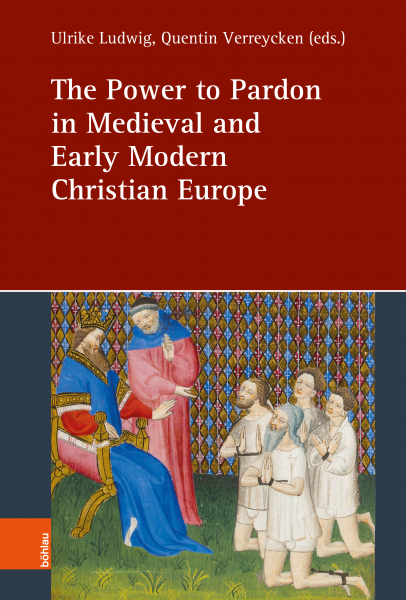
Abstract:
In medieval and early modern Christian Europe, the power to exercise pardon over rigor of justice was one of the strongest manifestations of sovereignty and, as such, it was almost ubiquitous. For merciful rulers, pardoning was a means to enforce peace and assert the supremacy of their judicial authority, whereas for subjects, it was primarily a way to save their lives and escape punishment, often at a lower cost than other mitigating practices. Studying the predominant role of pardon in medieval and early modern societies, this collective volume examines how pardons operated within complex legal systems marked by a plurality of legal orders, where various means of conflict resolution coexisted and litigants had to navigate multiple levels of authorities.
On the editors:
Ulrike Ludwig is a university professor of early modern history at the University of Münster and co-director of the Käte Hamburger Kolleg ‘legal Unity and Pluralism’; Quentin Verreycken is a postdoctoral researcher at the University of Louvain.
Read the full book here: DOI 10.7788/9783412533861.
No comments:
Post a Comment
Note: Only a member of this blog may post a comment.