29 August 2025

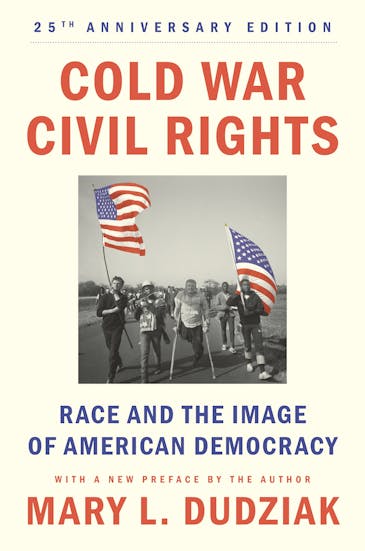
BOOK: Mary L. DUDZIAK, Cold War Civil Rights: Race and the Image of American Democracy (Princeton: Princeton University Press, 2025), 360 p. ISBN 9780691274324, 32 USD


(image source: Princeton)

Abstract:

In 1958, an African American handyman named Jimmy Wilson was sentenced to die in Alabama for stealing less than two dollars. Shocking as this sentence was, it was overturned only after intense international attention and the interference of Secretary of State John Foster Dulles. Soon after World War II, American racism became a major concern of US allies, a chief Soviet propaganda theme, and an obstacle to American Cold War goals throughout Africa, Asia, and Latin America. Racial segregation undermined the American image, harming foreign relations in every administration from Truman to Johnson. Mary Dudziak shows how the Cold War helped to facilitate desegregation and other key social reforms at home as the United States sought to polish its image abroad, yet how a focus on appearances over substance limited the nature and extent of progress. Cold War Civil Rights situates the Cold War in civil rights history while giving an international perspective to the fight for racial justice in America.

On the author:

Mary L. Dudziak is the Asa Griggs Candler Professor of Law at Emory University. Her books include War Time: An Idea, Its History, Its Consequences and Exporting American Dreams: Thurgood Marshall’s African Journey.

Read more here

(source: Legal History Blog)

BOOK REVIEW: Zeynep AĞDEMIR on Studies in the history of tax law (vol. 11), edited by Dominic De Cogan and Peter Harris (Comparative Legal History, XIII (2025), nr. 1, June, pp. 126-129)

(Image source: Taylor&Francis)

This volume of Studies in the History of Tax Law is a publication of selected conference papers presented at the Tax Law History Conference held in Cambridge in 2022. The book is divided into 18 rather lengthy chapters. The principal authors come from law faculties, although there are a few contributions by social scientists. The book also contains an intriguing co-authored chapter (Chapter 2) examining the effect of legislation taxing alcohol on production technology: one author is an expert in engineering, and the other in law.
It is worth noting that a body of literature on tax history known as ‘New Fiscal History’ already exists, as mentioned by Manse and Varding (235), together with the concept of the fiscal-military state. The influence of these approaches may be seen in recent fiscal history literature. However, these approaches are not adopted in the chapters contained in this volume. Methodologically, most of the chapters emphasise the significant impact of individuals or institutions on tax policy and tax laws.
A wide range of issues is explored in the book, including the taxation of the Royal Forests, the origins of tax law, the taxation of alcohol, tax regions (the geographic units used for tax assessments), parliamentary time for tax legislation, colonial taxation, income and corporation tax, and international taxation. Matters such as international taxation, income tax, and corporation tax appear to be recurring themes in other volumes of Studies in the History of Tax Law as well.

To read the full review, please click here. Online access is free for members of the European Society for Comparative Legal History. 
DOI: 10.1080/2049677X.2025.2500205


28 August 2025

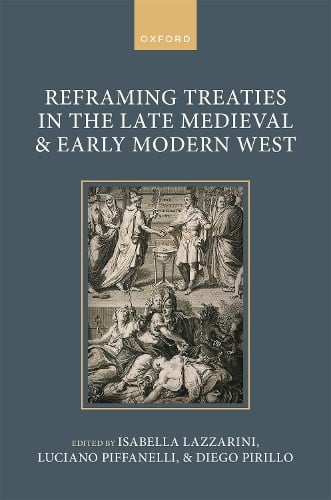
BOOK: Isabella LAZZARINI, Luciano PIFFANELLI & Diego PIRILLO (eds.), Reframing Treaties in the Late Medieval and Early Modern West (Oxford: Oxford University Press, 2025), 496 p. ISBN 9780198958475, 119 GBP


(image source: Waterstones)

Abstract:

Peace treaties were an important, dynamic, and varied element of late medieval and early modern diplomacy and international relations. But study of peace-making in the pre-modern period has often been limited to a focus on singular treaties and case studies, or presented as the historical prelude to the singular and inevitable 'universal' international order of the modern period. Seeking to counter this one-dimensional and Eurocentric teleology, this multi-authored volume conceives of peace treaties very broadly—as a range of successful and failed agreements, settlements, truces, oaths, and other forms conflict resolution—across a wide geopolitical and constitutional range of case studies not limited to Europe, but including also the Mediterranean and Atlantic worlds. Considered in this way, they become a means to reevaluate thoroughly the premodern peace-making process and the broader flow of negotiations that shaped late medieval and early modern political interactions; not as a discrete series of treaties but as a constitutive element of politics (a 'political grammar'), both within and outside frontiers and borders, whose complexity and adaptability are reflected in the diversity of its forms and the variety of the sources that recorded it. In so doing, and across 21 multi-disciplinary chapters, contributors show pre-modern peace-making to have been a multi-layered and varied phenomenon, the understanding of which has important implications for all those working on medieval and early modern international relations, diplomacy, and the new diplomatic history.

(source: Waterstones

27 August 2025

CALL FOR PAPERS: Between Institutions and Geography: Cities as Hubs of Medieval River Transport and Trade (EAUH 2026 Barcelona, 5-6 SEP 2026); DEADLINE 22 OCT 2025


Call for Papers: Between Institutions and Geography: Cities as Hubs of Medieval River Transport and Trade (EAUH 2026 Barcelona)


(image source: Wikimedia Commons)


17th European Association for Urban History Conference (Barcelona)


Dr. Marco in ‘t Veld (Tilburg University), dr. Bart Holterman (Forschungsstelle für die Geschichte der Hanse und des Ostseeraums), and dr. Maurits den Hollander (Tilburg University) warmly invite all academics interested in medieval river trade in an urban context to submit their paper proposals for our main session (nr. 3) at the EAUH conference in Barcelona, 2-5 September 2026.


Session Abstract


It is commonly acknowledged that waterways are of crucial importance for trade. They allow for relatively efficient transportation of goods. Cities served as hubs in medieval trade, as providers of the necessary institutions and services. While the relation between geography and the early modern economy is well-studied, we know much less about the interaction between geography and these urban institutions. This session will therefore investigate how urban governance was influenced by the geography of rivers. Did cities cooperate to ensure the efficient passage of ships? Were they developing common trade policies, or rather competing? To what extent did they copy legislation or exchange professionals?


In general, cities kept a close eye on legislation and institutions in other cities. Historians, particularly in the tradition of the New Institutional Economics, have underlined the importance of these social and legal norms for facilitating economic growth. Others, like Fernand Braudel, have focused on the more stable preconditions of economic prosperity, such as the position of a city in geographically determined commercial systems. This session draws on both academic traditions. For example, the city of Dordrecht possessed important staple rights in the wine trades along the Rhine river. These privileges were opposed by other cities and would have hindered commercial activity, but on the other hand cities also cooperated to divide the river into spheres of exclusive economic influence, such as Hamburg and Magdeburg on the Elbe or Wroclaw, Frankfurt and Szczecin on the Oder river. As such, they can be considered both as pillars in the economic system as well as crucial institutions in the economic organisation of trade.


However, our focus on cities also raises additional questions. How were privileges concretely enforced and how was infrastructure maintained? Staple rights, as well as toll rights, for example, were mostly privileges of the sovereign. On the other hand, it was often up to the guilds or merchant associations to prevent harbours and canals from freezing up in winter. As such rivers, while crossing several jurisdictions, seem to have necessitated cities to participate in special forms of multi-level governance, both external (inter-city communications, relations with princely authorities) and internal (urban professionals, guilds).


Although these examples are derived from the context of the northern European lowlands, the organisers believe that these questions are relevant in relation to many river systems. It is worthwhile to compare the specific dynamics of rivers from an economic, geographic, and legal point of view. Therefore, we would like to invite scholars from all over the world to contribute, preferably based on original archival research, to the analysis of the role of cities in transport and trade along rivers.


Paper Submissions


We encourage interested scholars with a diverse, global range of perspectives on this topic to submit abstracts for our session according to the general conference guidelines. Presentations should aim to be between 10 – 15 minutes, with additional space for discussion. Abstracts of max. 2500 characters can be submitted through this link ultimately Wednesday 22 October 2025. Please note that you will have to register on the website first, before being able to submit. Select ‘session 3’ when submitting your abstract.

BOOK: Donald S. PRUDLO (ed.), A Companion to the History of the Roman Curia [Brill's Companions to the Christian Tradition, ed. Christopher M. BELLITTO; 107] (Leiden/Boston: Brill, 2025), XVI+390 p. ISBN: 9789004184626, € 251,22

(Image source: Brill)

About the book:
The Roman Curia is the oldest extant body of institutional administration in the world. Indeed, it was the prototype for the development of centralized government in the monarchies of the Middle Ages. Further, it was the administrative backbone of the first worldwide organization in human history. It developed policies, laws, and procedures that continue to affect the entire world. This book offers scholarly contributions from the origins of the Curia to the early modern period.

Table of contents:

The Early Evolution of the Structures of the Roman Curia
1. The Versatility of the Early Medieval Papal Officials in the Light of the Liber pontificalis (Rosamond McKitterick)
2. Laying Down Papal Law: Archiving Controversy in the Letters of the Collectio Avellana (Bronwen Neil)
3. The Bishop of Rome and His Entourage: the Origins of the Papal Curia (Rita Lizzi Testa)
4. Ex codicibus et ex antiquis polypticis scrinii Sanctae Sedis Apostolicae: Canonical Collections and Archives of the Church of Rome in Antiquity (Dominic Moreau)

Forming the Medieval Curia
5. “Time and Money”: Regulating Appeals to the Roman Curia in the Second Half of the Twelfth Century (Bruce Brasington)
6. Papal Councils and the Curia in the ‘Long’ Twelfth Century, 1088–1215 (Danica Summerlin)
7. A Most Fortuitous Alliance: the Roman Curia and the Mendicant Orders in the Thirteenth Century (Donald S. Prudlo)

Roman Church Governance in the Late Medieval Period
8. Nepotism and the Papal Curia between the Eleventh and the Fifteenth Centuries (Sandro Carocci)
9. From the lectores curie romane to the Magistri Sancti Palatii: Education at the Medieval Roman Curia (Anthony John Lappin)
10. The Papal Penitentiary in the Later Middle Ages (Peter D. Clarke)
11. Administrative and Diplomatic Practices at the Papal Curia between the Thirteenth and Fourteenth Centuries: the Chancery (Barbara Bombi)
12. Sacra Romana Rota – the Papal Tribunal of Tribunals? (Kirsi Salonen)

The Curia in the Early Modern World
13. Locating the Renaissance Curia, c.1420–c.1530 (Miles Pattenden)
14. Europe and the Roman Curia: Conflicts of the Counter Reformation (Elena Bonora)
15. The Congregation of the Council and the Worldwide Provincial Councils, 1564–1622 (Maria Teresa Fattori)
16. The Roman Curia and the Eastern Churches, 1500–1800: Diplomacy, Cultural Policy, Mission, and Confessional Control (Cesare Santus)
17. Two Bodies and One Soul: Papal Finances in the Modern Age (1564–1800) (Massimo Carlo Giannini)
18. The New World by Francesco Ingoli, First Secretary of Propaganda Fide (Giovanni Pizzorusso)

On the editor:
Donald S. Prudlo, Ph.D. (2004, University of Virginia) holds the Warren Chair of Catholic Studies at the University of Tulsa. His research focuses on medieval religious history and thought, on saints and sainthood, and on the Dominican order. He is the author of Thomas Aquinas: A Historical, Theological, and Environmental Portrait (2020), Certain Sainthood (2015), and The Martyred Inquisitor (2009).


More information can be found here: DOI 10.1163/9789004723665.

26 August 2025

BOOK: Justin M. ANDERSON and Atria A. LARSON (eds.), Thomas Aquinas and Medieval Canon Law (Washington D.C.: Catholic University of America Press, 2025), 402 p. ISBN: 9780813239347

Abstract: 

Thomas Aquinas and Medieval Canon Law bridges, for the first time, two worlds of scholarship that have never been explored in book-length form and investigates an under-researched area in Thomistic studies, namely the question of how Thomas Aquinas engaged the ecclesiastical law and jurisprudence of his day.

Neither historians of medieval canon law nor experts on Thomas’s thought have previously paid much attention to the canon law tradition as a source for Thomas’s work and an influence on his thought. But, as this volume shows, his consideration of mendicant life, law, justice, oaths, penance, clerical orders, the Eucharist, baptism, property, commerce, marriage and more reveal engagement with key canon law texts and concepts and with the jurisprudence of major canonists. The book uncovers how Aquinas encountered canonical regulations and jurisprudence as a Dominican, an educator in both theology and pastoral care, and a participant in the secular-mendicant controversy. In his life, education, community, and his way of thought, Thomas Aquinas could not avoid and necessarily encountered and dealt with the canonical tradition. He did so in a distinctive way, working as he did with his theological and philosophical source material to craft his own great synthesis. What this volume shows, if nothing else, is that the canon law tradition should be taken into consideration when assessing Thomas’s synthetic thought.

Following the editors’ introduction, thirteen scholarly contributions and an epilogue explore Aquinas’s interaction with medieval canon law through four major themes: Dominican Matters; Foundations Matters of Faith, Truth, and Law; Moral Matters; and Sacramental Matters. Approximately half the contributors are specialists from the field of medieval canon law, and half are grounded in Thomistic tradition. The result is a unique and scholarly contribution to two major research areas that may open avenues for similar studies of other key figures in the scholastic tradition.

About the editors:
Justin M. Anderson is professor and Chair of Moral Theology at Immaculate Conception Seminary School of Theology at Seton Hall University. 
Atria A. Larson is associate professor of medieval christianity at Saint Louis University, and the author of Gratian's Tractatus de penitentia: A New Latin Edition with English Translation and Master of Penance: Gratian and the Development of Penitential Thought and Law in the Twelfth Century.


More information can be found here.

25 August 2025

BOOK: Ernst KANTOROWICZ, Radiances. Unpublished Essays on Gods, Kingship, and Images of the State (Ithaca: Cornell University Press, 2025), 258 p. ISBN 9781501782534

(Image source: Cornell University Press)

Abstract:
Radiances gathers previously unpublished essays by one of the greatest historians of the twentieth century. Although best known for The King's Two Bodies (1957), Ernst Kantorowicz's scholarly expertise ranged from classical antiquity to early modernity and from political pageantry to numismatics. These essays traverse the breadth of his expertise, exploring "radiations" of the themes that were central to his published work: sovereignty, theology, law, and iconography.
The radiations in these engaging essays include the imagery of throne-sharing from the Hellenistic era and Pharaonic Egypt to early Christianity, coronation ceremonies in Byzantium and the West, the Carolingian and Burgundian Renaissances, the relationship between Rome and Christianity, the importance of history as a humanistic pursuit, and the significance of postage stamps in political myth-building. Robert E. Lerner discusses each essay's composition, themes, and place in Kantorowicz's oeuvre. Combining vast knowledge with intellectual delight, Radiances teems with the profound historical insights that distinguished Kantorowicz's scholarship.

On the author:
Ernst Kantorowicz (1895–1963) taught at the University of Frankfurt and University of California, Berkeley, and was a member of the Institute for Advanced Study in Princeton.

More information can be found here.

22 August 2025

BOOK REVIEW: Manuel BASTIAS SAAVEDRA on The Cambridge history of Latin American law in global perspective, edited by Thomas Duve and Tamar Herzog, and A companion to Latin American legal history, edited by Matthew C. Mirow and Victor Uribe-Uran (Comparative Legal History XIII (2025) nr. 1, June, pp. 112-122)

(Image source: Taylor&Francis)

There has been an increasing interest in the legal history of Latin America in recent decades. Largely restricted to law faculties and considered to be the domain of legal scholars until the late twentieth century, since the early 2000s legal history has steadily become an established research field in the context of a wider historiography concerned with questions of colonialism and empire, race and status, slavery and labour, Indigenous peoples, nation and state-building, among others.
Many parallel developments can arguably account for this. One longer-term development has been the influence that prominent legal historians, such as Paolo Grossi, Víctor Tau Anzoátegui, Michael Stolleis, António Manuel Hespanha, and Bartolomé Clavero, have had in rejuvenating the field, not only through their works but mainly through their students and adherents, who have come to occupy positions in both history and law departments and have driven the emergence of a new legal history in the Latin American context. Another somewhat parallel development was the interest that social and ethnohistorians – mostly in Latin America and the United States of America – were taking to the use of judicial archives and sources, promoting what has been alternatively called sociolegal history and history of justice. Finally, a more recent development worth mentioning was the appointment in 2009 of Thomas Duve as director of the Max-Planck-Institut für europäische Rechtsgeschichte, which gave one of the world’s leading legal historical institutions a global historical agenda with regional focus on Latin America and encouraged both scholarly output and networking in the field.
The publication in 2024 of the two edited volumes that are the subject of this review can be seen as confirmation of this trend. But it also marks an inflection point in the historiography of law in Latin America, since what had been developing through the discrete accumulation of research across two decades has now become a field that is engaging in critical self-reflection about its objectives, methods, aims, and its future.

To read the full review, please click here. Online access is free for members of the European Society for Comparative Legal History.
DOI: 10.1080/2049677X.2025.2500187


21 August 2025

BOOK: Sari KATAJALA-PELTOMAA (ed.), A Companion to Medieval Canonization Processes. New Contexts, Perspectives, and Comparisons [Brill's Companions to the Christian Tradition, ed. Christopher M. BELLITTO; vol. 109] (Leiden/Boston: Brill, 2025), XII + 341 p. ISBN: 9789004516298, € 168,54

(Image source: Brill)


About the book:

Canonizations, which officially proclaimed a person’s sanctity, were complex, embracing theological, judicial, social, and cultural aspects of medieval Christianity. The dossiers manifest the theological ponderings while also revealing the devotional practices, daily life, and troubles of those not learned in canon law or theology.

This volume offers tools for comprehending canonization processes by investigating their judicial background and structural elements, as well as devotional aspects reflected in the depositions. It approaches canonization processes in a three-fold way: as a phenomenon of the past, as a source material with methodological challenges, and as a specific field of historical studies. Furthermore, this volume engages in innovative methodological discussions and illuminates the state-of-the-art and topical new themes.


Table of contents

Introduction: Canonization Processes in Context and Comparison (Sari Katajala-Peltomaa)

1. The Papacy on the Canonization of Saints: between Appropriation, Regulation, and Disinterest (Christian Krötzl)

2. God’s Ordinary and Extraordinary Speech: the Determination of Miracles by the Roman Congregation of Rites in the Early Modern Era (Maria Teresa Fattori)

3. Transforming an Individual into a Saint and an Accused into a Criminal. Judicial Procedure in Canonization Processes and libri maleficiorum of Italian Communes at the End of the Middle Ages (Didier Lett)

4. The Construction of Information in the Records of Medieval Canonization and Heresy Inquests: a Methodological Comparison (Saku Pihko)

5. Testimonies of the Life of the Saint in the Context of Canonization (Jenni Kuuliala)

6. Safe and Dangerous Names: Uncovering Connections and Boundaries in the Canonization Inquest for Countess Delphine de Puimichel, 1363 (Nicole Archambeau)

7. Disability, Miracle, and Sainthood in Early Fourteenth-Century Canonization Dossiers (Adelheid Russenberger)

8. “Are You Content to Die?” Death Acceptance and Death Denial in Depositions of Canonization Processes (Jyrki Nissi)

9. Writing Microhistory from the Canonizations of Bernardino of Siena and Vincent Ferrer (Laura Ackerman Smoller)

10. Experiencing the Miraculous: Lived Religion in the Depositions (Sari Katajala-Peltomaa)

11. Scent, Sight, Awe: Examining the Bodily Signs of Sainthood in the Canonization Processes of Dominican Saints (Marika Räsänen)

12. Canonizations and Jesuit Saints: the Lives and Images amid the Causes for Ignatius Loyola and Francis Xavier (Jonathan Greenwood)

On the editor

Sari Katajala-Peltomaa is currently Professor of Cultural History at the University of Turku, Finland. She has specialized in lived religion, gender, and family. Her recent publications on canonization processes include Demonic Possession and Lived Religion in Later Medieval Europe (Oxford: Oxford University Press, 2020) and edited with Christian Krötzl, Miracles in Medieval Canonization Processes: Structures, Functions, and Methodologies (Turnhout: Brepols, 2018).

More information can be found here: 10.1163/9789004726833.

20 August 2025

BOOK: Richard PRIMUS, The Oldest Constitutional Question. Enumeration and Federal Power (Cambridge (Mass.): Harvard University Press, 2025, 448 p. ISBN 9780674293595, € 45,95


(image source: Harvard)


Abstract:
A groundbreaking challenge to a core principle of constitutional law, arguing that congressional action is not limited by the legislative branch’s textually enumerated powers. Every law student learns that the federal government is constrained to act only according to its enumerated powers, meaning that Congress can do what the Constitution expressly authorizes it to and nothing more. Yet Richard Primus contends that this longstanding orthodoxy—allegedly required by the text of the Constitution, the Framers’ vision, and the logic of federalism—is fundamentally flawed.

On the author:

 Richard Primus is Theodore J. St. Antoine Collegiate Professor at the University of Michigan Law School. He clerked for Justice Ruth Bader Ginsburg at the US Supreme Court and is the author of The American Language of Rights.

(source: Legal History Blog

Read more here

19 August 2025

ARTICLE: Leon CASTELLANOS-JANKIEWICZS & Momchil MILANOV, "A Well-known Stranger: André Mandelstam – From Empire to Human Rights" (European Journal of International Law XXXVI (2025), nr. 1 (Feb), 263-270


(image source: OUP)

Introduction:

André Mandelstam delivered four courses at the Hague Academy between its inaugural session in 1923 and 1934, making him one of the most frequent lecturers of the interwar period. Two studies in particular – on the rights of minorities (1923) and on human rights (1931) – made outsized contributions to the theoretical and practical understandings of human rights as group rights, which, until then, had only been addressed by a smattering of authors.1 Because of this, Mandelstam has sometimes been celebrated as a human rights lawyer avant la lettre, but more recent scholarship has rightly positioned him as a transitional figure mediating between imperial and liberal mindsets within the epistemic community of international lawyers.2 The tension between these two attitudes provides the backdrop for the following considerations. These explore the ‘Realpolitik’ underlying Mandelstam’s humanitarian thought and its uneasy coexistence with his solidarist view of international law, which was largely set aside by mainstream scholarship after World War II to make way for individualistic approaches to human rights.3

Read more here: DOI 10.1093/ejil/chaf020.

18 August 2025

BOOK: Laura CULBERTSON & Susan LONGFIELD KARR (eds.), Framing Devices and Global Legal Traditions. From the Ancient World to the Modern Nation State [Routledge Studies in Comparative Legal History, eds. Aniceto MASFERRER DOMINGO & Heikki PIHLAJAMÄKI] (London: Routledge, 2025), 432 p. ISBN 9781032849447, 116 GBP


(image source: Routledge)

Abstract:

This collection explores prefaces, prologues, paratexts, and other types of framing devices. Across world history, these devices have introduced the law, articulated its context and audience, identified the basis of legal and moral authority, critiqued existing conditions, or even tried to “restore” something that never was. Scribes, lawmakers, and legal theorists also used frames to position the law in time and space, purporting to define populations and their identities. Despite the ubiquity and complexity of these phenomena, few studies have drawn out methods for studying their role in constructing, fortifying, or reimagining legal frameworks within legal cultures or traditions. This volume offers new ways to consider the significance of framing apparatuses regarding how and why they are created, remembered, forgotten, utilized, and recovered within legal traditions. The studies range from the ancient world to the modern nation-state system, aiming to explore the intersections and collisions between juridical and political interpretation practices. The book will be of interest to academics and researchers in the areas of Legal History, Comparative Law, Legal Cultures and Traditions, Legal Theory, Jurisprudence, Constitutional Law and Legislative Drafting.

Table of contents:

1. More than Marginal: The Complex Work of Framing Devices

Laura Culbertson and Susan Longfield Karr

Part 1: Pulling Together

2. The Preambles to Archaic Greek Interstate Treaties at Olympia: A Study in the Diffusion of Diplomatic Language

Nicholas D. Cross

3. Prefaces of Legal Documents in Late Imperial China

Frédéric Constant

4. The Conservative Case for Warrior Law: Legal Change in Medieval Japan

Christopher Bovbjerg

5. Bodies of Law in Early Medieval England and Scotland

Andrew Rabin

6. Preface to the Indian Penal Code, as Originally Drafted (October 1837)

Elizabeth Lhost

Part 2: Breaking Apart

7. (Re-)framing Hammurabi’s Laws: Worldbuilding with Prologues and Epilogues in the Ancient Near East

Laura Culbertson

8. Prefaces in the Legal Texts of the Crusader Kingdoms of Jerusalem and Cyprus

Adam M. Bishop

9. No Mere Metaphor: The State of Nature as Framing Device

Susan Longfield Karr

10. Jefferson's Preambles, Prefaces, and Persistence

Matthew Crow

11. Martens' Clause and Ambiguity at the Birth of Modern Humanitarian Law

Daimeon Shanks-Dumont

12. Searching for Meaning In the Utah Constitution's Free Market Preamble

Jorge Contreras

 On the editors:

Laura Culbertson (PhD Michigan, Near Eastern Studies) is a professor of Middle East Studies at American Public University. Her background is in Ancient Near Eastern history and archaeology, and her recent research interests include slavery and ancient law. On the topic of slavery, she edited Slaves and Households in the Near East and co-edited Society and the Individual in Mesopotamia, which includes a contribution Mesopotamian slavery. Other recent publications discuss legal pluralism and the social contexts of Mesopotamian law. Susan Longfield Karr (Ph.D. University of Chicago, History): Longfield Karr’s teaching and research focus on state- and empire-state formation and the emergence of the so-called modern rule of law within communities (constitutions) and between them (international law) from the late medieval through the early modern period. Her work pays particular attention to the meaning and significance of legal vocabularies within cultural, political, and juridical frameworks that accompany the history and development of rights (customary, civic, and natural) in the context of state and empire formation in Italy, Germany, France, and England. Most recently, she published On Justice and Right: Jus gentium in Humanist Jurisprudence, wherein she explored the transformation of fundamental categories of Roman law such as ius and ius gentium by the fathers of legal humanism, Guillaume Budé, Ulrich Zasius, and Andrea Alciati (Brill, 2022). Dr. Longfield Karr is an Associate Professor of History at the University of Cincinnati.

Read more here