04 September 2026

BOOK: Marinos DIAMANTIDES, Michel ROSENFELD & Giuseppe MARTINICO (eds.), Research Handbook on the Law and Politics of Sovereignty [Research Handbooks in Law and Politics] (Cheltenham: Elgar, 2026), 496 p. ISBN 9781803926346


(image source: Elgar)

Abstract:

This Research Handbook examines sovereignty as a contested and evolving concept shaped by law, politics, history and culture. Bringing together global experts, it traces the development of sovereignty across plural traditions of authority and legitimacy and analyses its contemporary transformations, from constitutional authority and global governance to political theology, biopower and decolonial critiques.

Read more here: DOI  10.4337/9781803926353.

BOOK REVIEW: Paolo ASTORRI, The legal legacy of the reformation: Catholic and Protestant approaches to law, by John Duddington (ed.) [London and New York: Routledge, 2025] (Comparative Legal History, XIV (2026), nr. 1 (June), pp. 137-139)

(image source: Taylor&Francis)

This volume collects essays presented at a conference organised by the editor in 2017 to mark the five-hundredth anniversary of the Reformation. Comprising thirteen chapters, the book is divided into four parts: (I Church Law and the Reformation; (LI) Catholic and Protestant Approaches to Law in the Life of the Church; (III) Catholic and Protestant Approaches to Church and State Law; and (IV) Catholic and Protestant Approaches to Particular Areas of Law. 

The book situates itself in the wake of influential scholarship on law and the Reformation, including works by John Witte Jr (Law and Protestantism, 2002). Harold J Berman (Law and Revolution II, 2003), Mathias Schmoeckel (Das Recht der Reformation, 2014; Das Recht der Reformation in Frankreich, 2024), Martin Heckel (Martin Luthers Reformation und das Recht, 2016), and Robert von Friedeburg (Luther's Legacy, 2016), to mention only a few. As the editor notes in the preface, the core message of the book is that '500 years after it occurred the sundering of Christendom at the Reformation still resonates in the law, but equally the Reformation was not an isolated event. It was the product of forces in society that were present before Martin Luther nailed his theses to the church door at Wittenberg and to this extent the Reformation did not create change in all cases but instead recognised new forces at work in society and at times accelerated changes which, had the Reformation not occurred, might well have come about anyway' (xiii). 

The volume is not fully homogeneous. Its contributions vary significantly in chronological scope, methodological approach, and confessional focus. Some chapters concentrate primarily on the early modern period, while others extend their analysis into the contemporary era. Some focus exclusively on Catholic ot Protestant contexts, while the majority attempt a comparative perspective. Inevi- tably, chapters that seek to offer broad overviews from the Reformation, or even from the late medieval period, can only provide succinct accounts, often relying more heavily on secondary literature than on primary sources. Nevertheless, the effort to connect early modern legal developments with contemporary legal frameworks is one of the book's notable strengths. As David Mclroy observes. 'the debates within and between the different strands of Christianity which emerged from the Reformation were a key factor in the development of legislation in respect of freedom of religion, civil rights and human rights'. 

To read the full review, please click here. Online access is free for members of the European Society for Comparative Legal History. 

DOI: https://www.tandfonline.com/doi/full/10.1080/2049677X.2026.2671630

03 September 2026

SEMINAR PROGRAMME: Legal Commentaries: Between History and Theory (Poznań: Adam Mickiewicz University, 7-8 SEP)


                                     (Image credits: Jan Lievens, Bücherstillleben, c. 1628, Alte Pinakothek, 

                                     Bayerische Staatsgemäldesammlungen, Munich (CC BY-SA 4.0))

The seminar "Legal Commentaries: Between History and Theory" will take place at Adam Mickiewicz University in Poznań on 7–8 September 2026. Bringing together legal historians, canon law scholars, and legal theorists, the seminar will examine legal commentary as a historical form, an interpretative practice, and a contemporary legal genre. The contributions will range from early modern manuscript and print traditions to modern code commentaries, case-law commentaries, and analytical legal philosophy. The seminar is organised within the NCN-funded SONATA 18 project “EXTRA: The Decretals, Early Modern Science of Canon Law and Legal Commentaries Today”.

Programme

7 September 2026
Collegium Rubrum, Room 207

9.00–9.30 | Introductory Remarks

9.30–10.45 | Theoretical Framework
David Kästle-Lamparter (University of Mannheim), Exploring the Contours of Legal Commentary
Marek Smolak (Adam Mickiewicz University, Poznań), Legal Commentary and the Application of Law

11.15–12.30 | Between Manuscript and Print
Lorenzo Sinisi (University of Genoa), Necessary but Prohibited. The Manuscript and Printed Commentaries on the “Canones et Decreta” of the Council of Trent (16th–17th Centuries)
Marco Castelli (Adam Mickiewicz University, Poznań), From Manuscript to Print: The Editorial Construction of Canon Law Commentary on the Liber Extra, c. 1470–1600

14.00–15.45 | Commentaries in Context
Alain Wijffels (KU Leuven), Andrea Alciato: Canon Law Commentaries in the Era of Neo-Classical Challenges to Traditional Jurisprudence
Matthew Cleary (Adam Mickiewicz University, Poznań), The Privilege of Pious Causes: Defective Wills, Testamentary Formality, and Early Modern Canon Law Commentary
Wouter Druwé (KU Leuven), An Early Modern Canon Law Commentary from the Southern Low Countries: The Paratitla by Andreas Vallensis

16.30–17.45 | Structures and Transformations
Piotr Alexandrowicz (Adam Mickiewicz University, Poznań), The Power of Structure: Opening Strategies in the Early Modern Canon Law Commentaries on the Liber Extra
Alessandro Tira (University of Bergamo), Beyond the Commentary: Moral Theology and Canon Law in the Late 19th–Early 20th Centuries

8 September 2026
Collegium Iuridicum Novum, Room 1.1

9.00–10.45 | Commentary Genres Today
Wojciech Dajczak (Adam Mickiewicz University, Poznań), From the History of Polish Commentaries to a Historical Commentary on the Polish Civil Code
Aleksander Grebieniow (University of Warsaw), Case-Law Commentaries
Wojciech Rzepiński (Adam Mickiewicz University, Poznań), Analytic Philosophy at Work in Legal Commentary

11.15–12.30 | Final Roundtable
Final remarks and discussion

You can find more information here.


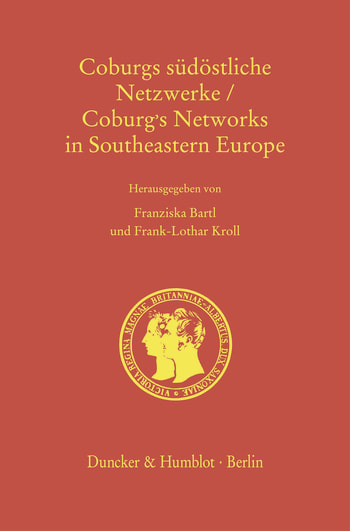
BOOK: Franziska BARTL, Frank-Lothar KROLL (eds.), Coburgs südöstliche Netzwerke / Coburg's Networks in Southeastern Europe [Prince Albert Studies; 39] (Berlin: Duncker & Humblot, 2026), 196 p., ISBN 978-3-428-19723-1

Cover: Coburgs südöstliche Netzwerke / Coburg's Networks in Southeastern Europe 

ABOUT THE BOOK:

Ende des 19. Jahrhunderts zählte das Haus Sachsen-Coburg und Gotha zu den einflussreichsten Dynastien Europas, wenngleich die Verflechtungen mit den Monarchien Südosteuropas lange unzureichend berücksichtigt wurden. Der Sammelband widmet sich umfassend diesen dynastischen Netzwerken in Bulgarien, Rumänien und der Balkanregion vom 19. bis ins 20. Jahrhundert.

Im Zentrum stehen die Etablierung der bulgarischen Monarchie durch die Coburg-Koháry, Ferdinand I. als Gestalter des modernen Bulgarien sowie Königin Marie von Rumänien als transnationale Akteurin dynastischer Machtpolitik. Darüber hinaus werden die politischen Transformationen der Region und deren erinnerungskulturelle Verarbeitung analysiert.

Die Beiträge renommierter Wissenschaftler aus Bulgarien, Österreich, der Slowakei und Deutschland zeigen, wie die Coburger durch strategische Heiratsallianzen, politische Einflussnahme und kulturelle Transferprozesse die Modernisierung Südosteuropas maßgeblich mitgestalteten.

TABLE OF CONTENT:

I. Einführende Bemerkungen / Introductory Remarks
Franziska Bartl und Frank-Lothar Kroll
Coburgs dynastische Netzwerke im Südosten Europas

II. Dynastische Netzwerke
Ivan Parvev
Alexander Battenberg und das Gleichgewicht der Mächte in Europa 1879-1886

Günter Fuhrmann
Karriere einer Seitenlinie. Die Coburg-Kohárys in den Ländern der Stephanskrone

Gregor Gatscher-Riedl
Südosteuropas Großmutter? Königin Marie von Rumänien als dynastische Netzwerkerin

Edda Binder-Iijima
Die Konsolidierung der rumänischen Dynastie als nationales und internationales Problem am Ende des 19. Jahrhundert

III. Der Begründer des modernen Bulgarien – Leben und Nachwirken des Zaren Ferdinand I.
Lothar Höbelt
Ferdinand von Bulgarien, Österreich-Ungarn und die vier Balkankriege

Franziska Bartl
Ein Zar im Exil – Die Coburger Jahre Ferdinands I. (1918–1948)

Zornitsa Velinova
»Ferdinand der Schuldige?« oder »Ferdinand der Moderne?« Die Rezeption Ferdinands I. in der Lehrbuchliteratur Bulgariens

IV. Das 20. Jahrhundert
Vladimir Zlatarsky
Waffen, Generäle, König: Der Wiederaufbau der deutsch-bulgarischen militärpolitischen Beziehungen unter Zar Boris III.

Veronika Aschenbrierova und Jarmila Oceľová
Die Transformation des Industrieerbes in der Slowakei

V. Anhang

Find more here.  


02 September 2026

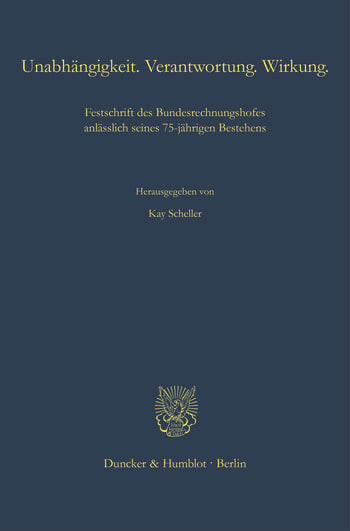
BOOK: Kay SCHELLER (ed.), Unabhängigkeit. Verantwortung. Wirkung. Festschrift des Bundesrechnungshofes anlässlich seines 75-jährigen Bestehens (Berlin: Duncker & Humblot, 2026), 266 p., ISBN 978-3-428-19535-0

Cover: Unabhängigkeit. Verantwortung. Wirkung 

ABOUT THE BOOK:

Der Bundesrechnungshof feiert im Jahr 2025 sein 75-jähriges Bestehen. Das Jubiläum fällt in eine Zeit dramatischer Umbrüche und multipler Krisen, die sich in einer finanzpolitischen Ausnahmesituation mit Rekordverschuldung widerspiegeln. Vor diesem Hintergrund nehmen die Beiträge der Festschrift, herausgegeben vom Präsidenten des Bundesrechnungshofes Kay Scheller, eine disziplinenübergreifende Standortbestimmung der externen Finanzkontrolle vor.

Die Autorinnen und Autoren beleuchten, wie sich der Bundesrechnungshof als Teil eines historisch gewachsenen Institutionengefüges von einer klassischen Rechnungsprüfungsbehörde zu einem wirkungsvollen Berater von Parlament und Regierung entwickelt hat. Aus diesem Rollenverständnis heraus werden aktuelle Herausforderungen wie die Schwächung der Schuldenregel, der Umgang mit Desinformation und die überfällige Staatsmodernisierung analysiert. Der Band setzt damit wichtige Impulse zur Diskussion um solide Staatsfinanzen und staatliche Kernaufgaben.

TABLE OF CONTENT:

A. Einleitung

B. Zustimmungsvorbehalte des Aufsichtsrats
Inhalt und Umfang der Zustimmungsvorbehalte — Kritische Betrachtung — Rechtslage GmbH und Zustimmungsvorbehalte

C. Zustimmungsvorbehalte der Unternehmenstransaktion
Vorüberlegungen – Identifizierung zustimmungsrelevanter Vorgänge — Verkaufs-/Kaufversuch bzw. Transaktionskosten — Abschluss eines Letters of Intent im Zwei-Verhandlungspartner-Verfahren — Entscheidung zur Zulassung einer Due Diligence (Verkäufer) — Kaufvertrag: Erwerb des Zielunternehmens — Kaufvertrag: Veräußerung des Zielunternehmens — Akquisitionsfinanzierung des Käufers — Abschluss einer W&I-Versicherung — Besonderheiten beim GmbH-Aufsichtsrat

D. Rechtsvergleich mit dem Recht von England und Wales
Das Board of Directors der Company — Beteiligung des Boards of Directors in Unternehmenstransaktionen — Besonderheiten bei den Private Companies — Vergleich und Erkenntnisse

E. Schluss
Zustimmungsvorbehalte des Aufsichtsrats gem. § 111 Abs. 4 Satz 2 AktG — Zustimmungsvorbehalte der Unternehmenstransaktion — Rechtsvergleich mit dem Recht von England und Wales

Find more here


01 September 2026

PROGRAMME: Past Privacy Today: Negotiating Boundaries – Navigating Challenges (Copenhagen: Centre for Privacy Studies, 3-4 SEP 2026)


(image source: KU)

Abstract:

Needs for privacy emerge when boundaries are negotiated between individuals, communities, and societies. In such encounters, the large-scale structures of public space are challenged by the small-scale needs, desires, and wishes of individuals and smaller social groups.

  • How do such social dynamics play out across different contexts across the globe, both in the past and present?
  • How do changes in institutional structures influence privacy, and the other way around?
  • What forms of privacy were safeguarded or suppressed?
  • Who has been entitled to privacy, and under what circumstances? 
  • How does privacy relate to other concepts such as intimacy, secrecy, confidentiality, and anonymity?
  • And how should we as historians and contemporary privacy scholars navigate the boundaries between them?

This conference aims to address these and similar questions through thematic panels, inviting speakers and audience for interdisciplinary explorations. Building upon the insights produced at the Centre for Privacy Studies (2017-2027), it is our goal that these discussions will spark a flourishing stream of new scholarship in the field of privacy studies.

Program:

Day 1 (3 September 2026)


09:00: Registration and Welcome Coffee


09:15-09:35: Introduction

Paolo Astorri (Centre for Privacy Studies/Lund University)


09:35-11:45: Panel 1 - Urban Space: Privacy inside and outside the city: spaces, social patterns, and institutional settings


09:35-09:55: Urban Space – a paradoxical cradle of privacy

Johannes Ljungberg (Linköping University/Centre for Privacy Studies)


09:55-10:15: Affordances, transgressions, risks: privacy and gender in 18th-century urban green spaces

Antonia Weiß (Amsterdam University)


10:15-10:35: Marriage, sex and family life in the 18th century Dutch oversea empire

Sophie Rose (Universität Tübingen)


10:35-10:50: Break


10:50-11:45: Round table and shared discussion moderated by Viktor Wretström (Centre for Privacy Studies)


11:45-13:00: Break 


13:00-15:10: Panel 2 - Home: Privacy in the Early Modern Home: Cases from Europe, Greenland and Formosa (present-day Taiwan)


13:00-13:10: Introduction

Natalie Patricia Körner (Centre for Privacy Studies/Royal Danish Academy— Architecture, Design, Conservation)


13:10-13:30: The Making of Privacy at Home in Europe, 1500-2000

Raffaella Sarti (University of Urbino)


13:30-13:50: Drawing the Curtain: Negotiating Privacy in the Kalaallit Communal House. 

Asta Mønsted (University of Copenhagen)


13:50-14:10: Approaching Privacy through Darkness in Sirayan Houses during Dutch Colonisation. 

Hui-Yi Yang (Centre for Privacy Studies/Royal Danish Academy— Architecture, Design, Conservation)


14:10-14:20: Break


14:20-15:10: Round table and shared discussion moderated by Natalie Patricia Körner (Centre for Privacy Studies/Royal Danish Academy— Architecture, Design, Conservation)


15:10-15:40: Coffee & Cake


15:40-17:50: Panel 3 - Belief: Cosmologies of Privacy and the Privacy of Cosmologies


15:40-15:50: Introduction

Bastian Felter Vaucanson (Centre for Privacy Studies)


15:50-16:10: Responsible Freedom: Privacy in Native American Twinship Culture [online presentation]

Barbara Alice Mann (University of Toledo)


16:10-16:30: When the World is your Village. Reconceptualising Indigeneity and Privacy through a Global Biography

Martha Fredriks (Protestantse Theologische Universiteit, Utrecht)


16:30-16:50: Privacy as Perseverance. Sámi Ritual Traditions in Early Modern Central Sweden in a Time of Forced Homogenization. 

Jonas Monié (Lund University)


16:50-17:00: Break


17:00-17:50: Round table and shared discussion moderated by Karen Lauterbach (Centre for African Studies, University of Copenhagen)


Day 2 (4 September 2026)


09:15: Registration and Welcome Coffee


09:30-11:45: Panel 4 - Health: Privacy and Health: Sharing and Protecting Knowledge in Systems of Care


9.30-9.40: Introduction

Natacha Klein Käfer (Centre for Privacy Studies/Lund University)


9:40-10:00: Datasociality in Precision Medicine 

Mette Svendsen (University of Copenhagen) 


10:00-10:20: Privacy and Hospital in the Medieval and Early Modern Periods

Gisela Drossbach (Universität Augsburg)


10:20-10:40: Privacy and Health: Past-Present Perspectives

Natacha Klein Käfer (Centre for Privacy Studies/Lund University)


10:40-10:50: Break


10:50-11:45: Round table and shared discussion moderated by Angana Moitra (Centre for Privacy Studies/Lund University)


11:45-12:30: Break


12:30-15:00: Panel 5 - Law: Anonymity Before Encryption: Concealing Identities in Early Modern Transactions 


12:30-12:40: Introduction

Paolo Astorri (Centre for Privacy Studies/Lund University)


12:40-13:00: Private, but Not Personal: Rethinking Privacy in Medieval Law 

Guido Rossi (University of Palermo)


13:00-13:20: Anonymity and Silent Financiers in Sixteenth-Century Commercial Partnership 

Luisa Brunori (CNRS Paris)


13:20-13:40:  The Merchant’s Silence: Secrecy and Norms of Conduct in Early Modern Mercantile Literature 

Stefania Gialdroni (University of Padua)


13:40-14:00: An Identity to Hide? Noble Merchants in the Early Modern Era: A Legal Survey

Giovanni Chiodi (University of Milano Bicocca)


14:00-14:10: Break


14:10-15:00: Round table and shared discussion moderated by José María Martín Humanes (Centre for Privacy Studies)


15:00-16:00: Closing session

15:00-15:30: Concluding Remarks by Mette Birkedal Bruun (Director, Centre for Privacy Studies)

15:30-16:00: Plenary Discussion 

16:15-17:30: Reception (Centre for Privacy Studies)

Read more here.

Programme may be subject to smaller changes


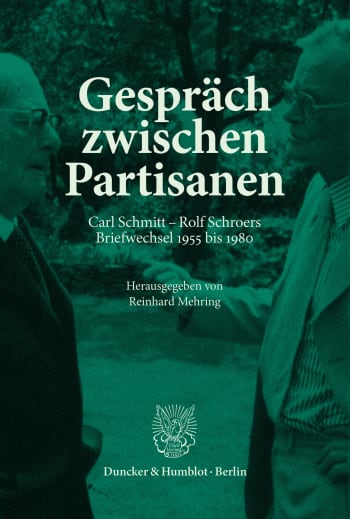
BOOK: Reinhard MEHRING (ed.), Gespräch zwischen Partisanen Carl Schmitt – Rolf Schroers. Briefwechsel 1955 bis 1980 [SCHMITTIANA. NEUE FOLGE; 4] (Berlin: Duncker & Humblot, 2026], 354 p., ISBN 978-3-428-19765-1

Cover: Gespräch zwischen Partisanen 

ABOUT THE BOOK:

Rolf Schroers (1919–1981) war nach 1945 ein Literat (Mitglied der »Gruppe 47«), Publizist, später Direktor der Heuss-Akademie in Gummersbach. Von Ernst Jünger und Paul Celan lief er gleichsam zu Carl Schmitt über, dem er 1955 erstmals begegnete und mit dem sich sogleich intensive Korrespondenz und lebenslanger freundschaftlicher Umgang ergab. Die vorliegende, in 214 Briefen und Gegenbriefen ziemlich vollständig erhaltene Korrespondenz ist ein Schlüssel zu Schmitts ›Theorie des Partisanen‹ (1963), die direkt auf Schroers' Buch ›Der Partisan‹ (1961) antwortet. Sie erinnert mit zahlreichen unbekannten Texten und Materialien auch an einen markanten Repräsentanten der existentialistischen Kriegsgeneration und »Kahlschlagliteratur«, der als Publizist und Akademiedirektor die politischen Diskurse der alten Bundesrepublik mit gestaltete und von Schmitt sehr geschätzt wurde.

ABOUT THE EDITOR:

Prof. Dr. Reinhard Mehring, Jg. 1959, Diss. 1988 (Freiburg) Politikwissenschaft, Habilitation 2000 Philosophie (HU-Berlin); 2007–2025 Prof. für Politikwissenschaft an der PH-Heidelberg, zahlreiche Bücher u.a. zu Carl Schmitt, Martin Heidegger und Thomas Mann; Editionen u.a. zu Ludwig Feuchtwanger (zusammen mit Rolf Rieß) und Emil Utitz. Als Schmitt-Editor u.a.: Briefwechsel mit Rudolf Smend (Duncker & Humblot, 2. Aufl. 2012) und Ernst-Wolfgang Böckenförde (2022).

Find more here